Lead Levels In North Mpls. Cause Concern, Scrap Yard Under Scrutiny
The Minnesota Pollution Control Agency is concerned about air quality and the levels of lead in an industrial area of north Minneapolis.
Watch CBS News
The Minnesota Pollution Control Agency is concerned about air quality and the levels of lead in an industrial area of north Minneapolis.
The Minnesota Pollution Control Agency is forming a new advisory committee on environmental justice.
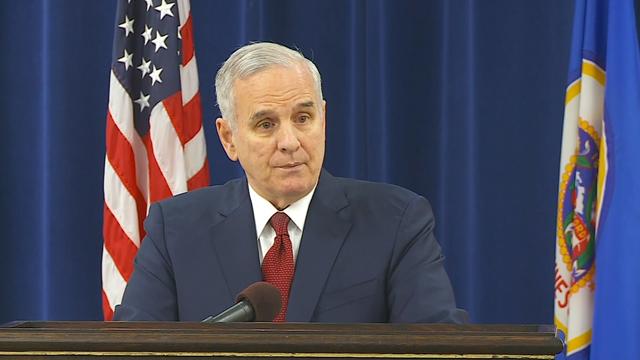
Gov. Mark Dayton has appointed eight people to a new committee to advise the Minnesota Pollution Control Agency. Dayton created the panel by executive order last year after the Legislature abolished the MPCA Citizens' Board.
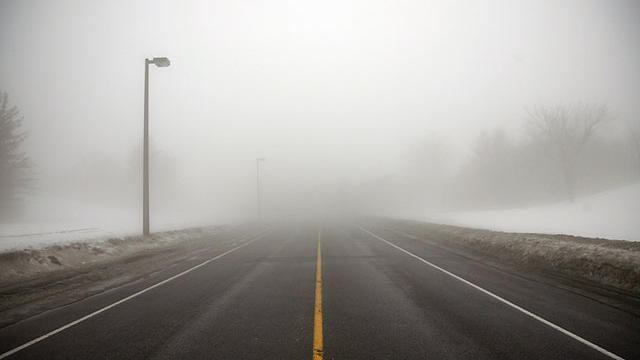
An air pollution health advisory is in effect for central and southern Minnesota. The Minnesota Pollution Control Agency says a combination of low clouds, fog and light southeasterly to easterly winds are combining Thursday to cause fine particle pollution to approach a level considered unhealthy.
The Minnesota Pollution Control Agency says it came up with a variety of creative approaches to the state's environmental challenges in 2015. The agency's "Swimmable, Fishable, Fixable?" report in April offered evidence about impaired water quality and its causes.
Gov. Mark Dayton kicked off visits to mining operations in other states Tuesday as he prepares to make a major mining decision in Minnesota. The state is considering whether to allow a mining company to open Minnesota's first copper-nickel operation. And it is a decision that is sparking controversy.
To some it's a lump of rock, but to others it's a sweet outdoor treat gone sadly sour. A group of enthusiasts plans to clean up piles of trash and other blights on parts of Sugar Loaf, an 80-foot rock that overlooks Winona.
A Robbinsdale lake is contaminated after a contractor accidentally released cement grout into a storm sewer Wednesday. Crystal city officials say the accident happened during work on a water main project on County Road 9.
Two members of Congress introduced legislation Tuesday that encourages states in the Great Lakes region to develop voluntary programs aimed at reducing farm pollution that causes harmful algae blooms.
The thick haze caused by smoke from more than 100 Canadian wildfires is causing unhealthy air quality conditions across a large part of Minnesota. The Minnesota Pollution Control Agency reports that the air quality is rated unhealthy for everyone from a large part of northwestern Minnesota, including Detroit Lakes, extending down to Brainerd and St. Cloud toward the Twin Cities suburbs.
Just two weeks after it was abolished by the Minnesota Legislature, an influential environmental citizen's board held its last meeting on Tuesday.
A shaky coalition of lawmakers that compiled a package of environmental and agricultural programs may not hold up in a coming special session, forcing Gov. Mark Dayton and legislative leaders to seek enough support for a final piece of the state budget Thursday and pause their hopes for a Friday special session.
Environmental groups are hoping to preserve a citizen oversight board at the state's pollution control agency, but it may be too late. Gov. Mark Dayton and top lawmakers worked Tuesday to put the finishing touches on a deal for the state's budget, including a retooled environment budget that Dayton previously vetoed.
Scientists specializing in the Great Lakes are going to be hearing about the challenge plastic pollution poses for the lakes during a conference at the University of Vermont.
Now that Minnesota lawmakers will be pulled back into action, the second-chance stampede is on. Groups with a gripe about the budget are trying to get in on the special session provoked by a promised veto of a $17 billion education spending plan, and some want Gov. Mark Dayton to veto other bills too.
In the town of Worthington, lake life is a part of the culture. "Whenever we poll the community about what the most important features are, what their proudest of in the community, Lake Okabena always comes in number one," Okabena Ocheda Watershed District's Dan Livdahl said.
President Barack Obama's proposed budget for 2016 seeks a $50 million cut in a multi-year program to clean up the Great Lakes. The president's spending plan released Monday requests $250 million for the Great Lakes Restoration Initiative, down from $300 million appropriated for this year.
State officials say a new report shows that Minnesota businesses lead the nation in reducing or eliminating dangerous pollutants from their work processes.
First it was tiny plastic beads, but now scientist are rising concerns about fibers from clothing polluting the Great Lakes. A recent study found polyester fleece sheds thousands of fibers when it's washed.
Scientists who have reported that the Great Lakes are awash in tiny bits of plastic are raising new alarms about a little-noticed form of the debris turning up in sampling nets: synthetic fibers from garments, cleaning cloths and other consumer products.
The southern half of Minnesota is under an air pollution advisory. Warmer temperatures, along with moisture and low winds, are causing fine particles to be trapped near the ground. The Minnesota Pollution Control Agency says it's unhealthy for people with respiratory health problems.
On Tuesday, California became the first state to ban single-use plastic bags like the ones used in Target and grocery stores across the country. The plastic bags will be phased out over the next two years, but people can still use them for vegetables and meats. Paper bags will cost 10 cents while reusable bags will be free to use.
The Minnesota Pollution Control Agency says more data analysis must be done to determine whether changes to the state's water quality standards are warranted to protect wild rice from sulfates.
The Minnesota Pollution Control Agency has issued an air pollution health alert for western Minnesota effective through noon on Friday. The agency says a strong temperature inversion, snow melt and fog are trapping fine-particle pollution near the surface, causing unhealthy levels for sensitive groups. An air pollution health advisory has also been issued for the southern half of Minnesota — including the Twin Cities and Rochester — beginning Thursday evening and extending into Friday morning. Fine-particle concentrations are expected to increase and may reach unhealthy levels for sensitive groups for short periods.
A government report says the U.S. Environmental Protection Agency should do more to make sure a Great Lakes cleanup program is meeting its goals. Congress has spent about $1.3 billion on the Great Lakes Restoration Initiative over the past four years.