Tim Walz delivers final State of the State as Minnesota governor. Read what he said.
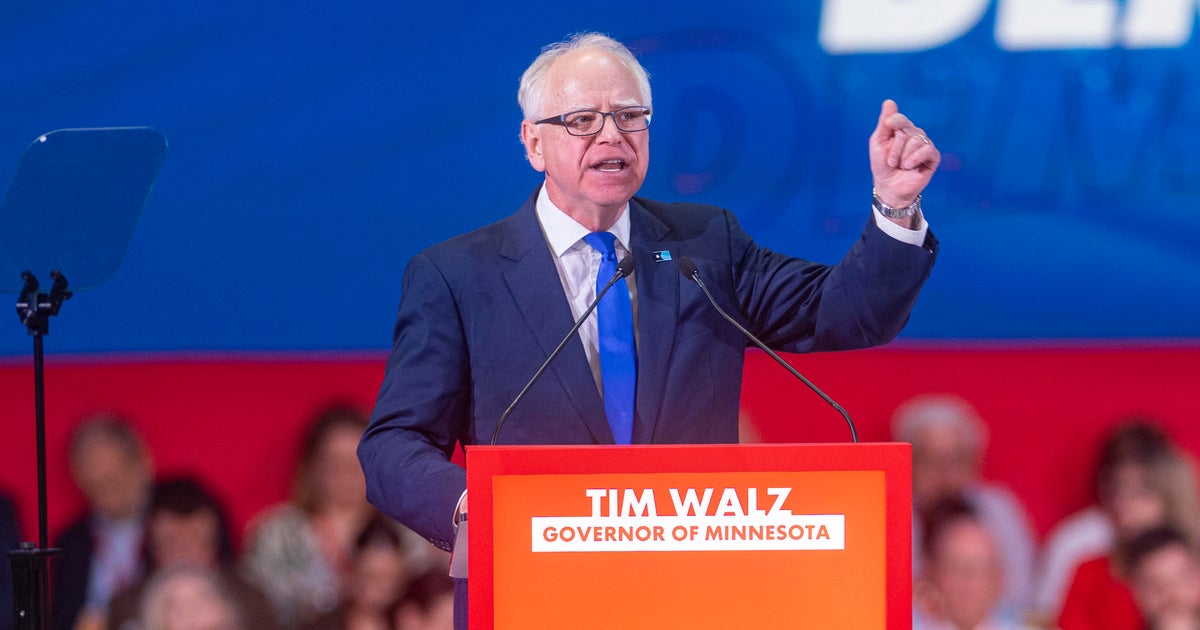
Minnesota Gov. Tim Walz delivered his final State of the State address on Tuesday, where he touted his administration's accomplishments, discussed the lingering impact of Operation Metro Surge and remembered those who lost their lives to gun violence.
Read the full address:
Good evening, my fellow Minnesotans, and thank you for tuning in. I'd like to start tonight by recognizing some of the distinguished Minnesotans joining us in the chamber this evening. Speaker Demuth is here, along with Leader Stephenson and members of the Minnesota House of Representatives. Senate President Champion is here, along with Majority Leader Murphy, Minority Leader Johnson, and members of the Minnesota Senate. We're joined tonight by members of the Minnesota Supreme Court, including Chief Justice Hudson, whom we wish all the best in her upcoming retirement.
I'd also like to recognize my fellow constitutional officers, as well as members of my staff, cabinet, administration, and our incredible state workforce. And I'd like to welcome our Tribal Leaders. . . Members of the Minnesota National Guard. . . Lieutenant Governor Peggy Flanagan and Minnesota's Second Gentleman Tom Weber. . . Minnesota's First Lady and the love of my life, Gwen Walz. . . And all of our other honored guests.
I also want to recognize someone who isn't here. Someone who should be here. Someone who has had a major role to play in every important achievement of the last seven years. Someone whose insight, whose energy, whose leadership we all miss so much. When Melissa and Mark Hortman were taken from us, we didn't just lose treasured friends. We lost the most consequential speaker in Minnesota's history—and the most talented legislator I've ever known. Mark and Melissa's children, Sophie and Colin, are here tonight, along with Colin's wife, Alina. You have shown such grace and courage over these last months. Minnesotans have their arms around you all.
I'd like to start tonight with a moment of silence to remember Melissa and Mark and their enormous contributions to the state we all love.
Thank you.
It's no secret that this has been an unimaginably difficult year for Minnesota. Our season of grief began last summer when we lost Melissa and Mark — and nearly lost John and Yvette and Hope Hoffman. We're deeply relieved and grateful to have John back with us. I hope you know, Senator, that you and Yvette and Hope have been surrounded by the prayers of an entire state — and that we will never forget your courage and grit.
Even as we struggled to process that sickening act of political violence, we suffered another grievous loss in the mass shooting at Annunciation Church in Minneapolis, where Fletcher Merkel and Harper Moyski were taken from us. Fletcher's mom and dad, Jesse and Mollie, are here tonight, along with the principal of Annunciation, Matt DeBoer and his wife Rose. Our hearts are still with the entire Annunciation community, especially with the families of those who suffered physical and psychological injuries on that horrible morning.
And then we experienced an unthinkable federal invasion of our state. For months, armed, lawless agents roamed our communities in a campaign of organized brutality. Families lived in fear. Children were separated from their parents, neighbors from neighbors. Minnesotans who had done nothing wrong were subjected to racial profiling and unlawful detentions. And for no reason at all, we lost two more of our neighbors: Renee Good and Alex Pretti. We gather tonight in the long shadow of all these tragic, transformative losses.
And yet, the state of our state remains strong. Indeed, over the last several months, the world has seen our strength — a strength that comes not from our politics, but from our people. For all the work we do here in St. Paul, the real work of moving our state forward is happening in communities across the state, as neighbors build and rebuild the bonds that hold us together in difficult times.
Tonight, I want to talk about what we've done here at the Capitol — and what we can continue to do— to support that work. But make no mistake: Minnesota is at its best when everyday people show up for one another — with compassion, with courage, with resilience.History may have its eye on our state—but we are writing our own story. That's been the case ever since I arrived here in St. Paul seven years ago. I had just come from twelve years serving in the United States House of Representatives, where discord and dysfunction were the rule. We were living through government by mean tweet. But we here in Minnesota, I argued in my first State of the State address, had an opportunity to do things differently. I wasn't naïve enough to think we'd agree on everything.
"One Minnesota" was never supposed to mean one point of view. But I believed that we could argue both passionately and in good faith. And I hoped that, even if we didn't share an ideology, we could share a vision of making Minnesota the nation's best place to raise a family — agreeing on the "what" if not the "how." "We've never feared the future," I said that evening. "We create the future."
But none of us could have predicted the future that lay in store for our state. Nobody knew then that we would be hit with a global pandemic, one that would claim the lives of more than 17,000 Minnesotans and throw our entire economy — our entire way of life — into chaos. Nobody knew then that we would face a national reckoning with racial injustice and police abuse, one whose epicenter would be located specifically at the corner of 38th and Chicago in South Minneapolis.
And if anybody knew then that I would wind up as a candidate for vice president of the United States, well, Gwen and I would have appreciated a heads-up. It's been a complicated seven years. But when I look back at the story we've written together, I'm deeply proud of Minnesota. There is, I believe, no better place in America to raise a child. And, not to sound like your parents, but there's never been a better time to start a family in Minnesota than right now.
For starters, our schools have never been in better shape — as evidenced by our record-high graduation rates. I've had the privilege of signing into law the most consequential education budgets in our state's history. From cradle to career, we're preparing our kids for life in the 21st century better than anyone else. We've invested more than $1 billion in childcare and early learning opportunities. We've added thousands of new pre-K seats. Made significant investments to improve child literacy. Expanded access to mental health resources for students at every level. Made college free for students with a family income under $80,000. And invested millions in workforce development to connect Minnesotans of every age with high-growth, high-demand career fields like manufacturing, education, and public safety.
Meanwhile, our nation-leading child tax credit is cutting child poverty in Minnesota by up to one-third. And because we instituted free breakfast and lunch in our public schools, we can say we're a state where no student goes hungry — in Minnesota, we feed our kids. During the first two years of the Minnesota Free School Meals Program, schools served more than 300 million free meals, saving Minnesota families an average of $1,000 per student per year. And we're not done. Not by a long shot.
Anyone who's been a new parent knows that you walk around with a laundry list of worries. And near the top of that list is the cost of childcare. That cost has skyrocketed in recent years, and it's squeezing families in a way they can't afford. Let's do something about it. Tonight, I'm proposing a significant expansion of the Dependent Care Tax Credit for more than 100,000 families with young and school-aged kids — lowering the cost of child care by up to $3,000 for families with one child, and $6,000 for families with two or more kids under five.
Simply put, I think parents have enough to worry about. And there's not much we can do here in St. Paul to help with teething or potty training. But we can take this one big thing off parents' plates. So let's come together and get it done.
Of course, even if you aren't the parent of a young child, odds are you're watching your budget more carefully than ever these days. The cost of everything — from groceries to gas to housing — is simply too high. And while there's only so much we here in St. Paul can do about the bad economic policies coming from D.C., we can do a lot to give Minnesotans some more breathing room. I'm proud to say that I've cut taxes in nearly every single budget I've proposed and signed. We've delivered rebate checks of up to $1,300, putting money directly into the pockets of students, seniors, workers, and middle-class families.
We've also lowered taxes for small businesses, and made Social Security tax-exempt for more than three quarters of our seniors. Meanwhile, we've invested $1 billion in housing — a historic investment in making housing more affordable and our economic foundation more secure in communities across the state. We've taken on medical debt — preventing it from impacting credit scores, stopping medical providers from denying care due to old unpaid bills, and eliminating automatic transfers of medical debt to a patient's spouse. We've attacked the junk fees that hide in the fine print — and cracked down on everyday annoyances like fraudulent ticket sales. And we've taken action to significantly lower the cost of prescription drugs and insulin. But we're not done. Not by a long shot.
This year, I'm proposing to cut the statewide sales tax for the first time in Minnesota history — because we could all use a little relief at the checkout counter. My budget also includes $33 million for permanent supportive housing to make sure that everyone has a safe place to live, and $34 million to help first-time homebuyers afford a down payment so everyone has a shot at living the American Dream.
And even as our collective psyche is recovering from the after-effects of Operation Metro Surge, we can take decisive action to help our economy recover, as well. My budget prioritizes resources to help our families and businesses get back on track — including $10 million in partially-forgivable loans for businesses that lost significant revenue during the occupation, as well as rental support for more than 9,000 Minnesota households through the Family Homelessness Prevention and Assistance Program.
I'm proud that we've been able to invest so much in our schools and in housing even as we cut taxes nearly every year — and, thanks to the work we did last year, maintained a fiscally responsible budget. But we've also made the largest investments in infrastructure Minnesota has ever seen. Right now, well-paid union workers are busy rebuilding our roads and bridges, repairing our fire stations and water treatment plants, upgrading veterans' homes and fish hatcheries and flood mitigation systems, and removing and replacing lead pipes all across our state.
We've also worked together to get Minnesota on a path to 100 percent clean energy by 2040 while creating green jobs in every corner of the state. And I've had the privilege of signing into law more than 40 different climate initiatives, including expanding our electric vehicle infrastructure, making our homes and buildings more resilient and efficient, and cutting red tape for clean energy projects. We also banned so-called "forever chemicals," which makes us all healthier. But we're not done. Not by a long shot.
This session, I'm asking you to pass a bonding bill — an additional $907 million investment in our state's infrastructure that will support the public safety, clean water, safe transportation, and affordable housing we need to keep our state strong and our people thriving. I'm asking you to join me in supporting Sustainable Aviation Fuel — a way we can support businesses doing the right thing – growing our ag economy and creating a cleaner future.
And I'm asking you to join me in getting our state ready for the economy of the future. I don't want Silicon Valley deciding how artificial intelligence and other new technologies will impact our small towns and working families. I don't want technocrats like Peter Thiel and Sam Altman and — yeah— J.D. Vance determining who wins and who loses. Nobody doubts that the rise of AI is good news for tech companies, who are making record profits.
But as industries, business practices, and jobs are transformed by innovation, we need to take bold steps to protect and prepare workers for what's coming. That's why I'm proposing a social media tax — not on users, but on the big tech companies making billions off of our data. I want to use that revenue for workforce development initiatives designed to get Minnesotans ready for the age of AI and other emerging technologies. I'm also proposing the establishment of a new Governor's Council on the future AI economy that would help guide us on how to invest funds to keep Minnesota a leader in innovation while making sure the benefits go to everyday people and not just CEOs.
Together, we've made Minnesota one of the most economically secure, prosperous, forward-thinking states in the nation. Just look at the rankings. Whether it's quality of life, or transportation, or health care, you'll find us near the very top. We aren't just the best place in America to raise a family — we're one of the best places to start a business, to find a job, to retire in comfort and dignity. And while they don't have rankings for this sort of thing, I think we've also made Minnesota one of the freest places in America.
Reproductive freedom is under attack in states across the country — but here in Minnesota, it's an ironclad right. Our trans friends are facing an all-out assault on their right to exist—but here in Minnesota, we've instituted protections, including the right to gender-affirming care, because we are a place where everyone belongs. Conservative activists are pushing anti-LGBTQ ideology everywhere they can — but they've hit a brick wall here in Minnesota, where we've put a stop to conversion therapy and book bans that deny kids the right to free expression.
People of color are facing an attack on their right to vote as the U.S. Supreme Court takes aim at the Voting Rights Act — but here in Minnesota, we've passed a VRA of our own — prohibiting standards that would deny or limit any citizen's right to vote based on their race, color or language.
Meanwhile, we've protected everyone's right to participate in our democracy by making it easier than ever to vote. We've established automatic voter registration. We've created a permanent absentee voter status. We've pre-registered 16- and 17-year-olds to vote. We've restored the franchise to more than 55,000 previously incarcerated Minnesotans who have paid their debt to society. We aren't just a place where everyone is welcome; we're a place where everyone's voice counts.
That's not all. We've also legalized adult-use cannabis and expunged nonviolent cannabis convictions. We've dramatically improved tribal relations and restored the Upper Sioux Agency State Park to its rightful owners after 161 years. We've taken new action to protect tenants' rights. And we've expanded the freedom of workers to balance career and family: ensuring paid sick days, banning non-compete agreements, and increasing protections for workers in Amazon warehouses, construction sites, hospitals, nursing homes, and public schools — and, of course, establishing paid leave. Since Paid Leave officially launched on January 1, we've approved more than 54,000 applications for people to take time — to bond with a new child, to take care of a family member, to serve their community.
But we're not done. Not by a long shot. After all, freedom doesn't just mean freedom from government oppression or corporate abuse. It means freedom from fear. And in addition to the immense heartbreak and loss gun violence has inflicted upon our state, especially on communities of color, the fact is that too many of us have to live in fear that we'll be next.
We've already taken action to protect our communities from gun violence: signing bills establishing a red flag law, expanding background checks, increasing criminal penalties for straw purchasing guns, and passing legislation to ban deadly binary trigger guns — which we need to reestablish this year. And in December, l became the first governor in Minnesota history to take executive action focused on gun violence prevention — by creating the Statewide Safety Council and directing our agencies to take new steps to keep Minnesotans safe. This year, I want to build on those measures.
Some of you might say we can't do more to stop gun violence. But what you really mean is that you won't do more. Because the truth is, we've beaten the NRA before. And we can do it again to keep our communities safer. We can — we must — ban weapons of war and high-capacity magazines that have no place on our streets and no legitimate function for gun owners. We can — we must — require gun owners to do what responsible gun owners are already doing: storing their weapons safely and reporting them when lost or stolen. We can — we must — implement a firearm insurance requirement and a firearm and ammunition tax. We can — we must — close the ghost gun loophole. And we can — we must — expand our toolbelt of early intervention resources, especially at schools.
I take public safety extremely seriously. That's why we've banned the use of hand-held cell phones while driving and raised the age to purchase tobacco to 21, why we've provided hundreds of millions for public safety needs across the state to combat crime, why we've increased funding for victims of crime, why we've transformed the prison system, why we've broken ground on a new, centralized Minnesota State Patrol headquarters. Let this be the year we act to prevent more gun-related tragedies here in our state.
Minnesota is consistently ranked as one of the best states to live in because we invest in programs that support children, parents, seniors, and people with disabilities. But, as we've seen in recent months — and just today — the more generous your support system, the more oversight you need to make sure people aren't taking unfair advantage.
When I announced earlier this year that I wouldn't be running for a third term, I promised that I would devote my energies to fighting fraud in our state's human services programs. Tonight, I want to update you on our progress. And I want to ask for your help in taking the next step.
In February, I introduced a comprehensive anti-fraud package and began to implement a nine-part fraud prevention roadmap developed by Director of Program Integrity Tim O'Malley. We've created additional checks and balances. We have brought on more investigators, more auditors, and more law enforcement agencies, as well as an outside firm to look at high-risk programs. People who have ripped us off are getting caught. And they are going to jail.
I've said the buck stops with me. And I know some of you will take that as an open invitation to play politics with every incident of fraud that takes place here in Minnesota, even though far more is happening in red states across the country. So be it. But taking responsibility doesn't just mean taking the blame. It means taking it upon yourself to fix the problem. And when it comes to the next step in fixing this problem, the legislature has a role to play.
I've proposed a legislative package that strengthens detection and oversight, using sophisticated analytics to identify suspicious activity more quickly and expanding our capacity to ensure funds are properly spent and misused dollars recovered. My bill also increases criminal penalties for defrauding taxpayers, and establishes a centralized office to lead our statewide fraud prevention efforts.
Meanwhile, I've rolled out a proposal to transform our entire human services system — a major structural overhaul of the way we administer these programs. I want to move us away from the complex, layered administration managed by a patchwork of counties, Managed Care Organizations, and state agencies and towards a model where a single, centralized agency has control of the money before it goes out the door. My proposal would also modernize Medicaid administration, consolidate administrative functions, and initiate independent reviews to strengthen program integrity and improve how services are delivered to Minnesotans.
My ask for you tonight is simple: If you take fraud seriously, take your responsibility to help me stop it seriously. If you talk about oversight, vote for oversight. Act on these measures immediately. Send them to my desk so I can sign them into law. And let's make sure our programs remain strong, accountable, and effective for Minnesotans who rely on them.
For seven years now, we've been writing a story. And the proposals I've made tonight represent the beginning of our last chapter working together. I'm hopeful that this chapter will be as productive as the previous seven — in fact, I'm insistent that it will. I still have eight months left in this job, and I intend to use every hour of every day to make as much progress as I can. This is not goodbye, my friends.
That said, this is my last State of the State address. Next year, someone else will be giving this speech — someone who, I'll just note, will inherit a state in tremendous fiscal condition with a AAA bond rating. But, for now, I will just say that it has been the honor of a lifetime to serve as Minnesota's 41st governor. And it's been a particular privilege to sit in this chair during such a pivotal moment in our history. I will never forget the way the people of this state showed up for each other during this consequential time. And I don't think anyone should be allowed to forget it.
That's why, recently, I signed an executive order establishing a Governor's Council to document the impact of Operation Metro Surge — not just the trauma, but the redemptive stories of Minnesotans who came together to support one another and advocate peacefully for their neighbors. Tonight, I'll just share one of those stories I read on social media. It comes from a Minnesotan I've never met. He calls himself Norm, although I don't think that's his real name, and he usually posts about sports. But he's also been working in his community to help families who had loved ones abducted during the occupation of Minnesota, raising funds online to help those families stay in their homes despite the loss of their breadwinners.
Last week, ICE released one such person from a facility in South Texas. That was the good news. The bad news was that he was released without any cash, or any ID, or any way to get home. Norm spent all day trying to figure out how to send this total stranger money for a bus ticket, but realized that getting home via Greyhound would take forever. So, eventually, he decided to take matters into his own hands. He bought a ticket on the night's last flight to Austin, rented a car, and drove an hour in the rain to pick up his fellow Minnesotan near midnight outside a gas station in some random town in Texas. They stayed overnight in a hotel, and in the morning, Norm took his new friend to Walmart to buy clean clothes and bought a round of breakfast tacos before flying him back to Minnesota so he could reunite with his family, including his new baby. "On the drive home," Norm wrote online, "he said he'd gotten taken in winter and now it was summer."
Every year around this time, Minnesotans watch the last of the snow melting and realize that brighter days are right around the corner. There will be Twins baseball, maybe even good Twins baseball, to build on a great Lynx season. Fishing on the lake. The State Fair. Summer is coming. This winter has been particularly cold and bitter for so many of our neighbors. But we are ready to move beyond our season of grief.
We will never forget those we have lost. But neither will we forget what we have found to be true about ourselves and our neighbors — that we are strong, that we are resilient, that we are generous, that we are compassionate, that we are in this together. Our work here in St. Paul is simply to make our state a place worthy of the incredible people who live here. For seven years, we've been doing that together. We have one more chance to do it again. Let's get to work.
Thank you.