Minnesota has goal of replacing lead lines by 2033. More funding is needed to stay on track
A Biden-era federal mandate, which the Trump administration plans to follow through on, compels states to replace lead service lines by 2037. Not to be outdone, Minnesota adopted a more ambitious timeline to remove all pipes with the toxic metal linked to a host of health risks.
"We took it seriously," said Elizabeth Wefel, a lobbyist with the Coalition of Greater Minnesota Cities.
Minnesota's seriousness has measured out to $243 million in allocations by the Legislature for lead line replacement since 2023. About $350 million in federal funding through Biden's bipartisan Infrastructure Investment and Jobs Act is further buoying the effort.
But both wells, so to speak, are running dry. State or federal funding won't last beyond 2027 unless further action is taken.
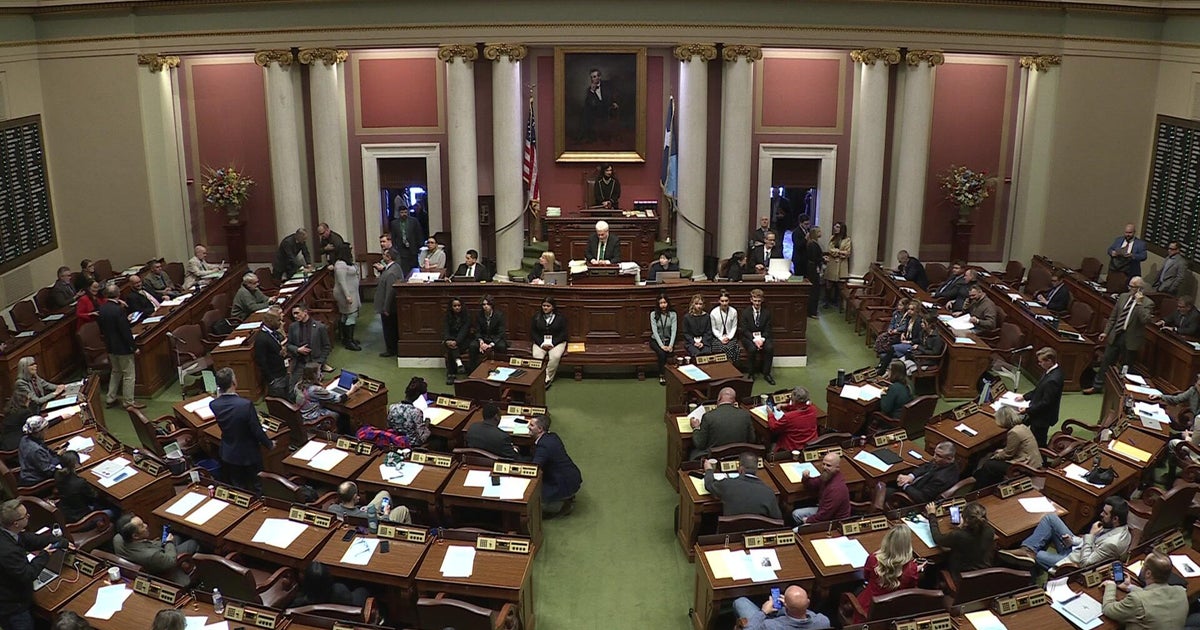
That's why the Coalition of Greater Minnesota Cities, as part of a group informally known as the lead pipes coalition, is advocating for $250 million in lead line replacement funding from the Legislature this session.
"The program would just fall off a cliff without continuing investment in it," Wefel said. "We've got programs that are set up or getting set up and we need to continue that momentum."
Lining up for lead line replacement
Service lines are the connecting pipes bringing drinking water from water mains to properties. Lead was once a commonly used metal for the piping.
Although Congress banned lead usage in 1986, lead lines remain in the ground all over Minnesota. There are upward of 87,000 known lines in need of replacement, according to the coalition.
The number is almost assuredly higher, as thousands of lines still haven't been identified. For the lines that have been identified, the University of Minnesota and the Minnesota Department of Health developed a searchable map for users to find them.
Along with the identification and mapping of lead lines, Minnesota's strategy to meet the 2033 goal included the creation of the Lead Service Line Replacement Program. Administered in tandem by the Department of Health and the Public Facilities Authority, this program allocates funding to cities.
Like other water infrastructure projects, it would be incredibly difficult for cities to pay for this work without outside aid. The cost to replace at least 317 lead lines in New Ulm, for example, would range from $12,000 to $25,000 each, according to Mayor Kathleen Backer.
"Our local residents or property owners aren't able to take on that burden of replacement of the lead lines," she said during a Coalition of Greater Minnesota Cities press conference in February.
New Ulm is among the many cities tapping state or federal funds to replace lead lines in Greater Minnesota or the Twin Cities metro area. In Moorhead, the money is needed to keep its decade-long replacement project on track, said Marc Pritchard, the city's water plant manager.
"The state funding is absolutely crucial for success," he said. "For other cities within Minnesota that have a lot higher percentage of lead services lines, they'd be in a tough spot too."
His city's lead line percentage is about 2%. While not too high, it still amounts to about 20 to 30 replacements per year spaced out over a decade. In comparison, about 18% of St. Paul Regional Water Services' properties had lead lines. The utility set a goal to replace 2,100 lines in 2026 alone.
Duluth may have the biggest undertaking in Greater Minnesota. Mayor Roger Reinert quoted more than 7,000 lines still in need of replacement in his city in a post celebrating Duluth's $63 million from the Public Facilities Authority last year.
Keeping up with the cost
All in all this year, the Public Facilities Authority tallied 221 projects requesting $428 million in lead line replacement funding, according to a report submitted to the Legislature. The agency estimated the total cost to replace all lead service lines would be $1.5 billion.
Covering these costs is somewhat complicated, at least in comparison to other water infrastructure projects. When a city needs to upgrade a filtration system or wastewater plant, to give two examples of public utilities, it typically can place its hopes in a bonding bill. They generally can't do the same for lead line replacements.
The reason for this is many lead lines run under private property, whereas a wastewater plant or other public utility infrastructure tends to be on public land. It's not uncommon for a service line to be publicly owned from a water main to a curb, and privately owned from the curb to the household. Since replacing the line would require construction on private property, general obligation bonds aren't an option for funding.
So the funding instead comes through federal or state appropriations, loan or grant programs and other options. From the federal government, the Department of Health is anticipating funding to cover the 2027 construction season. That funding alone won't go far in meeting the needs, however, said Corey Mathisen, the department's Lead Service Line Replacement Program manager.
Gov. Tim Walz's budget proposal set aside $7 million in general funds directly to the lead line replacement program. The Coalition of Greater Minnesota Cities and its partners in the lead pipes coalition are aiming considerably higher with a push for $250 million.
The state had to start capping awards to cities last year because there wasn't enough money to go around, Wefel said, so a big influx to meet needs would help make up for it.
"The thing with a lead line replacement is once we get it done, it's done," she said. "And I think it's going to be in Minnesota's best interest to continue to get ahead of other states by making the investments in that program."
Nels Paulsen of Conservation Minnesota, another group in the coalition, said timing is of the essence to secure this funding. Cities need time to plan for 2027 projects and can't do so if they don't know if there will be funding available.
"If we don't get funding in the 2026 legislative session, it's going to be a challenge to have a significant construction season," he said.
In a challenging year to get legislation passed, he said lead line replacement work has an advantage in having a clear beginning, middle and end. There isn't a forever need for funding in this case.
"If we can bite out chunks of a couple hundred million at a time it's going to help us keep moving on down the road toward this finish line," Paulsen said.
Renewed funding would certainly be welcome news for Moorhead's efforts, Pritchard said.
"Whenever I get a chance to thank the people who got the funding started, I do, and I tell them to keep it rolling if at all possible," he said.