Minnesota DNR logs 202 fish kill reports as heat wave pushes lake temps to 88 degrees

The effects of Minnesota's prolonged heat wave are becoming impossible to miss with several reports of fish kills.
Along the shoreline of Peltier Lake in Centerville, hundreds of dead fish — mostly northern pike, along with a few bluegill and largemouth bass — are washing up after 10 days of 90-plus-degree temperatures. In northern Wisconsin's Lake Namakagon, dead muskies are surfacing.
Crews with the Minnesota Department of Natural Resources are measuring lake conditions after numerous fish kills.
"Temperature is 31 degrees Celsius," said a DNR biologist.
That works out to about 88 degrees Fahrenheit, a water temperature considered a chronic stress level for fish.
"Today, we're at 202 reports covering 99 water bodies across the state. A huge pulse of these has really been just in the last week," said Dr. Isaiah Tolo, fish health supervisor for the Minnesota DNR.
Warm water holds less oxygen, making it harder for fish to survive.
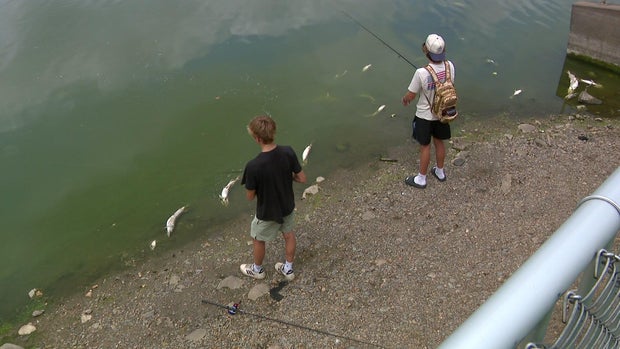
"I think we're looking at a bunch of shiners. I can't tell if they're here eating or if they're here because they're stressed," Tolo said.
Larger fish like northern pike and muskies are especially vulnerable.
"This water is pea-soup green. There's algae and other bacteria in this water that are using up oxygen. And as the water gets warmer, the amount of oxygen that can actually be present in that water is going to be lower," Tolo said.
Fishing guide Chris Griffin of West Tonka Guide Service says that's why he's putting musky trips on hold.
"This year is by far the warmest I've seen on [Lake] Minnetonka. I had 91.1 degrees last Thursday, averages in that 85-ish range," Griffin said.
He's waiting for cooler water to before letting clients chase them again.
"I won't book them for muskies until the fall," Griffin said.
And he's hoping other anglers will show the same restraint until conditions improve.
The DNR is also urging people to avoid wading in areas where large numbers of fish have died. It says decomposing fish can harbor bacteria that can post health risks.


