Family sues Twin Cities recycling plant over children's blood lead levels | WCCO Investigates

A Twin Cities family whose young kids were exposed to lead is now suing the father's former employer.
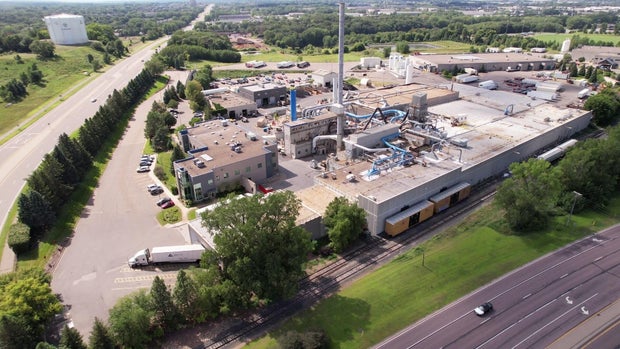
The lawsuits filed on behalf of siblings allege Gopher Resource in Eagan, Minnesota, failed to prevent lead from migrating off its property, harming kids of workers. It alleges the exposure cost the kids a normal life
Arlandis Dozier says he worked at Gopher Resource, a lead battery recycling plant, for about three years.
"I received all sludge, mud, dust, and I go in a room, contamination room, where I dump everything," Dozier said. "They call it one of the dirtiest places in the plant."
Dozier says he was careful, following procedures around lead and other hazardous material. The engaged couple says it floored them to learn his work could be impacting their kid's health.
It was 2024 when they say a routine test found their now 4-year-old Bryan had elevated blood lead levels.
"He can get upset by the smallest things," Dozier said.
"He has crash-out moments where, just hiding emotions and can't calm him down," said mom Tiffany Withers.
At his highest, Bryan registered at 10.4 micrograms per deciliter, while his younger sister, Taliyah, measured 17.6 mcg/dL.
"My daughter, she bites her hair, bites her nails, you know. She has worse tantrums than him," Dozier said.
The levels — at roughly three- and five-times the state threshold — triggered a lead risk assessment by the Minnesota Department of Health.
According to documents provided to WCCO Investigates by their attorney, the health department ruled out environmental sources. Their dads' personal belongings, like his work shoes and cellphone, tested positive for lead.
"Shoes. I leave them by the door. Kids, you know, they go by the door. Play. I was sad, scared, angry," Dozier said.
According to documents obtained by WCCO, around the same time as the BLL tests, MN OSHA cited Gopher for a serious violation and fined the company for hygiene and housekeeping practices which were "not adequate to prevent lead from leaving the facility." Gopher Resource contested it, and according to a settlement agreement, paid a reduced fine and did not admit fault.
"We feel like it's our job as parents to protect our babies, and we felt like we had failed them," Withers said. "We shouldn't have to feel like we have to choose between providing for our family and the safety of our kids."
MDH says there is no safe level of lead exposure in kids. It calls it dangerous and says lead impacts learning and behavior.
Elevated blood lead levels in children are 3.5 micrograms per deciliter The parents say they have concerns for their kid's long-term health.
"What health issues have we not seen yet? We don't know what's to come, and will these health issues continue? Will they ever get better?" Withers said.
The lawsuits filed on behalf of their children accuse Gopher Resource of failing to take measures to prevent the escape of lead, intentionally failing to provide a safe work environment, adequate protective equipment and hygiene methods to prevent exposure. The suit also alleges the exposure caused "physical, emotional, and mental injuries."
"They have people working for them, and they need to take accountability of their past actions and prevent this from happening in the future," Withers said.
Gopher Resource provided the following statement to WCCO Investigates:
"For 80 years, our mission has been to provide critical environmental services that enable the safe recycling of batteries and recovery of critical metals. At our Eagan facility, that mission is carried out by more than 350 highly skilled and dedicated employees who share a commitment to protecting people, communities and the environment.
Company-wide, we invest more than $19 million annually in environmental, health and safety programs, including extensive employee training, protective equipment, hygiene practices and other safeguards designed to minimize exposure. Matters involving health and safety are deeply personal to us, and we take these concerns seriously.
We have carefully reviewed the allegations raised in these lawsuits, which mirror the claims that have already been filed in the court-approved adjudication process agreed to by the individual's legal counsel.
While we respect their right to pursue their claims, we remain steadfast in our position that the allegations against Gopher Resource are without merit and that these lawsuits are legally and factually flawed."
The health department gave this statement to WCCO Investigates:
"MDH has been investigating take-home lead exposure from the Gopher Resource facility in Eagan since September 2024. Gopher Resource has been responsive and cooperative throughout that process. MDH's primary role in these situations is to help the facility establish a plan and processes to prevent future take-home lead exposures. Through this work, MDH also works with the facility to provide the necessary information and resources to share with employees and their families about the human health risks of lead and steps they should take. Once the investigation is concluded, additional information about the outcomes of the investigation can be shared.
In addition, MDH, alongside MPCA, has met regularly with community members to offer information and resources about lead related to air emissions, such as blood lead level testing options and offering soil screening through our soilSHOP program. MDH is committed to continuing this work to help prevent future exposures to lead and help communities better understand the human health risks where they exist."
The last time WCCO reported on a plant with lead migration, the health department declared the company a public health nuisance and temporarily shut the plant down. It went to the courts, and the public was allowed to be in the know every step of the way. However, a spokesperson says that delayed interventions.
Here's what MDH shared about changes made since then:
"Before Minnesota's Lead Poisoning Prevention Act was updated in 2021, requirements for MDH and local health departments with lead assessment programs to be able to do an investigation related to take-home lead included:
- Children with confirmed blood lead levels of 15 mcg/dL or higher received environmental investigations to determine the source of lead exposure.
- "Child" was defined as those younger than 6 years.
- Pregnant people with a blood lead level of 10 mcg/dL received an environmental investigation.
During this time, MDH shared blood lead levels of 5 mcg/dL or higher for pregnant people and children younger than 6 years old with local public health agencies to provide education and outreach. Also at that time, agencies could choose to provide environmental investigations for children with blood lead levels of 5 to 14.9 mcg/dL.
MDH recognized that these thresholds meant that there were gaps where vulnerable groups, like children and pregnant people, were exposed to lead but did not qualify for an environmental investigation. This meant that they may not receive individualized information or intervention as quickly as necessary to prevent ongoing lead exposure. Additionally, MDH only had the authority to order lead remediation for lead hazards that came from the building itself (e.g., peeling paint on windows), but we could not require changes to business practices that caused take-home lead.
Once an environmental investigation was completed, if MDH determined that the source of the lead was take-home lead, the agency didn't necessarily have the authority to require the entity to address the issue. Our main way to intervene was educating household members about actions they could take when returning from work, but that didn't address the source. When interventions were needed, MDH had to declare a public health nuisance through the courts. To do this, MDH had to show justification for many children being exposed to lead, which meant interventions were not happening quickly to mitigate and prevent other exposures to lead from the facility.
After seeing the challenges this posed to our public health response to take-home lead, MDH began to pursue updating the Lead Poisoning Prevention Act. Staff started by looking at what other states did so that we could potentially model our updates on existing legislation. However, the team found no other examples of existing legislation that addressed take-home lead. MDH moved ahead with pursuing an update to the legislation. In 2021, the Minnesota Legislature amended the Lead Poisoning Prevention Act, adding authority for MDH and other assessing agencies in the state.
Here's what changed with the updated legislation:
- Lead risk assessments are now required within 20 business days if we are notified of a child or pregnant person having a blood lead level of 5 mg/dL or higher (used to be the 15 mcg/dL for children and 10 mcg/dL for pregnant people).
- The definition of a child was updated to include anyone under the age of 18 years (where it used to be children younger than 6 years).
- MDH now has direct authority to require an entity determined to be the source of take-home lead exposure to fix the issues (MDH does not have to go to the courts to intervene).


