Jury acquits man accused of putting bounty on Border Patrol Cmdr. Greg Bovino
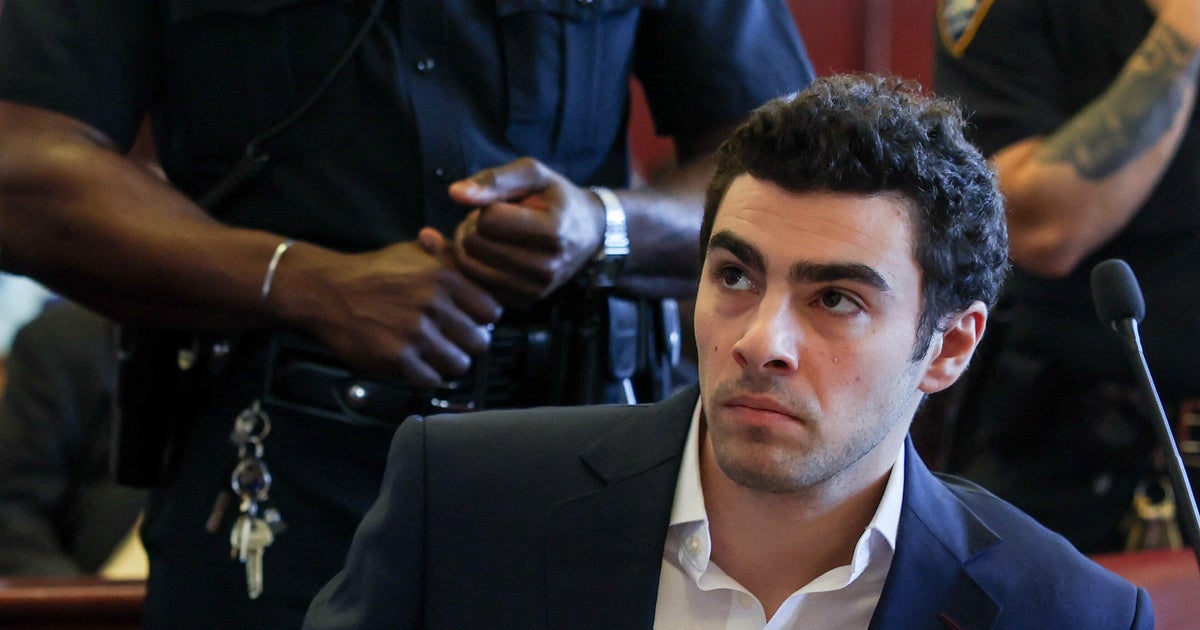
A Little Village man was acquitted Thursday on federal charges accusing him of trying to put a hit on U.S. Customs and Border Protection Cmdr. Gregory Bovino.
After deliberating approximately three hours, jurors found Juan Espinoza Martinez not guilty of one count of solicitation of murder for hire. Jurors heard less than a day of testimony on Wednesday before prosecutors and defense attorneys presented closing arguments on Thursday.
It was the first trial tied to the federal government's Operation Midway Blitz.
Federal prosecutors had accused Martinez of being a high-ranking member of the Latin Kings street gang, but never presented any evidence of his gang ties in court, prompting the judge hearing the case to bar any testimony that Martinez had ties to a gang.
Martinez's attorneys have denied that he has any gang ties, and said he has no criminal history whatsoever.
Federal prosecutors accused Martinez of offering a $10,000 bounty on Bovino, who was the face of the Trump administration's immigration enforcement effort in the Chicago area last year.
At trial, Martinez's brother, Oscar Espinoza, testified that he thought Snapchat messages about money for a hit on Bovino were a joke — even telling the defendant that nobody would think the numbers were real.
But the prosecution's star witness — Adrian Jimenez, 44 — forwarded photos of the Snapchat messages to agents from the U.S. Department of Homeland Security.
Jimenez, who has his own felony record, has worked as police informant since the mid-1990s, when he would have been a teenager.
Prosecutors have said messages Martinez sent to Jimenez offered $2,000 for information on Bovino, and $10,000 for his murder.
CBS News Chicago Legal Analyst Irv Miller said Jimenez's own criminal record may have weighed on jurors.
"Somebody's who's a convicted felon — I think most jurors would think say, 'Hey, do I want to trust him? Do I want to believe him, somebody's who's doing this for money and not to be a good citizen?" said Miller. "Well, some jurors would have a problem with that. Some jurors wouldn't."
Assistant U.S. Attorney Jason Yonan said in closing arguments Thursday that claims that Martinez's alleged threat wasn't serious don't hold up.
"2k for information when they catch him. 10 k if you take him down. L-K — Latin Kings — on him. Those were the defendant's words that he typed on his phone, that he sent to his friend Adrian Jimenez," said Yonan. "Those words do not indicate this was a joke. Those words do not indicate this an FYI. Those words do not indicate some sort of a misunderstanding, and those words are not some kind of neighborhood gossip."
Yonan argued that there was evidence of intent and the use of interstate commerce to plot a murder for hire.
"He was fixated and obsessed with Gregory Bovino," Yonan said. "You want to know this is real. He's telling you it's real: 's*** serious.'"
Defense attorney Dena Singer of the firm Bedi & Singer LLP argued that there was no evidence to claim that Martinez was seriously plotting a murder for hire.
"ICE raids had escalated, people were being deported, people were being taken off the street. Was it upsetting? Of course it was. It was upsetting to Juan. It was upsetting to a lot of people. Being upset about ICE raids, about people being deported, is not murder for hire," Singer said. "You can be upset about that, and not intend for people to be killed. The government wants you to use this information to say, 'Well, he was upset, he must have wanted Bovino to be killed.'"
Singer also said Jimenez is physically disabled and couldn't get out of a chair without help, and claimed that this made it unrealistic that Martinez could really have been seriously trying to hire him to commit a murder. Singer also said there was no follow-up to Martinez's Snapchat message.
The Snapchat at the center of the case, Singer said, amounted only to "words on a keyboard from a 37-year-old construction worker who comes home, drinks some beers, scrolls on his phone, and sends them out."
"The defense wanted the jury to know, 'Hey, this doesn't make a lot of sense.' And when something doesn't make a lot of sense, that means the government hasn't proven the case beyond a reasonable doubt. That's the issue, and I think that was highlighted by the defense, and I think maybe that is a crucial factor in their deliberations," CBS News Chicago Legal Analyst Irv Miller said.
Miller said Martinez's acquittal could have some impact on the wider conversation about immigration enforcement, and could undermine public trust in the federal government and affect federal prosecutors' credibility with judges hearing their cases.
While he's been cleared of criminal charges, Martinez is not a U.S. citizen, and it's unclear if he could face any deportation attempt.