Aid from South Florida continues flowing into Venezuela as families search for loved ones after earthquakes
As donations continue pouring into South Florida for victims of the devastating earthquakes in Venezuela, many are asking whether the aid is actually reaching those in need.
Michael Capponi, founder and president of the Global Empowerment Mission (GEM), says the answer is yes.
"There's been a lot of concern about how the Venezuelan government is taking the aid," Capponi told CBS News Miami from Caracas, where he traveled to personally oversee relief efforts.
Capponi said the organization is distributing the donations directly.
"I can assure you the aid that we are collecting is being distributed by ourselves," he said. "Look at our Instagram at Michael Capponi or at Global Empowerment, and you will see lines of thousands of people receiving the aid."
On Wednesday night, pallets of supplies collected at a warehouse in Doral were loaded onto a third Amerijet cargo plane at Miami International Airport bound for Venezuela. The supplies are intended for survivors of the earthquakes that struck the coastal state of La Guaira, about 19 miles northwest of Caracas.
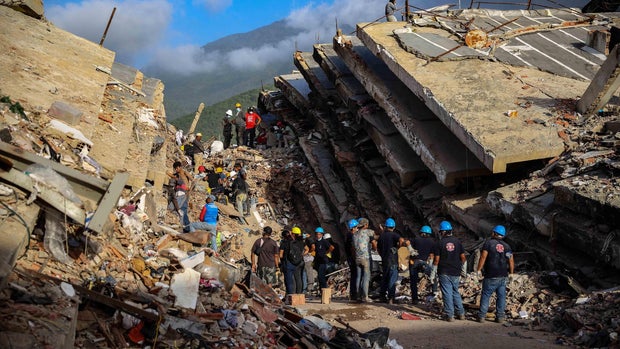
Meanwhile, in Venezuela, rescue efforts continue one week after the disaster. A team from Miami-Dade Fire Rescue remains on the ground, using specially trained search dogs to comb through the rubble in hopes of finding survivors.
In other areas of the country, residents continue digging through debris by hand. Although authorities acknowledge that the window for finding survivors has likely closed, recovery efforts are still underway.
Back in South Florida, volunteers at "Nacion de Fe" – a Christian church in northwest Miami-Dade – continue collecting and packing supplies for victims. For many Venezuelan-Americans, helping is also a way of coping with the anguish of not knowing the fate of loved ones.
Among them is Marian Volcanes, who said she and her family spent two agonizing days without hearing from her younger sister, 29-year-old pediatrician Alvinith Requena.
"We don't want to leave our house. We are still concerned about my sister and about the ones we haven't heard from," Volcanes said through tears.
Requena was working at a hospital in La Guaira when the earthquakes struck. The family eventually learned she had survived because she had been at work rather than at home.
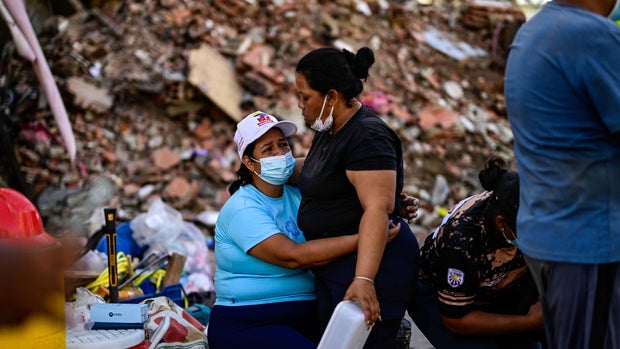
According to Volcanes, the apartment building where her sister lived collapsed during the earthquake.
She shared video with CBS News Miami showing the devastation. Requena's boyfriend, who is also a doctor, was inside the building at the time. He remains missing.
Neighbors have been searching through the debris for him and other residents, but many now fear they did not survive.
Volcanes said fellow doctors posted signs near the site pleading for help to recover the bodies believed to remain trapped under the rubble.
As the humanitarian crisis in Venezuela deepens, Volcanes and many others in South Florida are also urging the U.S. government to reconsider granting additional protections to Venezuelans living in the United States.
Several members of South Florida's congressional delegation have argued this week that renewing and expanding Temporary Protected Status (TPS) for Venezuelans is necessary given the scale of the disaster and the ongoing humanitarian crisis in the South American nation.