Smoke from Colorado wildfires causes increase in hospital visits across Northern Colorado and Front Range

Wildfire smoke drifting through Colorado has pushed the Front Range and Northern Colorado into some of the worst air quality conditions in the United States, prompting health experts to warn residents, especially those with underlying respiratory conditions, to take precautions.
Medical providers with UCHealth in Northern Colorado say they have already seen an increase in patients seeking treatment for smoke-related respiratory issues as fires continue burning to the region's west and southwest.
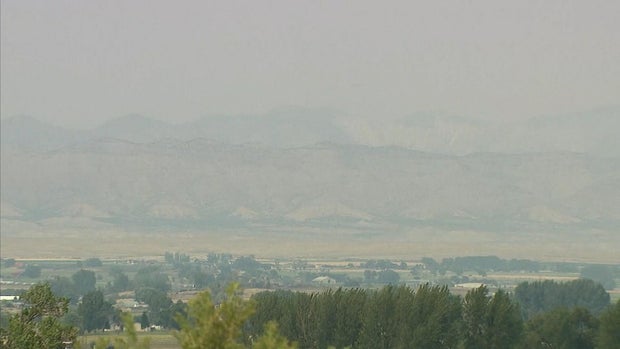
"We've definitely seen more people with reactive airway disease come into our urgent cares who are experiencing increased shortness of breath and difficulty breathing, sometimes chest pain or pressure," said Katie Siman, physician assistant with UCHealth.
Siman said people with existing respiratory conditions face the greatest risk from smoky conditions.
"For the most part, the people who are at risk are people with COPD, reactive airway disease, (and) asthmatics. People who are increased risk of experiencing increased shortness of breath anyways," Siman said.
She said smoke exposure can cause a wide range of symptoms, from relatively mild irritation to more serious breathing problems.
"Sometimes they can feel inflammation in their upper airway. Increased coughing can be a symptom," Siman said.
Patients experiencing severe symptoms such as chest tightness or significant shortness of breath may need emergency medical care, while those with milder symptoms may be able to seek treatment at an urgent care clinic.
According to Siman, wildfire smoke can affect people even when the fires are hundreds of miles away because of the size of the particles carried in the smoke.
"Those smoke particles travel far, and the particles in smoke are very, very small, so not only can they travel a really long distance, they can also bypass your natural immune system and get into the lungs when you breathe them," Siman said.
Because of that, Siman recommends that people who rely on medications such as inhalers ensure their prescriptions are current.
"Make sure that those prescriptions are up to date and filled and kept in your home, so that they're immediately available if you need them," Siman said.
Health professionals also caution that standard cloth or surgical masks offer little protection from wildfire smoke because the particles are so small. They say N95 masks or respirators provide the most effective protection when spending time outdoors in smoky conditions.


