Magnus' Law in Colorado will require critical question be asked on scene of certain crashes
Earlier in June, after months of fighting for change, surrounded by supporters, cyclists and lawmakers, Gov. Jared Polis signed "Magnus' Law" — SB26-132 - Voluntary Alcohol Breath Test.
"This is now officially the law of Colorado," Polis said at the bill signing.
The law requires officers investigating crashes involving death or suspected serious bodily injury to offer drivers a voluntary preliminary breath test. Drivers still retain the right to refuse. It's named for Magnus White, who was killed by a driver who had been drinking alcohol. That driver was never investigated for DUI.
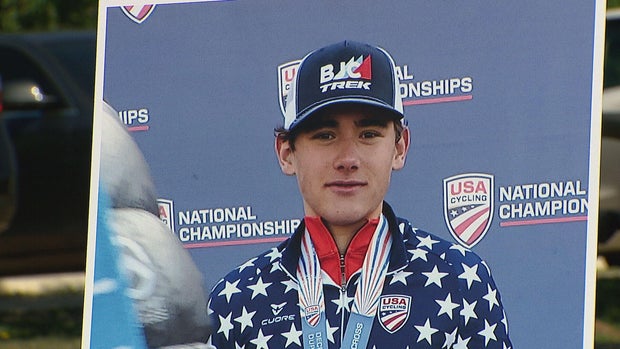
Inside their Boulder County home, Magnus White's family keeps his bikes.
"You can recognize Magnus on a bike from a mile away. He was just so smooth, effortless, powerful, technically gifted. This is the one he won a national championship on," said Michael White, Magnus' father.
Magnus was killed by a reckless driver while cycling alone in Boulder County back in 2023. But Magnus' family knew there was something missing from the investigation.
"The very first thing the Colorado State Patrol said to us was, 'The driver did everything right.' That raised a question mark in our head," Michael White said. "Like, really? Our son is dead."
For nearly three years, parents Michael and Jill White were left wondering what led to the death of their son, a 17-year-old cycling star.
"I've always advocated for my kids," Jill White said. "When he was killed, I said, 'I'm still going to advocate for you, Magnus. We are going to find out what happened. We're going to fix this. We're going to figure this out, and we are going to do something about it.'"
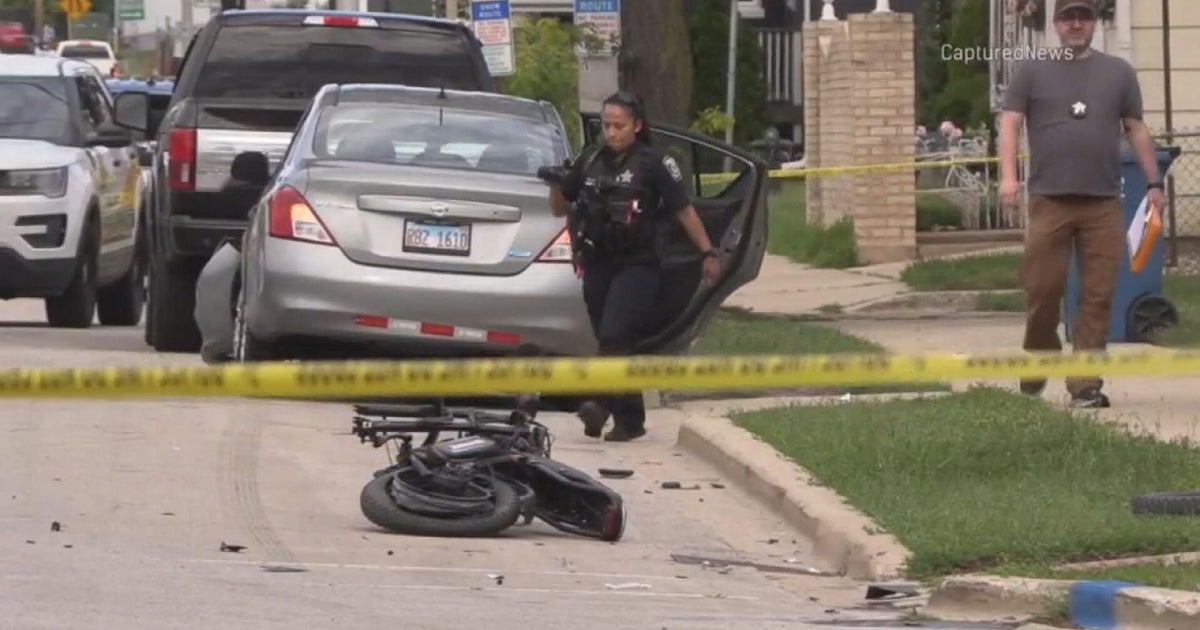
On July 29, 2023, an officer in training responded to the crash on Highway 119.
"All you need to do is start getting witness information statements," an officer is heard saying on body camera video.
A bicycle involved was still lying on the side of the road.
"It sounds like she ran off the road, hit the bicyclist. He went flying over there ... I wouldn't be surprised if it's (serious bodily injury) minimum or a fatality," the responding officer relayed.
Witnesses immediately raised concerns, telling investigators they saw the driver swerving miles back.
In her first interview with police, convicted driver Yeva Smilianska said her steering wheel malfunctioned.
"You know that feeling when you're driving in the rain, or in the snow, when you can't control your wheel?" Smilianska told the officer.
Smilianska also admitted to drinking after her shift at a Longmont bar earlier that morning.
"You didn't drink anything today?"
"Technically it's today because my shift ended at 2 a.m. I had drinks right after my shift. I went home with my friend. I had a sleep. I hung out, and then woke up and tried to go home."
There was no investigative follow-up about when she stopped drinking.
The first officer was then pulled off the crash for jurisdictional reasons and relayed inaccurate information to another investigator — saying the driver had nothing to drink that day.
"She works at a bar, so she worked there yesterday. She drank there at 2 in the morning. She didn't have anything to drink at all today. I asked her several times," the officer was heard saying.
Smilianska was never asked to take a test for drugs or alcohol.
Investigators eventually pieced together evidence, including text messages and a video saved to Smilianska's phone from the morning of the crash.
"Is that still whiskey? Her friend says on the video. "Yeah," Smilianska laughs.
A text message presented at trial reads, "I'm falling asleep."
Smilianska was convicted of reckless vehicular homicide and sentenced to four years in prison.
Because no alcohol screening was conducted at the scene, prosecutors were unable to pursue impaired driving charges, which could have carried a much longer sentence.
"It just didn't seem like it was taken seriously," Jill said.
"It's not about putting people in jail or prison. It's about the right level of accountability for the crime that was committed," Michael added.
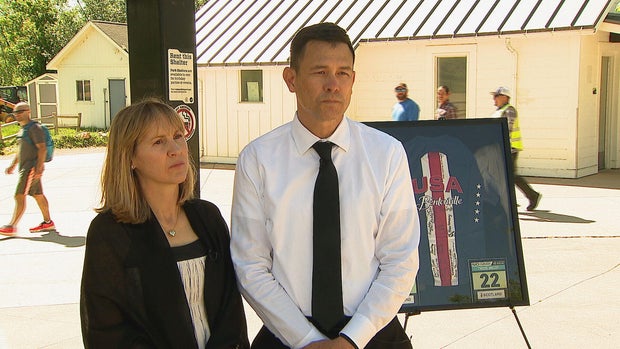
Instead of walking away after the trial, the Whites went to work.
For months, they met with lawmakers, prosecutors, law enforcement leaders and victim advocates, pushing for change they hope could spare other families the uncertainty they experienced.
"A car had left the roadway and traveled 300 feet into a field. There were no skid marks, and a 17-year-old boy was dead," Michael told lawmakers in the bill's first committee hearing. "The only person tested for drugs or alcohol that day was Magnus, the victim. It took nearly two years for the truth to come out in the courtroom — two years of an investigation and criminal case layered on top of our grief. One question at that spot where my son died could have brought the truth out immediately."
The proposal is no longer an idea; it's now Magnus' Law.
"It gives law enforcement additional tools," said Republican state Sen. John Carson, one of the bill's sponsors. "They can use it at the scene of one of these tragedies to make sure things are properly investigated. Otherwise, that evidence is lost. That information is lost, and families may not know what happened until months later."
The law won't bring Magnus home. His bike remains parked. But his parents say his legacy now rides with every investigation that follows.
"For me, it's an expression of my grief for Magnus, and that's going to carry on as long as I do. So of course I'm going to keep fighting for him, that's what any parent would do." Michael said.