Tehran engages in renewed diplomatic push, touts proposal to reopen Strait of Hormuz
Follow updates on the war in the Middle East for Friday, Aug. 28, here. See earlier developments below.
What to know about the Iran war:
- A news outlet run by Iran's military said Thursday that Iranian and Omani officials have reached an agreement to open a temporary new shipping route through the Strait of Hormuz, but that the U.S. must lift its naval blockade and return to the terms of a previous truce for the plan to be implemented.
- Qatar's foreign minister visited Tehran Thursday for talks with his counterpart aimed at creating "suitable conditions for dialogue," amid a push by mediators Pakistan and Qatar to draw the U.S. and Iran back into direct negotiations to end the nearly six-month war. Qatar said the foreign ministers also discussed the emerging proposal by Iran and Oman to open a shipping route through the Strait of Hormuz.
- President Trump told Al Jazeera on Wednesday that the U.S. was "achieving a very big victory" against Iran, but that the war "will continue for as long as necessary" and there's no timetable to resume peace talks with Tehran.
U.S. shouldn't expect China to help it put stranglehold on Iran's economy, analysts say
Treasury Secretary Scott Bessent laid out plans this week for the "economic asphyxiation" of Iran, warning of dire consequences for countries that don't join the campaign.
Iran's leaders, however, dismissed the impact of the new measures, having already endured decades-long crippling sanctions since shortly after the 1979 revolution.
And analysts say a successful chokehold on the Islamic Republic would require cooperation from China — but that's unlikely.
Bessent told China to "get with the program," but Beijing instead has defended its cooperation with Tehran and vowed to safeguard its interests.
The apparent impasse is likely to further strain ties between Beijing and Washington ahead of an expected visit by China's President Xi Jinping to the U.S. capital in September.
Before the war, Tehran exported millions of barrels of oil a day, mostly to China. Despite China buying less Iranian oil than it had been, the purchases remain an important source of revenue for Iran.
Although most ship traffic in the vital Strait of Hormuz is still blocked and the U.S. is blockading Iranian ports, China isn't totally cut off from Iran's crude thanks to the highways and railways of Central Asia, said Sun Degang, a professor of political science at Shanghai's Fudan University.
CBS/AFP
6 months in, war has changed Mideast, but not how U.S. and Israel intended
It's been six months since the United States and Israel attacked Iran with the perennial goal of transforming the Middle East through military force. The region has changed, but not in the way they had hoped.
The Islamic Republic survived the assassination of its top leaders and weeks of heavy bombing, and found a potent form of leverage in the Strait of Hormuz. Gulf Arab nations saw worrying gaps open up in the American security umbrella they have relied on for decades - and some are looking at alternatives.
Israel has once again thrashed its enemies without defeating them, and after nearly three years of war in Gaza and new land seizures, is at risk of a generational rupture with the U.S., its closest ally. Hopes of normalizing relations with Saudi Arabia - another enduring U.S. and Israeli aspiration - have dimmed even further.
When they attacked Iran on Feb. 28, the U.S. and Israel hoped to topple its clerical leadership and replace it with a pro-Western government. Instead, they've ended up with a "hardened and very radical regime," said Barbara Leaf, a former ambassador who served as assistant secretary of state for the Middle East in the Biden administration.
"That is going to be exceptionally difficult to deal with, to say the least," she said. Iran's "confidence has grown over the months that it cannot only survive, but it can prevail, it can reset the regional landscape."
Trump says Iran is "begging to make a deal"
President Trump insisted Thursday that Iran is "begging to make a deal," as Iranian officials push back against the U.S. and talks between the two countries remain stalled.
"I don't want to meet, they do," he said in a Truth Social post that lashed out at a Fox News report.
Mr. Trump told reporters earlier Thursday his administration is "not looking to meet" with Iran, arguing the naval blockade on Iranian ports and ever-tightening sanctions on Iran's economy have inflicted severe damage on the country.
Publicly, Iranian officials have stood firm, vowing to keep the Strait of Hormuz closed to shipping traffic unless the U.S. returns to a temporary deal the two sides struck earlier this summer. Mr. Trump claims the strait is open, but ships have been hesitant to sail through the vital waterway.
Meanwhile, Qatar's foreign minister visited Tehran on Thursday and urged the two sides to "resume the diplomatic process."
Pakistan, Kuwait reach deal to bolster Kuwait's military
Pakistan's military announced Thursday that it has agreed to assist Kuwait's military with training, capacity building and border management.
The Pakistani armed forces said the deal was signed by Kuwait's defense minister during a visit to the garrison city of Rawalpindi focused on bilateral defense relations and security cooperation.
Gulf states, long reliant on American protection, have been considering alternative security arrangements in the wake of the Iran war. In early August, Saudi Arabia signed a mutual defense pact with Pakistan and Turkey.
Pakistan said Thursday that it was also continuing diplomatic efforts with Iran, citing a recent visit to Tehran focused on reopening the Strait of Hormuz.
Trump responds "Who says I'm not?" to question about whether he'll sanction Chinese banks
President Trump fired back at a reporter Thursday who asked whether the U.S. would institute sanctions on Chinese banks that cooperate with Iran, responding, "Who says I'm not?"
The president was asked about the potential punishment for China after officials in that country said they would not support U.S. sanctions on Iran. China is Iran's largest trade partner.
"Well, who said I'm not? You said, 'Why not?' I mean, who said I'm not?" Mr. Trump responded. "You don't know if I'm doing it. Well, I don't have to announce everything, do I?"
Treasury Secretary Scott Bessent said last week that China should "get with the program" in regard to sanctions during an interview with CNBC. However, Chinese officials called the sanctions "illegal" and "unilateral" and said they would not enforce them.
Bessent and Mr. Trump have called the sanctions unprecedented and said they will lead to the total economic isolation of the country. Iran has criticized the sanctions, but also said they've been preparing for the sanctions for two years.
75 ships have been redirected in Strait of Hormuz by U.S. military blockade
There has now been a total of 75 ships heading into or exiting Iranian ports redirected by U.S. military blockade on the Strait of Hormuz, according to U.S. Central Command.
The update was the first since Monday, when CENTCOM said 71 ships had been redirected since the blockade went back into place on July 14.
President Trump again touted the blockade's effectiveness in a White House Oval Office event Thursday.
"The Strait of Hormuz is open. We have control and we have the blockade," Mr. Trump said. "Iran's not getting anything through. Nothing is getting through. Not one ship has gotten through."
24 oil tankers traveled through Strait of Hormuz overnight with U.S. assistance, Trump says
Twenty-four oil tankers traveled through the Strait of Hormuz overnight with the assistance of the U.S. military, President Trump said during an unrelated executive order signing Thursday.
He said "millions and millions" of barrels of oil were taken out of the strait, and it was being done on a daily basis.
The president also continued to say the strait has been completely demined, and also said for the first time that the U.S. has taken out multiple boats laying mines in the waterway. Allies of the U.S. have reportedly said they do not believe the strait is demined, according to Bloomberg.
"We've totally cleared the strait of mines. … Any boat goes through with a mine, we take it out," Mr. Trump said. "And we've taken out two."
U.S. Patriot missile stocks in Europe are "beyond critical" due to Iran war, officials say
The U.S. military is experiencing a "beyond critical" shortage of advanced missile interceptors in Europe largely driven by President Trump's war with Iran, a U.S. defense official in Europe and a NATO official told The Associated Press, raising concerns about vulnerabilities in NATO countries to a potential Russian attack.
The U.S. defense official said the most concerning shortfall involves Patriot missile interceptors, which can shoot down Russia's high-speed ballistic missiles. The NATO official confirmed the low inventories of Patriots among American and NATO forces in Europe. Both spoke on condition of anonymity to discuss sensitive military matters.
The shortage illustrates the cascading fallout from Mr. Trump's decision to launch a war against Iran, a conflict that reaches the six-month mark on Friday.
U.S. missile stocks in Europe have been moved to the Middle East, where U.S. and Gulf allies have fired off significant numbers of interceptors, including Patriots, to thwart Iran's drones and missiles. Some of those attacks have killed and wounded American troops.
Qatar says foreign minister "stressed the need to resume the diplomatic process" at meeting in Tehran
Qatar's government said the Persian Gulf nation's Prime Minister and Minister of Foreign Affairs Sheikh Mohammed bin Abdulrahman bin Jassim Al Thani "stressed the need to resume the diplomatic process" during his meeting Thursday in Tehran with the Speaker of Iran's Parliament, who is also a senior member of the Iranian negotiating team.
"The two sides reviewed developments in the region and efforts to de-escalate tensions and create suitable conditions for the resumption of dialogue," the Qatari Foreign Ministry said in a statement.
The office of Iranian Parliament Speaker Mohammed Bagher Ghalibaf said in its own readout of the meeting that he had "confirmed" to Al Thani "that Washington is making wrong decisions based on misleading information."
Ghalibaf's office said he had told the visiting Qatari diplomat that "America must fulfill its obligations under the memorandum of understanding."
Woman killed, 6 people wounded in Israeli strikes as fighting with Hezbollah continues, Lebanon says
Lebanon's ministry of health said a woman was killed and six other people wounded, including a girl, a woman and two elderly people, in Israeli airstrikes Thursday in or around the southern town of Arab Salim.
The Israel Defense Forces had announced airstrikes in southern Lebanon earlier, saying they targeted "Hezbollah infrastructure in the Nabatieh area" including purported weapons storage facilities belonging to the Iran-backed group that the IDF said had been "established in order to harm Israeli civilians" and soldiers.
"The strikes were carried out in response to the Hezbollah terrorist organization's actions overnight (Thursday) against IDF soldiers operating in the Ali-Taher Ridge within the Security Zone, in which they launched two explosive drones toward IDF soldiers. No IDF injuries were reported," the IDF said.
Despite a ceasefire brokered by the U.S., Israel has continued launching attacks on Hezbollah, always labeling them responses to Hezbollah truce violations, almost daily.
Israeli soldiers have occupied a section of southern Lebanon that extends some six miles from the country's shared border, calling it a "security zone" and expelling thousands of Lebanese residents.
Israel will not withdraw its forces, the country's political and military leaders say, until the threat posed by Hezbollah is eradicated.
The ongoing fighting between Israel and Lebanon has been a consistent thorn in the side of efforts by Pakistan, Qatar and others to broker a peace deal between the U.S. and Iran, which demands a halt to fighting on all fronts, including in Lebanon, as part of any peace agreement.
Iran has executed over 500 people this year amid surge in hangings, rights group says
Iran has executed over 500 people so far this year after a new surge in hangings in recent days, despite President Trump urging the Islamic Republic regime to halt executions, a rights group said Thursday.
At least 511 people have been executed so far in 2026, according to Norway-based NGO Iran Human Rights, including at least 29 people in connection with anti-government protests in January. At least 16 women are among those executed and at least 13 "political prisoners" affiliated with banned opposition groups, it said.
Activists accuse Iran of using capital punishment as a means to intimidate the population in the wake of the protests and the war against the United States and Israel that erupted on February 28.
"All executions, regardless of the charges, have a clear domestic purpose - to create fear and prevent new protests," IHR director Mahmood Amiry-Moghaddam told AFP. "We are very concerned that this trend could worsen in the coming months."
Since wartime executions resumed on March 19, two people have also been executed in connection with the "Woman. Life. Freedom." protests that erupted in 2022.
Mr. Trump wrote on his Truth Social platform Tuesday that "the failing Islamic Republic of Iran is not paying large segments of their military, while at the same time killing protesters, even when they are not protesting, at levels not seen before."
"It is a humanitarian crisis of epic proportions, and must be stopped, NOW," he added.
Oil prices inch back up slightly
The price of Brent crude oil, the international standard, climbed Thursday by about 0.5% to $87.36 per barrel.
It was trading around $72 a barrel in late February before the war in Iran began.
Benchmark U.S. crude rose 0.2% to $82.38 per barrel.
Oil prices have fluctuated during the war as markets try to interpret on-again, off-again diplomacy between the U.S. and Iran aimed at ending the conflict.
The White House says there are currently no direct talks underway, but Iran has indicated this week plans to propose a temporary measure, in conjunction with Oman, to reopen the vital Strait of Hormuz to commercial shipping traffic.
Efforts by mediating nations Qatar and Pakistan to revive direct diplomacy between Iran and the U.S., as the Trump administration announced new sanctions aimed at pressuring Tehran to accept a deal, had appeared to ease concerns in energy markets earlier in the week, with oil prices falling modestly for several days.
CBS/AP
Iran says damaged South Pars gas field coming back online, and oil sales continue, but "declined to some extent"
About 40% of the natural gas production capacity in Iran's South Pars gas field damaged during the war with the U.S. and Israel has been restored, Iran's Deputy Oil Minister Ahmed Zeraatkar was quoted as saying Thursday by Iran's Fars news agency, which is linked with the country's Revolutionary Guard Corps.
South Pars is the Iranian portion of the world's largest offshore natural gas field, which it shares with Qatar in the Persian Gulf.
Israel launched an attack on South Pars infrastructure just several weeks into the war, drawing an early rebuke from President Trump, who said the U.S. wasn't warned in advance, and declared there would be "no more" such Israeli attacks on the field.
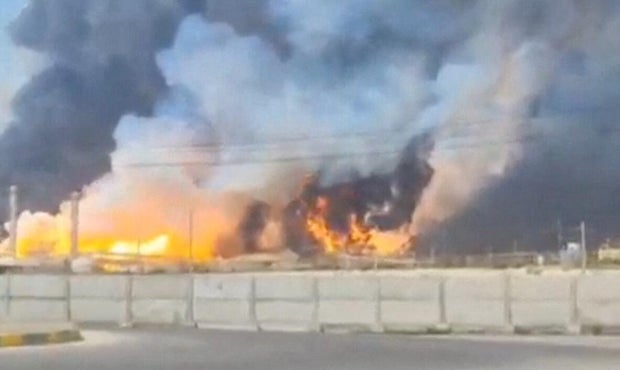
Mr. Trump, in the same remarks in March, then threatened to "massively blow up" the South Pars field if Iran continued launching attacks on Qatar.
Iran's oil and gas production and sales have since been severely curtailed by the ongoing U.S. naval blockade of its ports, and by increasing sanctions against the Islamic Republic intended to force its leaders to capitulate and accept a peace deal favorable to Washington.
Iranian Oil Minister Mohsen Paknejad said Thursday that "the sale of our oil outside our territorial waters, in distant waters — meaning the delivery of oil to our customers — has continued" despite the U.S. blockade, but he acknowledged they had "declined to some extent."
"I don't want to go into the details because, in any case, this is information that, if disclosed, could be exploited by the enemy," Paknejad said.
Pakistan sees momentum to reopen Strait of Hormuz, but says only Iran and U.S. can make the decision
Pakistan's government voiced optimism Thursday about an emerging proposal from Iran and Oman to reopen the Strait of Hormuz to shipping traffic, touting "momentum" in diplomatic efforts, but stressing that it would be down to a "sovereign decision that is to be taken in Tehran and Washington."
"There was indeed renewed efforts for the opening of the Strait of Hormuz," Pakistani Foreign Ministry spokesman Tahir Andrabi told reporters in Islamabad on Thursday, referring to the visit earlier in the week by Pakistan's army chief to Tehran. "We remain positive that some momentum will be generated towards this important aspect — the opening of the Strait of Hormuz — because it affects everybody with respect to the disruption of supply chains, particularly energy supply chains."
Noting "follow-up visits," including the Qatari foreign minister's meeting Thursday in Tehran with his Iranian counterpart, Adrbabi said "there are concerted efforts towards the settlement of this issue, particularly the opening of the Strait of Hormuz," but he stressed that in the end, it would come down to "a sovereign decision that is to be taken in Tehran and Washington."
Asked whether Pakistan would support an emerging agreement between Iran and Oman, as the two states with coastline in the strait, to open a temporary shipping channel if it involved the imposition of fees on commercial vessels, Andrabi declined to answer directly.
"This is part of the larger discussion," he said. "I would not like to comment on every specific aspect of this larger debate, i.e. the right to levy fees, the right to collect fees by the littoral states, and what the obligations are of the countries whose ships are passing by."
Top Qatari, Iranian diplomats discuss creating "suitable conditions for dialogue" and emerging Strait of Hormuz proposal
Qatar's Foreign Ministry said the Persian Gulf state's top diplomat, during a meeting with his counterpart in Iran Thursday, discussed "efforts being made to de-escalate tensions and create suitable conditions for dialogue," amid a push by Qatar and Pakistan to revive U.S.-Iran peace negotiations.
Qatar's Sheikh Mohammed bin Abdulrahman bin Jassim Al Thani met Iranian Foreign Minister Abbas Araghchi in Tehran, and their "meeting also touched on the ongoing discussions regarding the proposed phased framework, which includes the establishment of a temporary joint navigational corridor through the Strait of Hormuz," the Qatari ministry said, referring to a proposal Iran and Oman have been crafting.
The Qatari ministry's statement said Al Thani stressed during the meeting, "the need to respect the sovereignty of neighboring states and respect freedom of navigation, affirming the importance of continuing diplomatic efforts to de-escalate tensions and address differences through dialogue."
Iran parliament speaker: Country facing "all out economic war" as U.S. tries to foment internal division
Iranian Parliament Speaker Mohammad Bagher Ghalibaf called Thursday for national unity and support for the government, saying internal divisions would weaken Iran as the country faces an "all-out economic war."
In a message posted on his Telegram channel, Ghaliban said President Masoud Pezeshkian's government should prioritize people's livelihoods, purchasing power, youth employment and economic security while addressing the economic consequences of the war.
"Supporting the government does not mean turning a blind eye to its weaknesses, but trusting the government to serve the people better," he said.
Ghalibaf said Iranian officials had made effective efforts to manage the country's economic situation and address weaknesses, despite what he called the enemy's efforts to exert maximum pressure on the Iranian population.
He predicted, however, that the government and the wider Iranian state apparatus would ultimately win.
"The country is in an all-out economic war and, by the grace of God, we will see that the government and the executive apparatus, relying on the capabilities of the people, economic actors in the private sector and all the institutions of the system, will defeat the enemy in this arena as well," he said.
Top Qatari and Iranian diplomats meet in Tehran amid efforts to revive U.S.-Iran talks
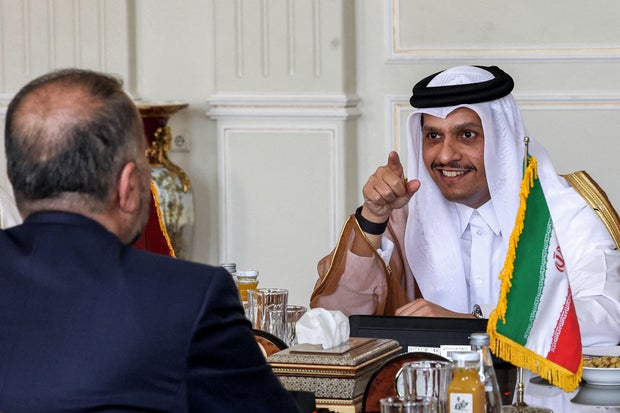
Qatar's visiting Prime Minister and Foreign Minister Sheikh Mohammed bin Abdulrahman bin Jassim Al Thani met Thursday with his counterpart Abbas Araghchi in Tehran, amid efforts by mediators Qatar and Pakistan to revive negotiations to end the war between the U.S. and Iran.
Photos shared online by Iran's Fars News agency, provided by the Iranian Foreign Ministry, showed the two men meeting in Tehran.
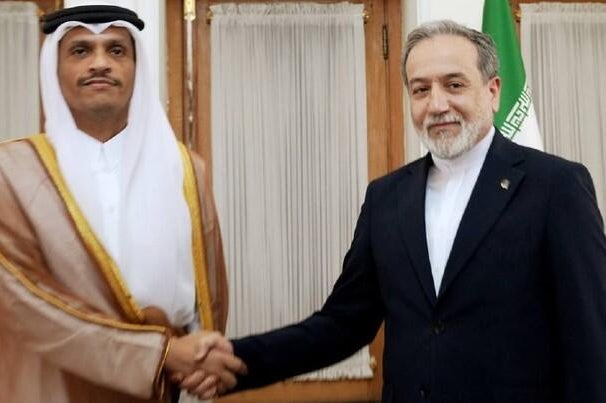
Iranian Foreign Ministry spokesman Esmaeil Baqaei said earlier that the visit was part of ongoing Iran-Qatar consultations aimed at strengthening bilateral relations and promoting peace and security in the region.
He said Al Thani would meet Iranian officials to discuss the continuation of Qatar's mediation efforts and initiatives, as well as other regional developments.
Iran news outlet says agreement reached with Oman on temporary Strait of Hormuz corridor - but all depends on U.S.
Iran and Oman have reached an understanding on a temporary joint maritime corridor to enable commercial shipping to resume through the Strait of Hormuz after several weeks of consultations, the Iranian armed forces' Defa Press outlet reported Thursday.
It stressed that the agreement did not mean the immediate reopening of the strategic waterway, and Iranian officials said Wednesday that a previous agreement reached with Oman had effectively been rejected by the U.S.
Under the new proposal, vessels entering the Persian Gulf from the Gulf of Oman to the south would travel entirely through Iranian territorial waters, and part of the outbound route would also pass through Iranian waters.
The corridor would consist of two-way shipping lanes separated by approximately two nautical miles, with a total width of around seven nautical miles, including the lanes and separation.
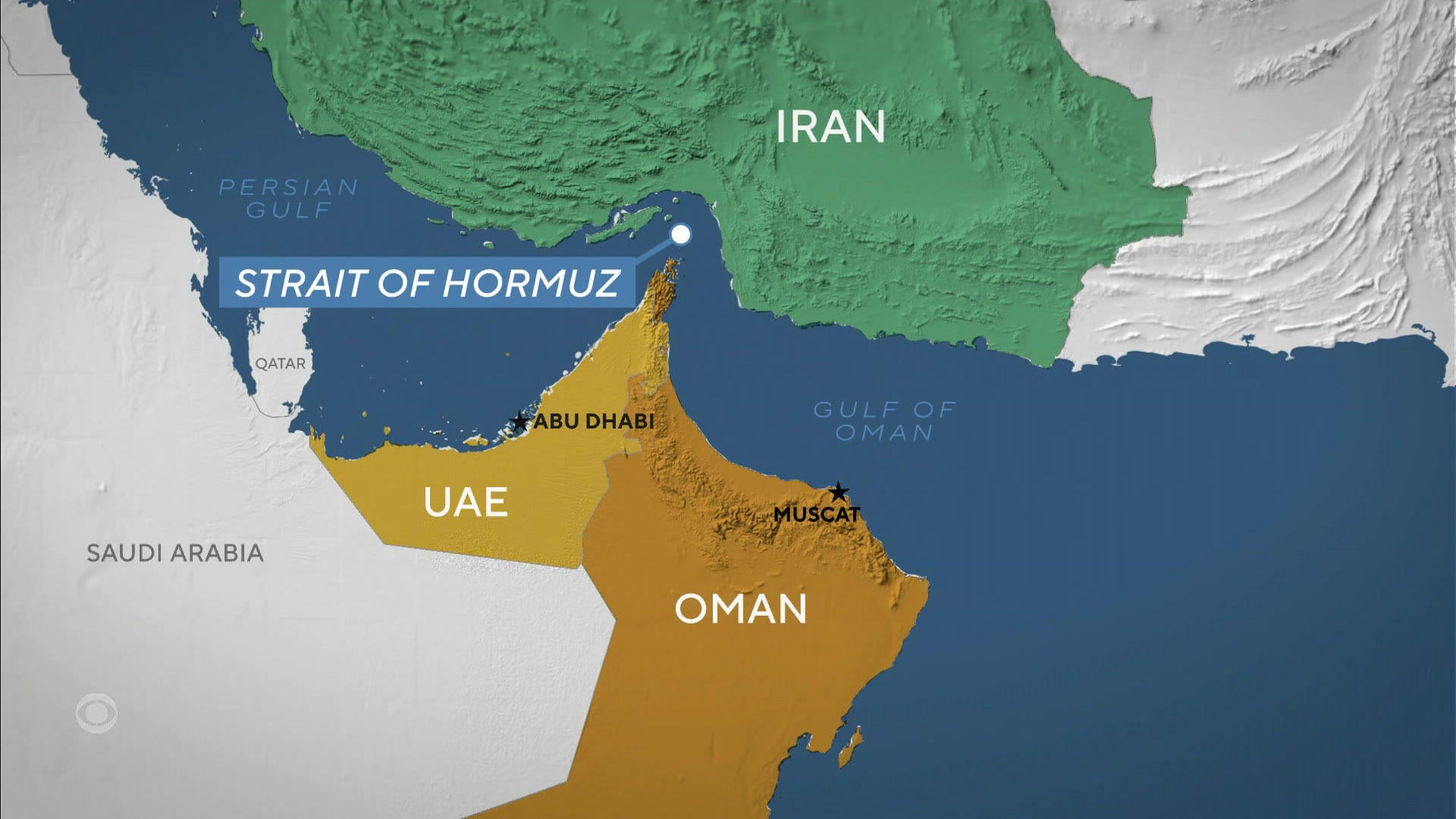
Defa said the route was established following technical and expert assessments by Iranian and Omani officials, with the intention being to eventually replace the temporary corridor with a permanent maritime traffic scheme following further Iran-Oman negotiations.
For Tehran, a key element of the proposal is the formal closure of the southern route through the strait, in Omani internal waters, which the U.S. has urged commercial vessels to use for the past couple months. Iran considers that route inconsistent with the memorandum of understanding signed with the U.S.
If the new arrangement is implemented, the southern route would be formally closed and the change notified to the International Maritime Organization. Iran and Oman would then negotiate a replacement for the pre-war maritime traffic separation scheme, which has been in place for about 58 years. Those negotiations could take 30 to 60 days, according to Defa.
The report stressed that the reopening of the Strait of Hormuz remained conditional, according to Iran, on the U.S. fulfilling its commitments under the previous MoU, which called for a halt to all threats and military operations. Iran insists the U.S. must, under the terms of the currently-mothballed deal, lift its naval blockade of Iran's ports and vessels, release frozen Iranian state funds, impose no new sanctions and refrain from increasing the U.S. military deployment in the region.
According to Defa, Iran wants those commitments to be visible and verifiable before it takes reciprocal action, including implementing the tentative agreement with Oman over control of the strait.
Iran confirms Qatari prime minister visiting amid efforts to revive U.S.-Iran diplomacy
Iran confirmed Wednesday that Qatari Prime Minister and Foreign Minister Sheikh Mohammed bin Abdulrahman bin Jassim Al Thani was to visit Tehran as Doha seeks to help revive diplomacy between Iran and the United States.
Iranian Foreign Ministry spokesman Esmaeil Baqaei said the visit was part of ongoing Iran-Qatar consultations aimed at strengthening bilateral relations and promoting peace and security in the region.
Baqaei said Al Thani would meet Iranian officials to discuss the continuation of Qatar's mediation efforts and initiatives, as well as other regional developments.
Iranian Foreign Minister Abbas Araghchi said in a social media post Tuesday, after a visit by a senior delegation led by Pakistan's army chief, that "Iran's commitment to peace and stability is matched by steadfast diplomacy with our neighbors. In talks with Pakistani and Omani guests, regional solutions were stressed."
Iran concedes U.S. blockade leaving it short on oil
Iran hasn't been able to import enough oil to make up for insufficient domestic production due to the U.S. naval blockade, a senior Iranian official said.
"Petrol production is insufficient, and because of the U.S. naval blockade, we cannot import it," the official IRNA news agency quoted Vice President Mohammad Jafar Ghaempanah as saying.
The remarks came as Iranians have in recent days lined up outside gas stations, with the war with the United States increasingly shifting toward economic pressure on Tehran.
On Monday, the Iranian president's chief of staff, Mohsen Haji-Mirzaei, said oil quotas would be reviewed, without elaborating.
War broke out between Iran and the United States on February 28. Tehran seized control of the strategic Strait of Hormuz, and Washington countered with a naval blockade on Iranian ports.
Ghaempanah criticized the distribution of highly subsidized fuel in Iran, saying the current system disproportionately benefits people who own multiple vehicles.
"The distribution of petrol in the country is inequitable. Owners of several vehicles benefit from subsidies, unlike those who do not own one," he said.
Iran, a major oil producer with some of the world's cheapest fuel, has for years heavily subsidized oil purchases, making any changes to pricing politically sensitive.
Tanker in Strait of Hormuz hit by "unknown projectile," British military says
An "unknown projectile" struck a tanker in the Strait of Hormuz this week, causing a fire that has since been put out, a British military maritime agency said early on Thursday.
Iran has effectively blockaded the Strait of Hormuz since the United States and Israel attacked the Islamic Republic in late February.
Tehran wants to charge tolls for passage, and has attacked ships it accuses of trying to skirt its preferred route.
"Local authorities have reported a tanker has been hit by an unknown projectile, causing fire to the vessel which has since been extinguished," the United Kingdom Maritime Trade Operations (UKMTO) said.
The incident occurred near the Omani coastal city of Khasab and was reported to the UKMTO on Tuesday, the agency said.
There were no casualties among the crew and no adverse environmental impact, it said, adding that authorities are investigating the cause.
The online notice didn't specify the vessel's nationality or direction of travel.
USS Abraham Lincoln to make stop in Thailand on its way home to San Diego
The USS Abraham Lincoln aircraft carrier will make a stop in Thailand after its grueling deployment in the Middle East, Thai officials said Wednesday.
The Lincoln was supporting the U.S. war against Iran, and its deployment included a record-setting uninterrupted time at sea of more than 250 days. Concerns have grown about the Lincoln's lengthy deployment following reports of deteriorating mental health among the crew and shortages of supplies, including food and hygiene products.
Thai defense ministry spokesperson Surasant Kongsiri said the Lincoln will stop in Thailand next week for rest and recovery before returning to its U.S. base in San Diego.
"The stop in Thailand is a chance for the crew to go ashore and relax," he told reporters at a news conference in Bangkok.
On Tuesday, the Royal Thai Navy said three ships from a U.S. Navy carrier strike group were scheduled to stop in eastern Thailand and that no military exercises would be carried out during the visit.
Iran's foreign ministry spokesman Esmail Baghaei wrote in a mocking social media post Wednesday that "after months of war - and more than 200 days without a single port call" the Lincoln "is now heading to Thailand for crew R&R. Mission: Project Power. Current mission: Project Vacation."
Separately Wednesday, the U.S. Navy's top uniformed officer told reporters that with the surprise needed to launch the Iran war, it took some time to put a "process in place so that we were really replenishing at sea in an effective and systematic way."
Speaking about the Lincoln, Adm. Daryl Caudle said the issue was not about having enough protein or vegetables, but items like hygiene products, energy drinks and soda that sailors come to expect during long ship deployments.
He said parts, food and "niceties" have different supply chains and that "we had to get all those dialed in," noting that "there was some learning curve on our replenishment process."
Iran's Parliament speaker thanks China for rejecting U.S. sanctions
China, Iran's largest trade partner, is receiving thanks from Iran's Parliament speaker after saying it won't comply with the newest U.S. sanctions.
"We welcome China's principled statement rejecting illegal sanctions against Iran," Mohammad Bagher Ghalibaf wrote on X. "The Iran-China comprehensive strategic partnership is rooted in mutual respect, win-win cooperation, and a shared vision for a multipolar world. This relationship needs no one's permission."
President Trump last week said he expected all countries to get on board with the sanctions announced on Monday. Treasury Secretary Scott Bessent said in an interview last Thursday with CNBC that China should "get with the program."
But China rejected those notions almost immediately.
"China has already stated many times that it firmly opposes illegal unilateral sanctions. ... China will take all necessary measures to firmly safeguard its own rights and interests," foreign ministry spokesman Lin Jian said at a news briefing.
Iranian foreign minister pleads with U.N. secretary-general to condemn U.S. actions
Abbas Araghchi, Iran's foreign minister, addressed a letter to U.N. Secretary-General Antonio Guterres on Wednesday asking for the global body to "condemn and reject" the U.S. actions in Iran, especially the new round of sanctions issued this week.
"Now is a crucial moment for the Security Council and all members of the United Nations; either we must defend the principles of sovereign equality, non-interference, and respect for the sovereign rights of States, as enshrined in the Charter of the United Nations; or we surrender to the unilateralism and bullying of a rogue state," Araghchi wrote in the letter, posted on his official Telegram channel.
Iranian officials have repeatedly called the U.S. actions in Iran a violation of the country's sovereignty in recent days. Araghchi asked for all members of the U.N. to do three things, including "condemn and reject the use of unilateral coercive measures and secondary sanctions by the United States" to change economic interests; "refrain from recognizing, approving, or implementing" the sanctions; "call on the United States to immediately cease its threats and coercive actions designed to force" countries to alter legitimate economic relations.
He also asked for the U.N. to monitor the humanitarian implications of the sanctions on the Iranian population, and said Iran could retaliate in the interim.
"In the meantime, the Islamic Republic of Iran reserves its right to pursue all available avenues to achieve accountability, reparation and redress, and to hold the perpetrators accountable for the consequences of these inhumane and illegal actions," Araghchi wrote.
Guterres hasn't shown an inclination to side with Iran in the conflict, saying on Monday that Iran must end attacks in the Strait of Hormuz and restore "respect of navigational rights and freedoms" in the waterway.
Iran state media reports "constructive" talks with Russia on gas cooperation
Iran and Russia held "constructive" discussions on advancing cooperation in the gas sector, including implementation of an agreement to transfer Russian natural gas to Iran, Iranian state news agency IRNA reported Wednesday.
IRNA said Iranian Ambassador to Russia Kazem Jalali and National Iranian Gas Company CEO Saeed Tavakoli met with Alexey Miller, the CEO of Russia's state-controlled energy giant Gazprom, in St. Petersburg on Wednesday.
The meeting followed a series of technical discussions between the two countries aimed at implementing a gas cooperation agreement, following on an agreement for the transfer of Russian gas to Iran that was signed in July 2024.
Iranian Oil Minister Mohsen Paknejad previously said the gas would be delivered to Iran using an overland route via Azerbaijan, with Iran receiving the gas at a terminal in Astara, on the country's far northern Caspian Sea coast.
Jalali has described the project as a "win-win" undertaking for Iran and Russia that could provide significant mutual benefits and help strengthen Iran's position as a regional energy hub.
Iran's IRGC says deal with Oman to reopen Strait of Hormuz had been reached, but U.S. must accept conditions
The spokesman for Iran's powerful Islamic Revolutionary Guard Corps said Wednesday that Iranian and Omani officials reached an agreement weeks ago on terms under which the two nations could control shipping traffic through the Strait of Hormuz — and share the proceeds from fees incurred — but he indicated the U.S. had failed to accept the arrangements.
"The Strait of Hormuz belongs to Iran and the Sultanate of Oman, which is opposite us. About a month ago, we entered into negotiations with Oman and reached results that were acceptable to both sides," Brig. Gen. Hossein Mohebbi said, according to Iran's state broadcaster IRIB. "In these negotiations, agreements had been reached regarding the share of each of the two countries from the waters of the strait and the share of Iran and Oman from its revenues."
"If the United States stops obstructing and returns to the memorandum of understanding, we can open the Strait of Hormuz within the framework of the agreement reached," he said, stressing, "our conditions must be accepted by the United States."
Until they are, he said "the Strait of Hormuz will remain closed."
President Trump has repeatedly insisted the strait is open, but few commercial ships have dared to transit the vital waterway given Iran's attacks and lingering threats against them doing so without permission.
"The Strait of Hormuz is under our control, and no enemy military vessel is present inside the Persian Gulf," Mohebbi insisted Wednesday, claiming all U.S. warships had moved at least 250 miles from the strait.
Iran and Oman said Tuesday the two nations continue discussing a new proposal to reopen the strait by way of a temporary shipping route, as well as a plan to clear sea mines, but they said no new agreement has been reached.
Stock prices mixed as oil drops, inflation remains high
Lower oil prices helped lift European stock markets Wednesday, while continued high U.S. inflation weighed on Wall Street. Paris and Frankfurt rose in mid-afternoon trading, though London lagged behind as energy heavyweights BP and Shell were hurt by cheaper oil.
"Lower energy prices are providing a supportive environment for European markets," said Fawad Razaqzada, market analyst at FOREX.com. "The resilience of the European economy has been more impressive than many had expected."
In New York, all the main indexes were slightly lower in morning trading. Just before Wall Street opened, the Commerce Department reported that the personal consumption expenditures price index — the Federal Reserve's preferred inflation measure — rose 3.7% in July compared to the previous year.
While that was largely in line with analyst expectations, it still leaves inflation well above the Fed's 2% target, keeping alive fears of an interest rate increase.
Both main crude oil contracts have tumbled this week as Iran and Oman say they're edging toward a deal to open a temporary shipping corridor in the Strait of Hormuz.
While President Trump said Washington would impose an "economic D-Day" on Tehran with a raft of sanctions targeting the Islamic Republic and its trade partners, the U.S. has so far held back from enforcing the measures, which in any case appear softer than many had expected.
Oil prices had dropped more than 3% early Wednesday before recovering a bit, with international benchmark Brent crude back below $90 a barrel.
CBS/AFP
Trump repeats assertion that without him, "there would be no Israel"
President Trump repeated his claim Wednesday that without him, "there would be no Israel."
Speaking on conservative commentator Glenn Beck's podcast, Mr. Trump described the Obama-era Iran nuclear deal, which he pulled the U.S. out of unilaterally during his first term, as "one of the most dangerous deals ever," describing it as a "path to a nuclear weapon."
Iran "would have had a nuclear weapon," he said. "They would have used it."
"Israel would have been totally knocked out," he added. "If Donald Trump wasn't president, there would be no Israel right now … and that's a guarantee."
In June the president made similar comments at the G7 summit in France.
Iran army spokesman says hostile media outlets "are included in our military target bank"
Iran's senior armed forces spokesman, Brig. Gen. Abolfazl Shekarchi, said Iranian military forces do not regard outlets such as BBC Persian, the exiled Iran International and Radio Farda as media organizations, accusing them of being directly connected to Israeli and U.S. intelligence agencies.
In comments carried by multiple state media outlets, Shekarchi alleged that the outlets receive operational guidance and support from, "Mossad [Israeli intelligence agency], the CIA and the enemy's intelligence organizations … The Iranian armed forces do not regard these news-propagating enterprises as media outlets."
"Every bloodshed and act of violence in the world is carried out with the support of these pseudo-media outlets," he said. "Hostile media outlets are soldiers of the Zionists and America and are included in our military target bank."
Trump says Strait of Hormuz "functioning" but "every once in a while there will be a drone or a rocket"
President Trump, in an interview with conservative radio host Glenn Beck aired Wednesday, said the Strait of Hormuz is "functioning," but there will still be a drone or a rocket shot sometimes.
"We got rid of the mines," the president said. "But the strait it's functioning, it's a functioning strait. Yes, every once in a while there will be a drone or a rocket or something shot, but it is a very functioning strait. A lot of oil is pouring out."
Maritime analysts say very little oil has actually been moving out of the Persian Gulf through the strait since the war began, with a brief resumption of shipments during a ceasefire between the U.S. and Iran tapering back off after hostilities resumed in early July.
Trump says he doesn't "think" Iran's supreme leader is dead
Speaking to conservative radio show host Glenn Beck, President Trump said he doesn't "think" Iranian Supreme Leader Mojtaba Hosseini Khamenei is dead, and if he is, he said the Iranians are putting on a pretty good "show."
The Atlantic ran a piece Monday suggesting he may have died.
"I don't think he's dead," the president said. "He was very seriously wounded."
Dubai airport reports sharp drop in second quarter traffic due to Iran war
Dubai International Airport, one of the world's busiest transport hubs, said Wednesday that it saw a sharp drop in passengers during the second quarter as the Iran war disrupted air travel and prompted many travelers to choose routes that avoided the Middle East.
The airport recorded 13 million passengers during the second quarter, following 31.5 million passengers in the first. That was a 31.3% drop in passenger traffic compared to the first half of 2025, the airport said.
Air traffic in the United Arab Emirates and elsewhere across the Persian Gulf region has been disrupted by shutdowns and restrictions imposed after the U.S. and Israel launched their joint war on Iran on Feb. 28. The Dubai airport suffered minor damage in attacks by Iran.
Dubai airport CEO Paul Griffiths said, however, that there has been a steady increase in passenger volume each month in the second quarter, adding that "the trajectory now is universally positive."
He said the airport was waiting for overseas airlines, particularly European carriers, to restart operations.
"I'm very confident we'll be back to full operation in a very short space of time," he said.
Last week, the UAE cut off all trade ties with Iran, which has relied for decades on the kingdom for access to foreign currency. Dubai's opaque financial services industry has long offered Iran a way to skirt international sanctions.
CBS/AP
Iran parliament speaker says any negotiations with U.S. not "a sign of retreat"
Iranian Parliament Speaker Mohammad Bagher Ghalibaf argued Wednesday that any negotiations with the U.S. did not equate to retreat from the Islamic Republic's principles and demands.
"Negotiation, in my view, has neither intrinsic value nor is it a taboo; it is neither absolutely good nor absolutely evil," he wrote in a letter responding to criticism from Hossein Shariatmadari, the editor-in-chief of Iran's hardline Kayhan newspaper, according to Iran's state IRNA news agency.
Qalibaf said diplomacy did not mean abandoning resistance.
"If necessary, dialogue, too, according to this logic, is the same arena of struggle and resistance; neither a replacement for it nor a sign of retreat from it," he said.
He argued that negotiations, when necessary, should be conducted from a position of strength while preserving Iran's "dignity, wisdom and interests."
Qalibaf said refusing to engage with an enemy would amount to Iranian authorities avoiding their responsibility.
Just less than a week ago, President Trump said there were no ongoing talks between the U.S. and Iran and none scheduled, but Iran has kept up a dialogue with Oman aimed at establishing a proposal to reopen the Strait of Hormuz and to reinstitute a ceasefire with the U.S.
All weapons systems destroyed in the war have been rebuilt, Iran's army claims
Iran's army said Wednesday that all of the country's weapons systems damaged in the war with the U.S. and Israel had been "rebuilt," and a claim that new systems had been brought into the country.
"Systems in all branches of the military, including those that were damaged, have been rebuilt, and new systems have also been imported," army spokesperson Mohammad Akraminia was quoted as saying by Iranian state TV.
"New systems have come through the defense industry and the army, and some have also been imported from abroad, and this equipment has enhanced our combat capabilities," he claimed, without naming any countries providing military hardware to the Islamic Republic.
President Trump has previously claimed that Iran's military capabilities have been destroyed by U.S. strikes on the country, but experts have questioned that assessment, and Iran has demonstrated an ongoing capacity to launch attacks on ships and America's Persian Gulf allies.
CBS/AFP
Iran's president says negotiation with U.S. still possible, but Tehran "will stand firmly against economic pressures"
Iran's president has not ruled out resolving the conflict with the United States through negotiations, despite the "economic pressure" being exerted on his country.
"Our foundation is understanding and resolving issues through interaction and negotiation, but at the same time, we will stand firmly against economic pressures, just as we have done so far," Masoud Pezeshkian said during a three-hour meeting at Iran's Central Bank on Tuesday.
Pezeshkian said Iran would continue pursuing dialogue while relying on measures prepared by the government's economic institutions to withstand the U.S. sanctions, adding that Washington's attempts at pressuring Iran would fail.
Iran calls on United Nations to condemn U.S. sanctions
Iran called Tuesday on the United Nations Security Council to condemn U.S. sanctions and other "unilateral coercive measures" against the Islamic Republic.
Speaking at a Security Council meeting, Gholamhossein Darzi, Iran's ambassador and deputy permanent representative to the U.N., said the council had failed to fulfill its responsibilities.
"The Security Council must firmly condemn and reject these unilateral coercive measures aimed at forcing sovereign countries to change their legitimate economic interests and foreign relations," Darzi said.
He called the ongoing U.S. naval blockade of Iran's ports and vessels, which has included several attacks on Iranian commercial vessels, violations of Iran's sovereignty and freedom of navigation.
"The root cause of instability and disruption in maritime trade and shipping through the Strait of Hormuz is the war of aggression by the U.S. and Israeli regime against Iran," Darzi said.
Netanyahu says diplomatic deal with Iran "cannot be reached"
Israeli Prime Minister Benjamin Netanyahu has said a diplomatic deal is not possible with the "savages" who rule Iran, as he hailed President Trump's new campaign of economic pressure against the Islamic Republic.
Recounting a recent meeting with Mr. Trump, Netanyahu said at an event late Tuesday that they had discussed the possibility of diplomacy with Iran and said: "I doubt, however, that an agreement can be reached with that group there, with those savages. I tell you, an agreement cannot be reached."
Iran accused Israel of getting in the way of a previous ceasefire initiative by continuing operations in Lebanon, against Hezbollah, which it considered a violation of the terms of the agreement reached with Washington.
Israel insisted it was only responding to violations of the truce by Hezbollah, which is a powerful paramilitary and political force backed by Iran in Lebanon.
CBS/AFP
Iran says reopening the Strait of Hormuz depends on U.S. ending the war, despite progress in talks with Oman
Iran's deputy foreign minister insisted Wednesday that the Strait of Hormuz would not reopen until the U.S. lifts its naval blockade of Iranian ports and vessels, and the "termination of the war."
Kazem Gharibabadi told Iranian state broadcaster IRIB "the blockade is not the only quid pro quo for the Strait of Hormuz."
"Another issue is the termination of the war," he said. "The termination of the war in a permanent and sustainable manner on all fronts, including Lebanon."
Iran and Oman, the two countries with coastline in the waterway, said in a joint statement Tuesday that they were discussing a proposal for a temporary route that would allow ships to transit through the Strait of Hormuz, as well as a plan to remove sea mines.
President Trump has said repeatedly that all mines have been removed from the strait.
Iranians line up for gas after U.S. announces new sanctions
Long lines formed at gas stations in Tehran Tuesday after the United States announced fresh sanctions aimed at pressuring Iran into submission.
Washington has turned to pulling economic levers six months into a war on Iran that has ground to a stalemate militarily, with peace talks stalled and most traffic through the crucial Strait of Hormuz blocked.
Treasury Secretary Scott Bessent on Monday laid out plans for the "economic asphyxiation" of Iran, saying the "objective is to sever every economic lifeline that sustains this tyrannical regime."
Though Iran's leaders have shrugged off the tough talk, having already endured sanctions for decades, some residents of the capital feared that they would feel the pinch.
"Naturally, sanctions affect people's lives," realtor Mehdi Yazdian, 55, who urged the authorities to control prices, told the AFP news agency. "People are being hurt, both those who are financially well-off and those who are financially weak."
"Yes, these sanctions are having an effect," he said. "But naturally, our people are resilient. These sanctions have been in place for 47 years."
"I personally am not afraid of war at all because this is our land," English teacher Kia Farahani, 45, said. "But I think that this war will be more economic and will cause people to feel a lot of pressure, and now maybe there will be protests again."
Iran's national police chief said Monday that the U.S. was "seeking to create unrest in a part of the country or throughout the country," by imposing the additional economic pain.
CBS/AFP
Iran, Oman edge closer to deal on Strait of Hormuz but Tehran demands U.S. lifts blockade
Oman's foreign minister said Tuesday he was "hopeful" a temporary route through the Strait of Hormuz would be announced "soon," after meeting with Iran.
In a joint statement, Iran and Oman said they had discussed a proposal for a temporary reopening of the Strait of Hormuz which includes a specific route and a plan to clear mines.
The two countries have held regular meetings on the future management of the Strait of Hormuz as laid out in the memorandum of understanding signed in June.
"I am hopeful we will soon announce a temporary corridor for the Strait of Hormuz and practical arrangements to restore safe navigation," Oman's Foreign Minister Bdr Albusaidi said in a social media post. "Future management of the Strait and a permanent solution will follow in due course," he added.
However, Iranian Deputy Foreign Minister Kazem Gharibabadi warned on Wednesday the United States would have to lift its blockade on the narrow waterway.
"Before any action is taken to reopen the Strait of Hormuz, the United States must fully implement all of the commitments it has violated," he said.
U.S. will destroy any Iranian ship deploying mines in the Strait of Hormuz, Trump says
President Trump said Tuesday that the U.S. was implementing a "Zero Tolerance" policy on any Iranian ships placing mines in the Strait of Hormuz, saying they would be "immediately and systematically destroyed."
In a post on his Truth Social platform, Mr. Trump reiterated his claim that all mines have been removed or destroyed from the vital waterway, adding, "Iran has been notified that any ship or boat placing new mines will be immediately and systematically destroyed."
He said the U.S. Space Force was "watching every square inch of the Strait" and that there is "a Zero Tolerance policy on mine placement in full force and effect."
Quoting anonymous Iranian sources, the Financial Times reported last week that Iran would fire missiles at U.S. targets in Europe if Mr. Trump stepped up military pressure over the Strait of Hormuz.
China insists trade with Iran "within the framework of international law and should not be disrupted"
China's government on Tuesday dismissed any looming efforts by the U.S. to impose punishment for doing business with Iran as likely illegal, and warned Washington against taking such measures.
U.S. Treasury Secretary Bessent, in announcing new sanctions targeting Iran on Monday, said President Trump was making phone calls to world leaders warning them to cease interactions with the Iranian regime. He declined to name any of those leaders when asked by CBS News, and he didn't get into a timeline or other specifics.
Asked whether Chinese banks that finance Iranian oil imports would be among those hit with the punishing financial measures, Bessent said, "no one is above the reach of U.S. sanctions."
Speaking to reporters in Beijing, Foreign Ministry spokesperson Lin Jian said Tuesday that China has "repeatedly stated its firm opposition to illegal unilateral sanctions without the basis of international law and without authorization from the UN Security Council," according to China's state-run Xinhua news agency.
"Economic warfare and extreme pressure do not help solve problems; they only further intensify conflicts, cause risks to spill over, disrupt the global economic and financial order, and harm the legitimate rights and interests of other countries," Lin said, adding that China's cooperation with Iran has "always been conducted within the framework of international law and should not be disrupted or undermined."
China "will take all necessary measures to firmly safeguard its own rights and interests," he added.