Stellantis to pause production at Windsor plant, lay off 900 workers in Midwest
Jeep-maker Stellantis is idling production at plants in Canada and Mexico and will temporarily lay off 900 workers in the Midwest.
Watch CBS News
Jeep-maker Stellantis is idling production at plants in Canada and Mexico and will temporarily lay off 900 workers in the Midwest.

Trump on Thursday announced a temporary pause on import taxes for goods listed in the U.S., Mexico, Canada trade deal brokered during his first term.

President Trump announced a one-month reprieve from tariffs on cars and other products coming in from Mexico and Canada as part of the United States-Mexico-Canada Trade Agreement.

President Trump said Thursday he is postponing the 25% tariff on most imports from Mexico for a month. As for Canada, Prime Minister Justin Trudeau said he welcomes indications that his country could also see a reprieve.

Trump is pushing Ford, General Motors, and Stallantis to shift all production to the U.S. as early fallout builds from his new 25% tariff on Canada and Mexico plus 20% on goods from China.

As Canada and Mexico make plans for reciprocal tariffs on U.S. goods, Canadian Prime Minister Justin Trudeau calls President Trump's move "a very dumb thing to do."

The price of a wide array of products will likely soon be going up as a result of the tariffs — affecting everything from food to electronics.

President Trump's imposition of blanket 25% tariffs on all goods imported from Canada and Mexico took effect overnight. Charlie De Mar spoke with some Chicago business owners who are bracing for an impact.
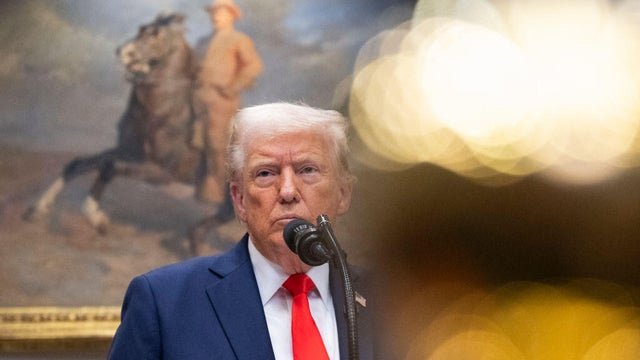
Canada, Mexico and China are hitting back with retaliatory tariffs. The moves raised fears of higher prices for U.S. consumers and a trade war.

From produce to gasoline to electronics, CBS MoneyWatch correspondent Kelly O’Grady looks at what products might get more expensive for American consumers after President Trump imposed tariffs on all goods imported from Canada and Mexico, and increased existing tariffs on imports from China.

The United States imposed 25% tariffs on nearly all goods imported from Mexico and Canada on Tuesday, as well as an additional 10% tariffs on imports from China on top of those already in place, bringing them to 20%. All three nations plan to retaliate with their own tariffs on the U.S.

The tariffs mean the prices are of things like gas, cars, lumber and groceries are expected to go up within the next few weeks.

President Trump said he plans to impose tariffs on Canada and Mexico starting next week, while also doubling existing tariffs on China. Meantime, the president also is doubling down on his Department of Government Efficiency’s bid to slash federal spending and chop the workforce.

Drivers say those inspections take several minutes each, causing up to three-hour delays.

The tariffs have been placed on hold after President Trump spoke to the leaders of our closest neighbors on the phone. Erica Brown reports.

While the tariffs on Mexico and Canada have been paused, there was still concern late Monday about what happens next month if the tariffs go ahead in a month.

President Trump is pausing tariffs targeting imports from Mexico and Canada for a month after the two countries agreed to beef up border security.

The tariffs in Canada and Mexico were paused Monday, but gas and lumber are two of the big commodities that would potentially be impacted if they go ahead. Megan Hickey reports.

President Trump's tariffs against Mexico and Canada have been paused, but there is concern about the effects in particular on the gas and lumber industries if they go ahead. Megan Hickey reports.

President Trump also said he spoke with Canada's Justin Trudeau Monday morning and will speak to him again, raising the possibility that a trade war may be avoided.

America is on the verge of an international trade war after President Donald Trump signed an order imposing 25% tariffs on Canadian and Mexican neighbors and an additional 10% levy on goods from China.

President Trump said Sunday night that a European tariff is likely next, and that Americans could feel some pain with all this. This comes as the stock market set to open down sharply on news that these massive tariffs on our largest trading partners kick in Tuesday. Political Reporter Chris Tye reports.
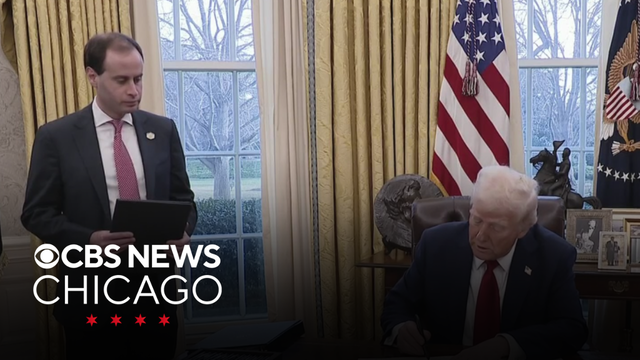
Mexico and Canada are set to face 25% tariffs — with the exception of Canadian energy at 10% — while China will face 10% tariffs. As Andrew Ramos reports, Canadian Prime Minister Justin Trudeau has already retaliated.

Canada responded hours later with retaliatory tariffs of its own, while Mexico said it was also planning to issue tariffs on the U.S. as well. China's commerce secretary said that China would challenge the tariffs through the World Trade Organization, according to Reuters, claiming that the move "seriously violates" WTO rules.

Gas Buddy experts say a 25% tariff on Canadian imports could add 30 to 40 cents a gallon at the pump.