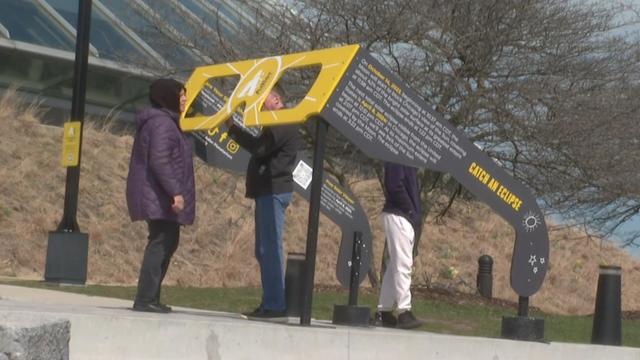
Chicago's Adler Planetarium prepares for solar eclipse activities
Experts say on April 8 in Chicago, the sun will be covered at 94%. A team from the Adler Planetarium is preparing for the big event in Chicago and Carbondale in southern Illinois.
Watch CBS News
Experts say on April 8 in Chicago, the sun will be covered at 94%. A team from the Adler Planetarium is preparing for the big event in Chicago and Carbondale in southern Illinois.
Gov. Eric Holcomb issued an executive order to expand the state's emergency response capabilities – allowing local dispatchers to tap into resources from neighboring states if needed.
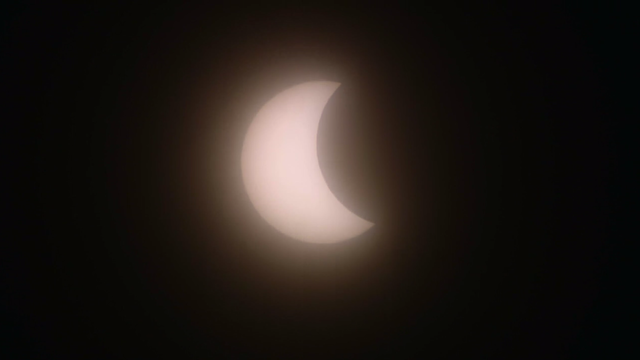
Looking at the eclipse requires special glasses that protect against the sun's powerful rays.
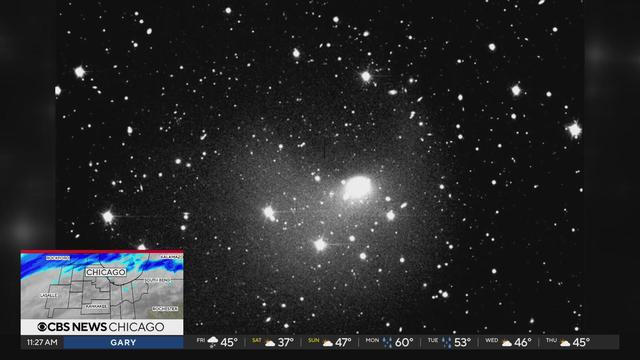
A horned comet called the Devil Comet will be visible during the eclipse on April 8. It travels around the sun once every 71 years, similar to Haley's Comet. It gets its name due to its unusual shape.
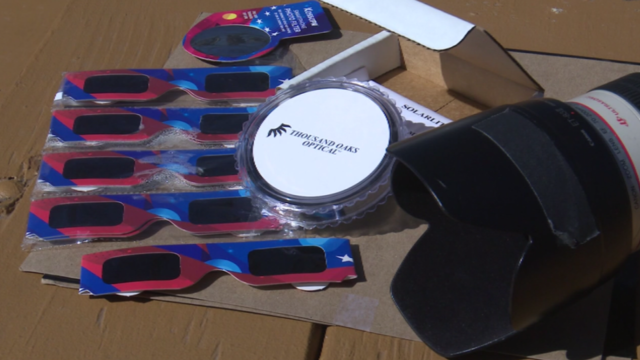
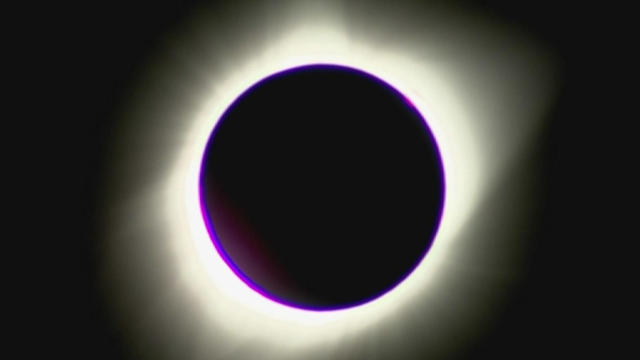
The eclipse, expected on April 8, will be the last one visible from the continental U.S. until 2044.

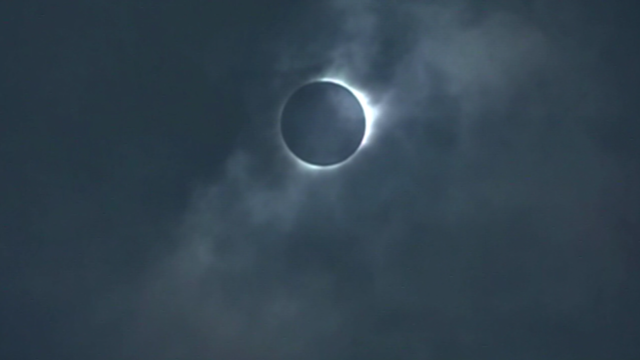
The peak of the total solar eclipse is just after 2 p.m. Monday, April 8.

Adler's event starts at 12:30 p.m. in the afternoon, on Monday, April 8. The peak of the eclipse is just after 2 p.m.
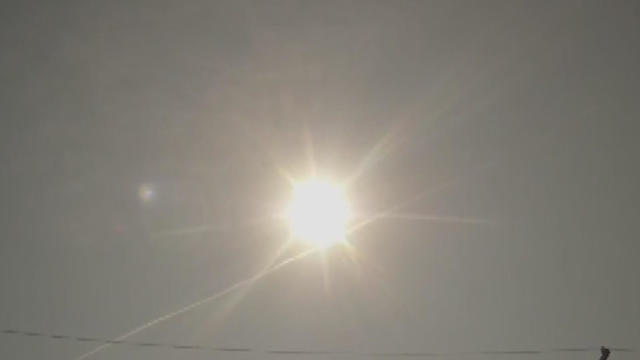
The eclipse, expected on April 8, will be the last one visible from the continental U.S. until 2044. CBS 2 wants viewers to have a good memory of the celestial moment, so it's important to know how you can literally get burned if you're not equipped for the eclipse. CBS 2's Lauren Victory reports.
Triton College's Earth and Space Center has the second largest planetarium in Illinois, and is planning an eclipse watch on April 8.
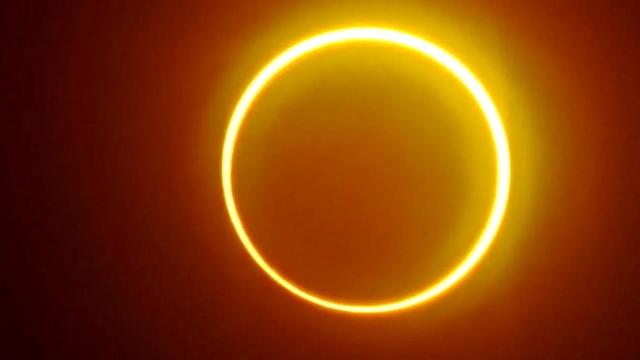
The telescope can take pictures and videos, and is powerful enough to catch solar flares and sunspots from more than 93 million miles away.