ICE says they're conducting targeted raids in Chicago, but actions and reasons remain opaque

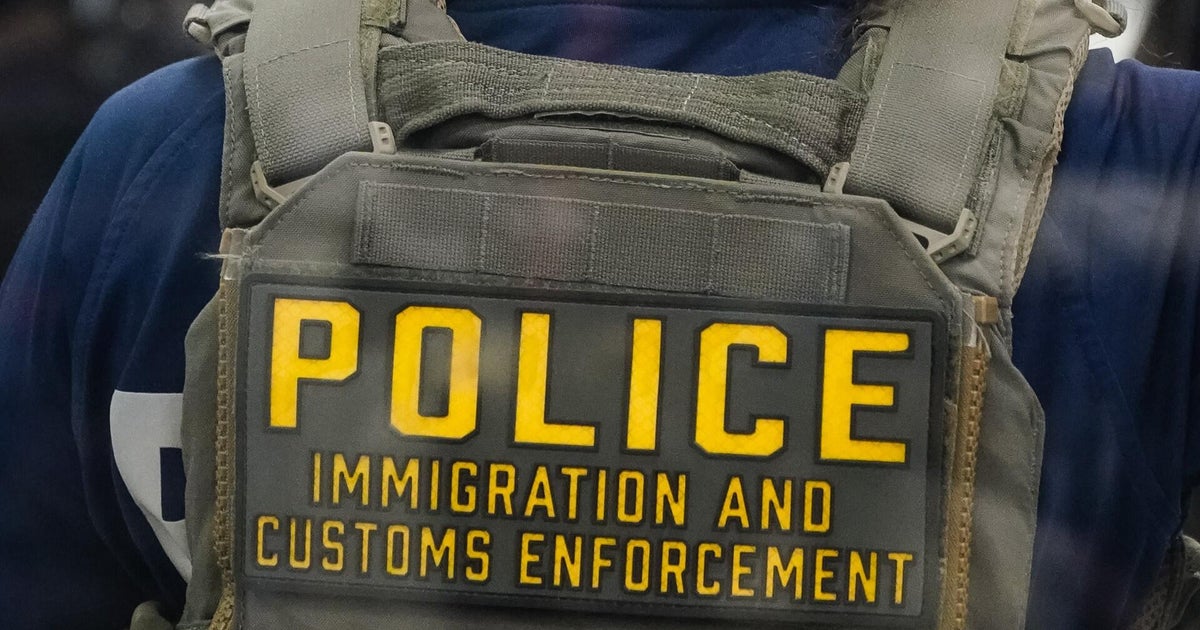
Since January, CBS News Chicago has been trying to figure out who U.S. Immigration and Customs Enforcement has been arresting and why.
Questions were asked about their tactics, use of force, and details about the people who have been taken into custody — those questions went unanswered, or the answers lacked specifics.
After countless requests, ICE agreed to speak in person.
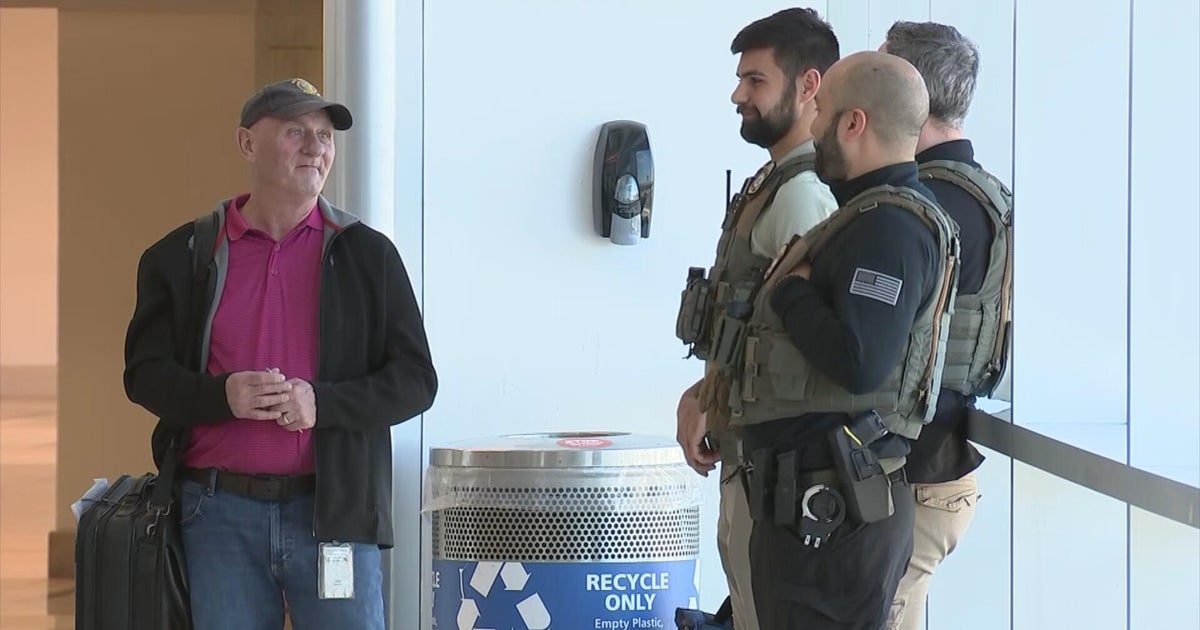
Before the sun rose, Chicago ICE field office director Sam Olson drove CBS News Chicago into the Broadview ICE processing center. On the other side of the gates were white buses with people inside, destined for out-of-state detention.
While many in the Chicago area have openly said they're afraid to leave their homes because they may be profiled as an undocumented immigrant, Olson denied that's how ICE works.
"We don't profile. Even in our Chicago office, we probably have, nearly, probably people from 100 different nationalities, different countries, in our custody," he said. "That's not something we do." He said many things make a person suspicious, not just a single indicator.
Enhanced immigration enforcement by both U.S. Customs and Border Protection and ICE has been documented frequently in immigrant neighborhoods like Little Village, Cicero, Pilsen, West Chicago, and Gage Park.
Still, it's unclear exactly who is on the buses at Broadview. A spokesperson for ICE said we may never know, citing privacy concerns. They said the agency only names some detainees who they called the "worst of the worst" as a matter of public interest.
Despite the claims that ICE only targets the worst criminals, Department of Homeland Security data analyzed by TRAC, a data gathering and research organization at Syracuse University, doesn't support the assertion.
"While we try to target the worst of the worst, there's times that we won't always be able to arrest the worst of the worst," Olson said.
That analysis of DHS data shows that as of Sept. 21, 72% of people detained nationally don't have a criminal conviction, and 25% of those people are facing pending charges.
On the day CBS News Chicago rode along with ICE, Olson said their planned arrest was considered "high risk" because he had a recent weapon-related arrest. Officers were looking for a 44-year-old Mexican national facing recent felony charges and, they said, two prior convictions. They said he drove a black Tundra.
"He has an autistic adult son with him, so if he has that son with him, again, there is a wife or a mom in the house, so have her come get the kid," he instructed his agents.
The agents waited about an hour on a quiet block in Burbank, Illinois, before they spotted a man who they said matched their description. They took him into custody and brought him to the parking lot near the Burbank Police Department.
ICE said his name is Flavio Retana-Segovia, and said he'd been previously convicted of solicitation in 2013 and of driving with a suspended license. CBS News Chicago could not independently confirm the solicitation conviction, but could confirm he is currently facing charges for burglary, theft, and illegal possession of a firearm. He had pleaded not guilty and was in court on the day he was taken into custody.
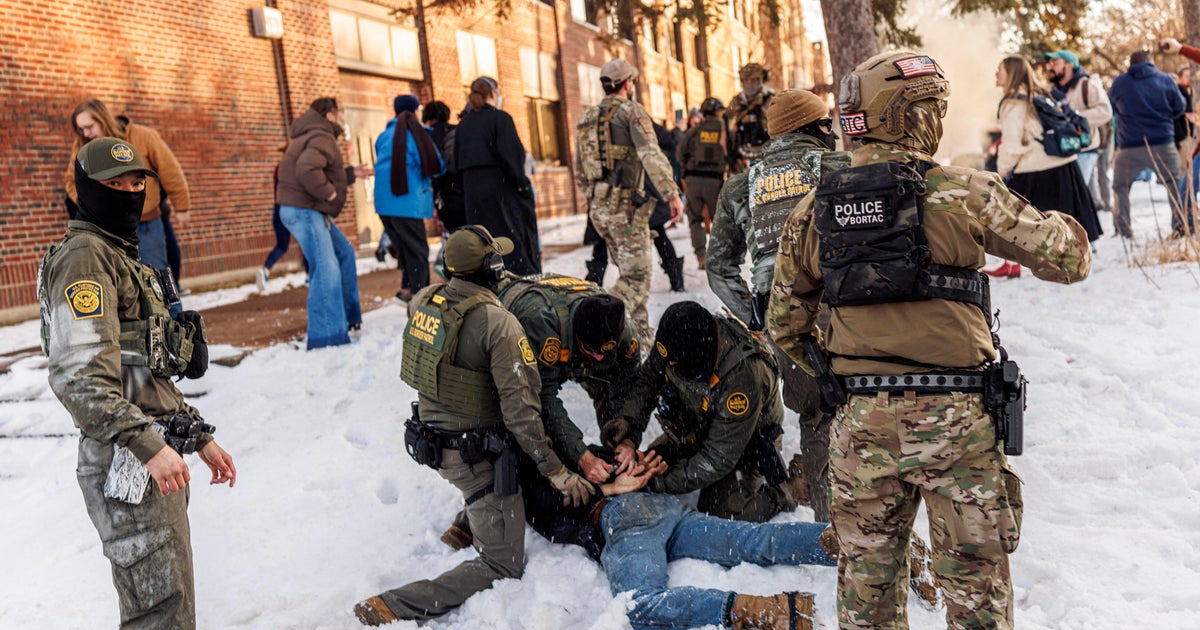
Federal agents have often been caught on video arresting their targets on the ground; CBS News Chicago wanted to understand why.
"That's just a way to arrest somebody, like if somebody has been resisting and we can't control them, we use the ground as help to be able to control them. If someone hasn't been resisting, that isn't a tactic that we normally do," Olson said.
From Burbank to Harvey. No arrests there. Then, in South Chicago, agents believed they spotted a car they were looking for, but then they found a man running, someone they said they weren't originally looking for. They said he had a Venezuelan ID. The agents asked why he ran. He said he was afraid.
ICE never gave his name. Aside from his apparent immigration status, it was unclear what he was being accused of.
We asked him if he understands why immigrants are afraid.
"I mean, I don't want to say that I understand why they're afraid, I understand that it is known that we are going out, we do have enforcement teams in the field seven days a week now enforcing anybody who is in violation of immigration law could be arrested," Olsen said.
As for whether people can expect federal agents at food pantries in Chicago, Olson said, "We go where the targets are."
"Essentially, that could be we take a whole approach to each target and depending on when is the best possibility that we can arrest somebody, depending on where it might be where they live, where they work on the way to work, and that's kind of where we go. We go where the targets lead us," he said.
Olsen said that agents are focusing on predetermined targets.
"There's times where we are going to be at locations and we might gather information while we're at that location that might lead us to a target, but right now, yes, the focus is on targeted enforcement."
According to DHS, there have been 3,000 immigration arrests since immigration operations began.
For context, there are an estimated half a million undocumented immigrants in Illinois.
When asked how long operations might last, ICE wouldn't release that information.
Note: For the ride along portion of this story, CBS News Chicago signed the ICE Media Embed Ride Along Waiver, which required we not identify certain federal agents' faces.