Border Patrol Cmdr. Gregory Bovino in Chicago as federal agents detain people in Little Village, Cicero and Berwyn


U.S. Customs and Border Protection Commander Gregory Bovino, who was at the center of several use-of-force lawsuits and the most violent, controversial actions of Operation Midway Blitz, was back in the Chicago area Tuesday morning.
The enforcement action sends a clear message that although some declared Operation Midway Blitz to be "over," it is not.
A source tells CBS News Chicago this will not be the only day the city will see federal agents out in force. A U.S. Department of Homeland Security spokesperson told CBS News that Bovino has temporarily come to Chicago to continue immigration enforcement, and would not confirm when he intends to return to Louisiana.
In a video shared with CBS News Chicago by an immigration rapid response group, Bovino can be seen on the sidewalk standing with a group of Border Patrol agents, talking and laughing. The video was taken near Midway International Airport, which is not far from the initial sightings of him in Cicero.
Bovino and his team of agents in tactical gear wasted no time taking people into custody, seemingly at random off the street. Federal agents sped through Little Village, making frequent stops and meeting protesters at every turn.
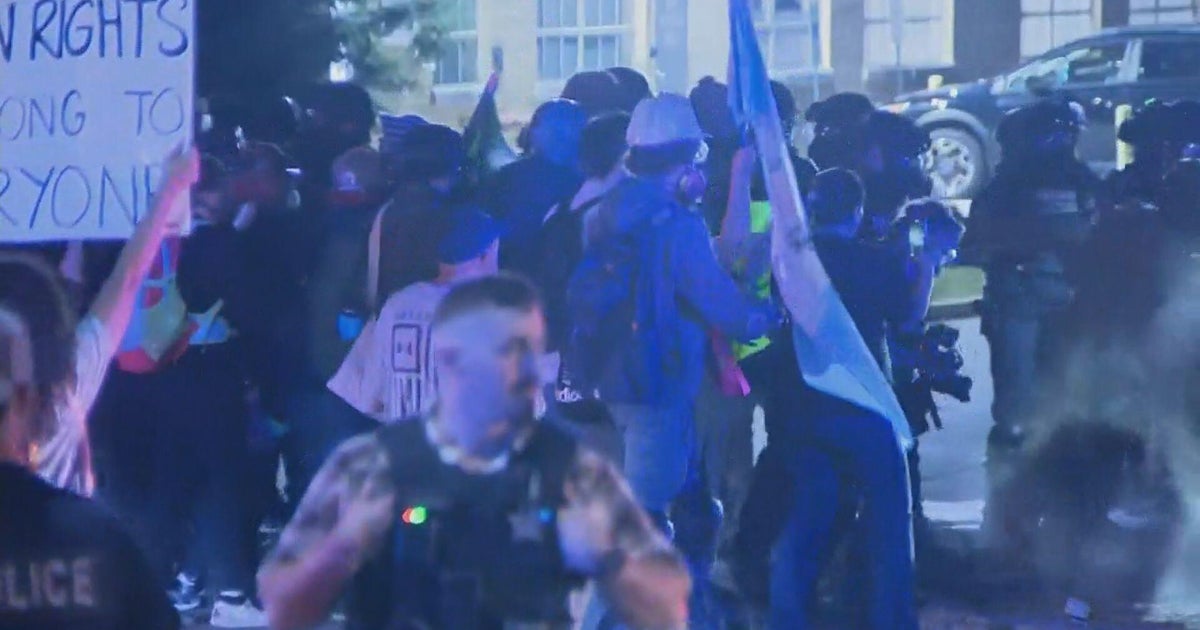
Neighbors tried to use a large rock to block agents from making their way down 26th Street through the neighborhood, but it did not work. Groups of residents and protesters were out throughout Little Village, blowing whistles, filming, and confronting agents as they continued their operations.
Near 27th Street and Ridgeway Avenue, Bovino and his agents wrestled at least one person into an unmarked vehicle. A couple of blocks away at 33rd Street and Ridgeway Avenue, CBS Skywatch caught CBP agents detaining a person and loading them into a white SUV.
Robert Aguilar, whose family owns the Village Laundromat at 26th and Avers, saw and heard the commotion heralding CBP's return as they began detaining people on Tuesday morning.
"I was just filling up some soap, I just hear a bunch of whistles," he said. "Right away, I opened up and let some people in."
"He's been all over the country terrorizing people, and the fact that we were just feet away was crazy, yeah," he added.
Video of the scene in front of the laundromat, taken by Juan Carlos Hernandez Muñniz of La Estrella Supermarket, shows the chaotic scene. He spoke in Spanish, saying he locked the doors because agents had already grabbed people.
"We're not terrorists," he said in Spanish. "We come to the country to work. We're not bad people."
Muñniz said business at the supermarket has slowed considerably because of the agents' presence, leading to empty store aisles and empty sidewalks. He said Bovino's return has now made the community more fearful of going out.
Enlace Chicago, a nonprofit in Little Village, went into a lockdown on Tuesday morning—their first since immigration enforcement ramped up earlier this fall. It was in response to Bovino, seen peering through glass blocks.
"Agent Bovino and others approached our front door and waved to our staff, a clear intimidation tactic," said Enlace Executive Director Marcela Rodriguez.
Community groups meeting after a long day, believing Bovino's presence was meant to intimidate their neighborhoods and prevent people from living their everyday lives.
Bovino was also seen at a Garfield Ridge picket line about a half-hour after striking workers arrived. Union reps said he asked to see the members' identification, though nobody was detained.
"Our members didn't take the bait. They weren't provoked," said Nicolas Coronado, Teamsters Local 705.
There were several confrontations between agents and residents, including some captured by CBS News Chicago reporters at the scene. In the case of the confrontation at 27th and Ridgeway, DHS officials alleged the man detained by agents threw a rock at one of their vehicles and shattered a window.
Chicago police were at that scene, and eventually paved a way for federal agents, including Bovino, to leave the area. The Chicago Police Department said their officers were there to maintain "crowd and traffic control to ensure the safety of everyone in the area, including those exercising their First Amendment Rights."
"CPD, in accordance with the Welcoming City Ordinance and departmental policy, did not assist federal authorities with any immigration enforcement," the statement concluded.
As the caravan of federal agents, with at least one CBP media person in tow filming the operations, traveled through the Southwest Side neighborhoods and into the near west suburbs, neighbors followed in their own cars, honking and blowing whistles to let people know Bovino and his agents are back.
At a gas station in Berwyn, agents made a stop and were again met with protests. One man told CBS News Chicago he had been arrested by Bovino previously, during this fall's, at times, tense demonstrations.
Agents drove into the parking lots of a Menards and a Food For Less, and pulled over at Cicero and Roosevelt with zip-ties ready at their hips, holding what appeared to be a pepper bullet launcher. CBS News Chicago did not see any less-lethal weapons deployed on Tuesday.
For some, the shift seemed to end back at Broadview, but it was not immediately clear how many people detained were taken there.
Local leaders at a news conference decry the latest actions by the agents.
"We witnessed how agents were driving their cars without license plates, the wrong way on one-way streets, running red lights, and behaving recklessly," said Any Huamani of the Brighton Park Neighborhood Council. "This is not law. They are the real danger in our communities."
Gov. JB Pritzker said he was not informed of Bovino's visit, but added he believes residents are more prepared for this round of enforcement.
"Frankly, I am very proud of the way that Illinoisans have reacted to CBP and ICE, and that is in pulling out your whistles, and your phones, video everything, posted online," he said.
DHS has not addressed the reports of intimidation.
Pritzker said the newly formed accountability commission, looking at the actions of immigration agents, has a hearing on Thursday. He said it's unclear how long they'll stay in the city.
While he hasn't been seen in weeks, at one point on Tuesday, Bovino told protesters, "We never left."
Aguilar said he believes his Little Village community will have to continue to endure federal activity. This is with the Christmas holiday just days away.
"They're going to be here, and even if they do leave, which we saw they'll probably be back even when spring and summer comes, so that's just reality," he said.
The first reports of Bovino's return came from social media, saying he was spotted at a Walmart in Cicero, Illinois. In one video, Bovino and about half a dozen CBP agents in full tactical gear can be seen by a white SUV taking a man in a gray hoodie into detention with zip-ties as another agent in a uniform labeled "MEDIA" films the detainment.
The Department of Homeland Security has regularly turned its own footage of immigration operations into social media videos as it has ramped up immigration enforcement nationwide, including a controversial overnight raid at a South Shore apartment building.
CBS News Chicago has reached out to DHS for more information about who was detained on Tuesday and why.
Government data on detentions in Operation Midway Blitz through mid-October found that only 3% of immigrants detained had convictions for violent crimes, only 15% had any criminal conviction, and another 18% had pending criminal charges. The data revealed that the vast majority, 67%, have only civil immigration violations like overstaying visas or crossing the border illegally.
Lawsuits over Bovino and his agents' use of force are ongoing
Bovino left Chicago after two and a half months of leading Operation Midway Blitz in mid-November, as the Trump administration's immigration enforcement goals turned their attention to Charlotte, North Carolina, then New Orleans before coming back to the Midwest for operations in Minnesota.
At the time, the Department of Homeland Security indicated that agents would return in the spring, but didn't specify a timeline.
Bovino's arrival in Chicago toward the beginning of Operation Midway Blitz led to a swift increase in CBP agents on the streets in the greater Chicago area, as well as a marked escalation in the use of force against civilians and protesters.
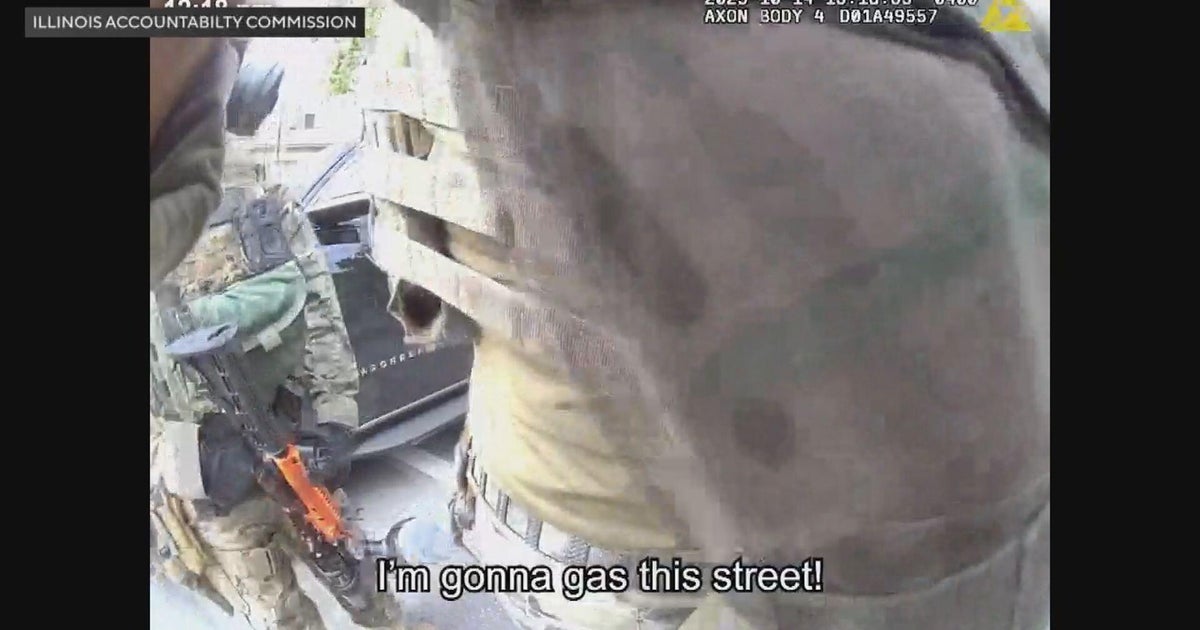
Soon after taking over, CBP agents started deploying tear gas against civilians, media, and protesters on residential neighborhood streets and near schools. That led to a federal use-of-force lawsuit, testimony in open court, and hours of depositions. Federal Judge Sara Ellis issued a preliminary injunction against federal immigration agents in early November over the use of force, setting sharply stricter limits on what they could do and when.
When Bovino left the city, hundreds of CBP officers left alongside him.
About two weeks after Bovino left, attorneys for the group of journalists, clergy, and protesters who were at the center of the use-of-force lawsuit moved to have the lawsuit dropped, saying that as Bovino had left, it appeared the Trump administration's immigration enforcement blitz had ended, though the government argued that was not the case. The preliminary injunction was being considered by an appeals court at this time.
DHS sent a statement in response to CBS News Chicago inquiries, saying in part, "As we said a month ago, we aren't leaving Chicago and operations are ongoing."