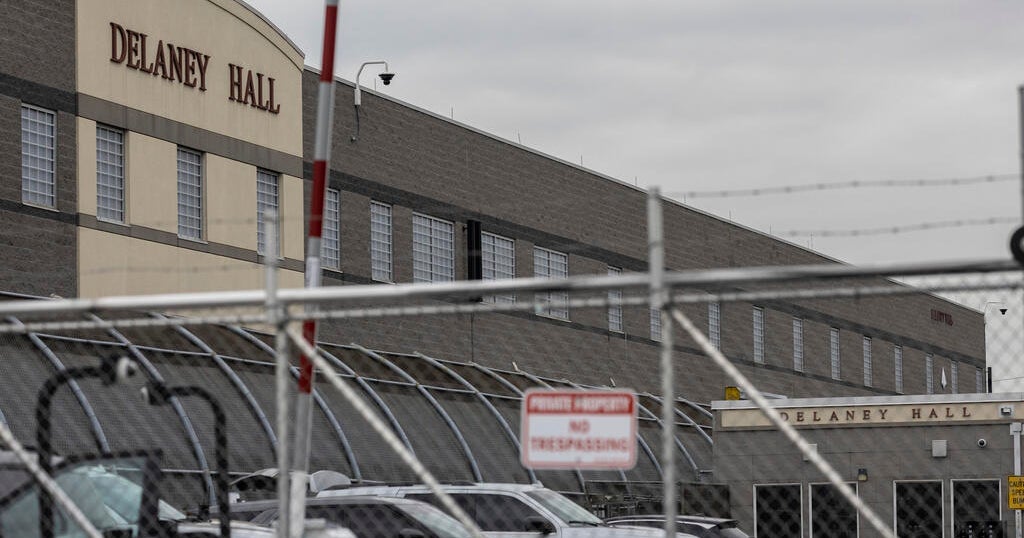
Federal judge again declines to grant restraining order against DHS in Minnesota
A federal judge said there will be no decision on Monday in Minnesota Attorney General Keith Ellison's bid to end to Operation Metro Surge.
The state of Minnesota and the cities of Minneapolis and St. Paul are seeking a temporary restraining order in their lawsuit against Homeland Security Secretary Kristi Noem and other Trump administration officials, arguing the influx of thousands of immigration agents to the state has caused "tremendous damage."
Tricia McLaughlin, U.S. Department of Homeland Security's assistant secretary, previously called the suit "baseless."
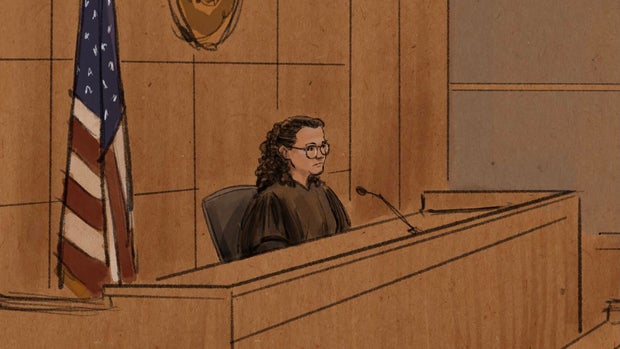
Judge Kate Menendez, an appointee of former President Joe Biden, said at the end of Monday's hearing she is going to take the time "to do everything I can to get it right" on whatever final decision she makes.
Menendez was just as skeptical of the rationale of the U.S. Department of Justice and Trump administration for the deployment and the number of federal officers deployed as she was the state's arguments.
She started off by acknowledging the significance of Monday's hearing and the weeks-long record of court filings in front of her, but said "most of the complexity … rests on the legal questions" of what Minnesota is asking for in the case and not on the actions of the Trump administration.
The plaintiffs' arguments
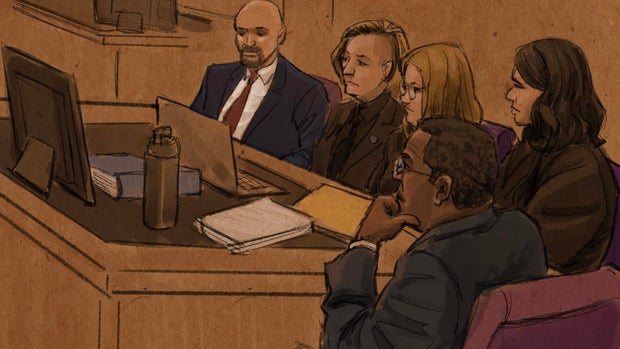
Lindsey Middlecamp, an attorney with Ellison's office, said Minnesota should not have to deal with this "unchecked invasion and occupation" another day, and asked Menendez to issue an immediate restraining order. Middlecamp argued that Operation Metro Surge, which she described as the largest federal deployment of law enforcement in U.S. history, has brought an "unprecedented force of masked agents" who are "racially profiling and inflicting violence" in their wake.
Middlecamp accused U.S. Attorney General Pam Bondi of sending Gov. Tim Walz "a ransom note," which she said President Trump reaffirmed in social media posts, demanding Minnesota to "either change their policies" or suffer further.
Middlecamp also noted the toll Operation Metro Surge has taken on Twin Cities schools, the health care system and small businesses, saying the city is essentially back to COVID levels.
Ellison's team also underlined the "pervasive and systematic retaliation against legal observers," including the "indiscriminate use" of chemical irritants.
"They are finding any way they can to find and punish those who speak up against this misconduct," Middlecamp said. "Harms are accruing every day."
Menendez was skeptical of exactly what harms the state is alleging and under what past precedent case law can give her guidance to make a decision, and what exactly the solution is in this case.
Minnesota Assistant Attorney General Brian Carter then alleged that DHS "designed" plans to force Minnesota to expend its resources.
"The difficulty with the case law on this situation is that this situation is unprecedented in the 250-year history of this country," Carter said. "We have never had a federal government amass an army of 3,000 to 4,000 masked federal agents and sent them into a state to essentially stir the pot with conduct that is pervasive and includes widespread and illegal violent conduct."
Menendez replied that while Minnesotans are in "shockingly unusual times," she's unsure if she has the leverage to stop it as a whole. She added that the "defining principle" of the argument is something that she is "struggling with here," adding that the federal government has tremendous power in immigration enforcement.
Carter said he has seen a "crystallization" of efforts, citing Bondi's "shakedown" letter.
"'You need to do these three things, and if you do it, we'll get these officers off your streets,'" Carter said. "It's a particularly damaging flavor of extortion."
Carter cited the 10th Amendment in the Bill of Rights, which states the "powers not delegated to the United States by the Constitution, nor prohibited by it to the States, are reserved to the States respectively, or to the people."
"This administration is not content with the rule of law," Carter said. "This administration is not content with the courts working this stuff out."
Carter said instead, the administration is putting "violence on the streets" of Minnesota.
"That has to violate the 10th Amendment," Carter said.
Menendez said she wants to know the parameters of the ruling if there is one, adding there is "no question" the federal government can enforce immigration laws, but she questioned how she is supposed to be able to delineate between legal response and illegal response by the government.
"I don't know what the line is," Menendez said. "Is it the motivation, is it the scope, is it the illegality?"
"That kind of coercion … when Congress legislating that states are required to run background checks, if those violate the 10th Amendment, this has to. It's beyond debate," Carter said. "This is so far beyond the pale of legality, this is such an affront on the sovereignty of the state."
Carter also underlined the unprecedented nature of the Trump administration's attack on states "based on personal animosity."
"The president of the United States said, he said, 'Minnesota, your day of retribution is here.' That is crazy," Carter said. "How can that not violate equal sovereignty … If this is the way things go, if this is not stopped, what is going to happen to the next administration?"
Menendez ultimately pushed back on the state's requests for a temporary restraining order.
"You're asking me for a TRO. What does it say? What exactly do I do?" Menendez said.
Carter argued that the easiest, most straightforward thing is to end Operation Metro Surge.
"The whole Operation Metro Surge is an illegal means to an illegal ends, so just end it," Carter said. "End the whole thing, is the appropriate remedy here."
Menendez replied with a question.
"I can do all that?" she said.
The defense's arguments
After a brief recess, Menendez asked U.S. Department of Justice attorney Andrew Warden if the explicit goal of Operation Metro Surge was to get Minnesota to change the policies listed out in Bondi's memo — the contents of which did not sit well with Menendez.
Warden replied that "the goal of the surge is to enforce federal law." Menendez then pushed again, asking if Minneapolis changed its policies and the state did the same thing, would the surge end?
"I can't commit to a specific numbers of officers leaving," Warden said.
Menendez, pushing again, asked: "But it would change? Aside from the fact that policies have been in effect for years, if they changed policies tomorrow, you'd leave?"
"The goal of the surge is to enforce federal law," Warden said.
Menendez then asked how Bondi's letter and written statements to the court do not demonstrate that the purpose of the surge is to affect the three changes the U.S. attorney general listed. Warden deflected, adding there was a need for "compensation" to supplement the "vacuum" left by the state and local leaders on immigration enforcement.
"It's not like you can fix it overnight, let's say they fix it in a week. If it is true you're there because those policies had consequences, do you think it's true that the motivation matters?" Menendez said. "Let's imagine Bondi said we are here till you change your policies? Does that not violate the anticommandeering principle?"
"If there is a less of a need for federal law enforcement, then our involvement will change," Warden said, but added it's "undisputed that federal law enforcement can be here enforcing federal immigration law."
Menendez then pressed Warden on Mr. Trump's comments on "retribution."
"I have not exactly seen that Truth Social recently," Warden said, referring to posts from the president's social media platform.
Next, Menendez mentioned Chicago, which had a DHS surge last year, and cited the lower number of federal law enforcement officers who were deployed to a much larger city to deal with potentially a much larger problem. She said there are "vastly more" law enforcement in Minnesota "than was even thought to be necessary in Chicago."
"Is there a point in which it can no longer be depicted as a rational law enforcement response?" Menendez said.
Warden responded by citing Trump's Article II powers, and said it would be "difficult to craft a remedy in light of that," adding that he doesn't "see how a court can say this amount of officers is the right amount" if requested by DHS.
Menendez said Bondi's letter "concerns" her in describing the DOJ's goals, because all three points are already being litigated in federal court in the state.
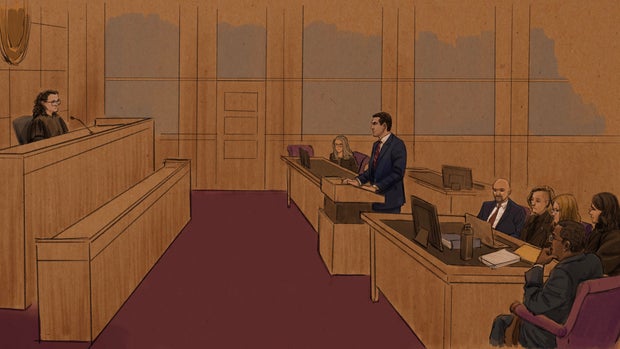
"Is the executive trying to achieve a goal through force that it cannot achieve through courts?" Menendez said.
"No, your honor," Warden said, adding that "when there's a vacuum in law enforcement" the federal government has gone in historically. Warden said he "doesn't see how" operating on one front in Minnesota stops the law enforcement there from enforcing other laws.
Warden and his justice department team finished their arguments by telling Menendez they do not see the grounds for an injunction of any type and that there would be an "administrability problem" with pausing Operation Metro Surge in any respect, adding it would be "very difficult to implement."
The plaintiffs got the final word before recess on Monday, with Minneapolis city attorney Sarah Lathrop saying relief is needed because it's "clear that the intense situation on the ground" is not getting better.
"The court in its exercise can say 'we're stopping, we're pausing,'" Lathrop said, adding there's a chance of proceeding the case over the long term.
"You don't have to draw the lines now," Lathrop said.
The plaintiffs asked for Menendez's order to return the federal law enforcement back to the status quo in the state to Nov. 30, the day before Operation Metro Surge began.
"This weekend demonstrated in a terrifying way that the current situation is untenable," Lathrop said, referring to the fatal shooting Saturday of 37-year-old Alex Pretti by Border Patrol agents in Minneapolis.
Lathrop said an order needs to come now to "take down the temperature."
"Not all crises have a fix from a district court injunction," Menendez said. "There are other things that are supposed to reign in this kind of conduct. It must be that work is being done elsewhere to bring an end to what is described here, not just counting on a single district court writing a single preliminary injunction."