"Hopeful" sign for right whales: Critically endangered species sees highest number of births since 2009
Researchers say there's "positive news" for the critically endangered North Atlantic right whale. The recent calving season has produced 23 births, the highest number for the species since 2009 and the fourth-highest count since tracking began.
More than one-third of those mother-calf pairs have been spotted in Cape Cod Bay in the past month. New England Aquarium researchers say it's a good thing that whale mothers are giving birth more frequently.
"While a healthy right whale can give birth every three to four years, we had been seeing nearly 10 years between calves for some females," the aquarium's scientific program officer Amy Warren said in a statement. "Many of this year's moms have had shorter intervals - 18 of them previously gave birth within the last six years - giving us hope that they may be healthier and can help grow the population faster."
The age of this calving season's whale mothers range from 10 years old to over 40. They give birth off the southeastern coast of the U.S. between Florida and North Carolina starting in mid-November and make their way north to New England waters.
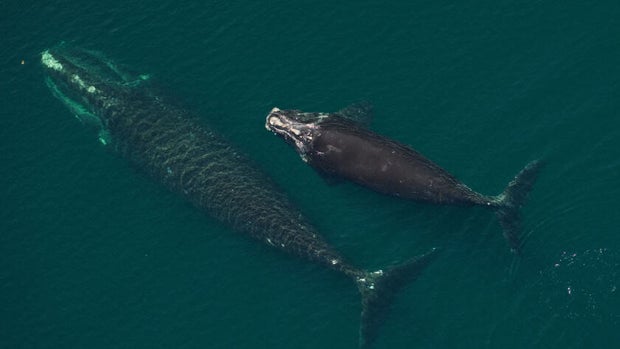
Aerial observers earlier this year spotted 33 right whales in Cape Cod Bay, which broke a single-day record for January sightings.
There are estimated to be about 380 right whales left in the world. The population has seen a trend of slow growth over the last few years, but they are still threatened by deadly boat strikes and entanglement in fishing gear.
"It is hopeful to see 23 new calves born this year, but their survival into adulthood is still a long journey ahead in an ocean with many dangers and obstacles," Warren said.


