Blocked vents and pipes, the dangers of carbon monoxide following Massachusetts blizzard
One of the most common hazards after a major snowstorm are blocked house vents and pipes, which could lead to carbon monoxide poisoning. The vents could be for furnaces, water heaters, dryers, chimneys, or even gas meter vents. These are crucial for bringing oxygen into the house and sending toxic chemicals out.
During snowy winters, it is very common for some of these intake or exhaust pipes to get snow covered. Even if they are several feet off the ground, snow drifts can easily pile up to five or six feet or higher. If your vents are located on the side of the house from where the main winds were blowing during the storm (northeast in the Blizzard of 2026), there is an even greater risk of blockage.
What you should do immediately
If you can safely reach your vents, go outside and inspect them to make sure they are clear. You should give them at least two to three feet of clearance.
If you smell gas inside your house, exit immediately and call 911. Since carbon monoxide is odorless, you may not be alerted to high levels until it is too late.
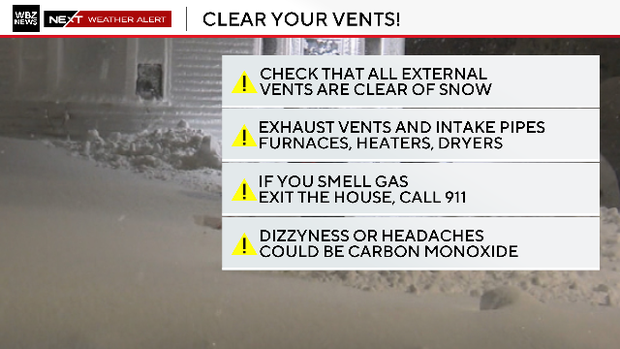
Every home should have ample carbon monoxide detectors, and they should be checked frequently.
If you are experiencing unusual dizziness or headaches, it could be CO poisoning.
Some things to consider before next winter
Inspect the outer walls of your home and make a mental note of where your pipes and vents are located.
If possible, mark them so you can easily find them the next time they are covered in snow.
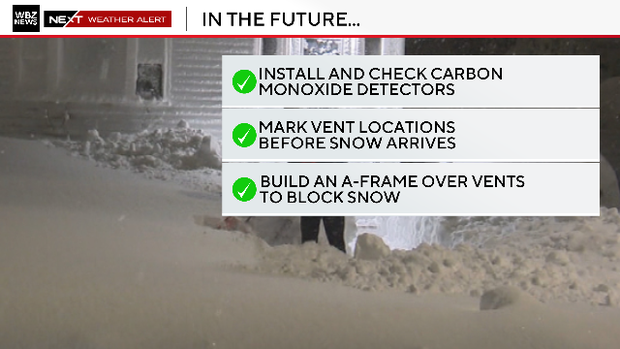
You may also consider a simple A-frame cover for your vents, blocking any falling snow from the area. This is especially useful to prevent snow falling from your roof and piling up near vents.
In Scituate, Massachusetts on Tuesday, officials issued a warning about carbon monoxide due to an improperly placed generator. Four people were hospitalized after a generator was put inside a closed garage. Officials say generators should be at least 20-25 feet from your home.
It is also important to keep your vehicle's exhaust pipes clear of snow and debris when they are idling.