Watch CBS News

In 2013, 60 Minutes' correspondent Bob Simon reported on the extreme sport of free diving, in which divers descend hundreds of feet down into the sea on one single breath.
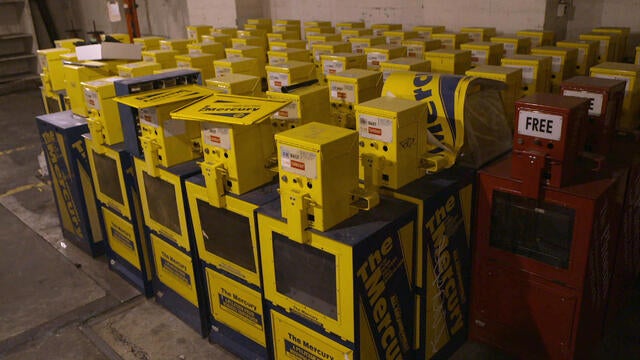
In 2022, when 60 Minutes reported on the decline of small-town newspapers, Jon Wertheim met Stewart Bainum, who was in the process of launching The Baltimore Banner. This week, the paper won a Pulitzer Prize in collaboration with the New York Times for local reporting on the fentanyl crisis.

In 1987, 60 Minutes' Ed Bradley reported on the popularity of a course about the Vietnam War at UC Santa Barbara, where students often heard directly from veterans who shared their experiences.
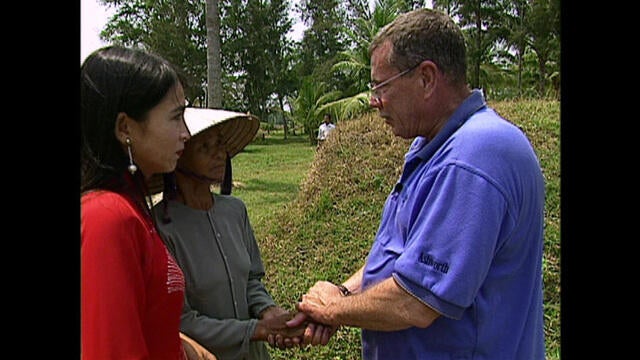
In 2004, Mike Wallace interviewed Larry Colburn and Hugh Thompson, members of an American helicopter crew who were credited with saving Vietnamese civilians during the 1968 My Lai massacre, which killed more than 500 unarmed civilians. In 1998, 60 Minutes first returned to Vietnam with Colburn and Thompson, where they met some of the people they rescued in My Lai.

In 2019, 60 Minutes reported on an NIH clinical trial using an innovative type of gene therapy to attempt to locate and fix the genes responsible for sickle cell anemia.

In May 2024, Pope Francis spoke with 60 Minutes, answering questions about global conflicts in Ukraine and Gaza, migrants in the U.S., sexual abuse in the church, and more. The pope died on Monday at the age of 88.

In 2001, Ed Bradley accompanied survivors and family members to the Oklahoma City National Memorial & Museum. The 1995 federal building bombing killed 168 people and injured hundreds more.

In 2020, Bill Whitaker first reported on the company BlueDot and their computer algorithm, which was among the first to detect the COVID-19 outbreak, tracking where the virus might spread next.

60 Minutes' Ed Bradley met Mario Vargas Llosa in 1989, when the Peruvian author was running for president of Peru. The prolific novelist, who later went on to win the Nobel Prize, has died at the age of 89.

In 1983, 60 Minutes' Harry Reasoner visited Greenland. In this excerpt, Reasoner reported that the world's largest island spanned 840,000 square miles — which is about three times the size of Texas.