NARRATOR:
00:03:30
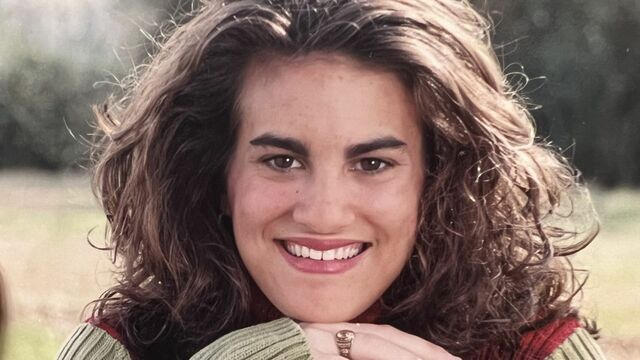
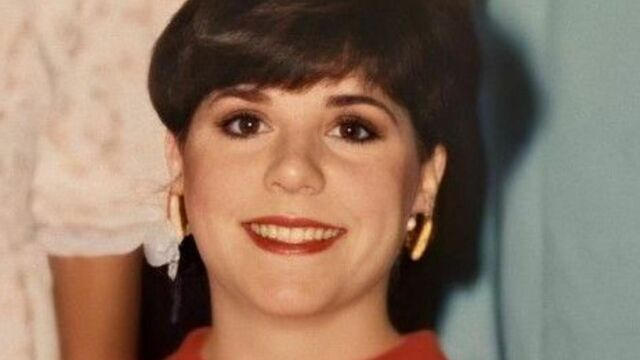
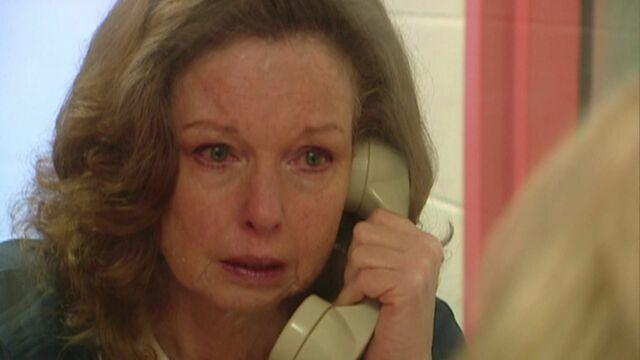
Seven years after she shot her husband in their suburban living room, Linda Duffey Gwozdz is in a Los Angeles County court, denying as strongly as she can that she is a murderess. This was a horrible accident, [CRIES] and I wish and pray constantly that I could be able to take away your pain, but I can't. [CRIES]
RICHARD SCHLESINGER:
00:03:57
This case is not a whodunit. It's more of a, why'd she do it? Linda admits she shot her husband, Patrick Duffey, in 2007, but she says it was an awful and unlikely accident. She's had to convince authorities that fact can be stranger than fiction, because her legal defense has featured, among other things, a cast of cartoon characters. Here, let me see that thing.
RICHARD SCHLESINGER:
00:04:23
Her lawyer has used the words of Bugs Bunny and Elmer Fudd to explain her actions, as he insisted she is innocent.
POLICE OFFICER:
00:04:32
We're going to ask you to tell us what happened today.
RICHARD SCHLESINGER:
00:04:35
Linda talked to police voluntarily and without a lawyer just hours after the shooting. It was pointed down. [CRIES] And the next thing I know, his head was right there, just laying there. [CRIES] Well, let's go by the House.
RICHARD SCHLESINGER:
00:04:58
Sean McCarthy and Shannon Laren have been homicide detectives for the LA County Sheriff's Department for 13 years. Forgive the cliche, but they really did think they'd pretty much seen it all. Here's the house right here.
RICHARD SCHLESINGER:
00:05:14
And then on April 26, 2007, they got a call about a shooting at the Duffeys' house in suburban Whittier. LINDA GWOZDZ (ON RECORDING): [CRIES] My husband was going to go from shooting, and I accidentally shot him. I need your help. [CRIES] DISPATCHER (ON RECORDING): OK, stay on the line with me, ma'am. This is the couch that you saw in the living room. Yes. Yes Mr. Duffey was right here
RICHARD SCHLESINGER:
00:05:35
McCarthy and Laren found Patrick Duffey dead on the couch. His left hand was in his pocket. And his right knee was being supported by a pillow. Very comfortable, relaxed.
RICHARD SCHLESINGER:
00:05:47
There was blood pooled on the floor and splattered on the wall. It was a pretty good sized blood puddle right in here. Clearly, he had a gunshot wound to the head.
RICHARD SCHLESINGER:
00:05:56
The couple's two teenage sons, Sean and Thomas, were at school, so Linda was the only surviving witness, and Detective Laren had a funny feeling. It looked like he'd been sleeping on the couch, and somebody walked up and shot him in his sleep. What did you think? I was leaning that this was an accident.
RICHARD SCHLESINGER:
00:06:16
Detective McCarthy has been investigating homicide cases for about 13 years and knows how to spot even the tiniest clues. He saw very little here that made him suspicious. Do you guys disagree, frequently, on cases? I disagree with all my partners on every case. Well, so how does that work? I think we wait until we have more information. I wanted to hear her story. She was very entertaining. Loved to tell stories.
RICHARD SCHLESINGER:
00:06:46
Julie Prendergast has been listening to Linda's stories since they first became friends in a college music program in the '80s. She said, well, actually, I'm from Ireland, and she started talking with what I thought was a pretty phony accent. That was my first indication that Linda was a little bit different.
RICHARD SCHLESINGER:
00:07:06
Julie says Linda could be irreverent, even goofy. I would say, Linda, I'm going to tell you something and you're going to want to laugh, but we're in class right now, so don't laugh out loud. And it would just pop out anyway.
RICHARD SCHLESINGER:
00:07:17
After they left school. Julie and Linda ended up working at the same place. And one day, Julie says, Linda called with some news. She said, I'm so excited. I'm getting married, and I'd like you to be in my wedding.
RICHARD SCHLESINGER:
00:07:31
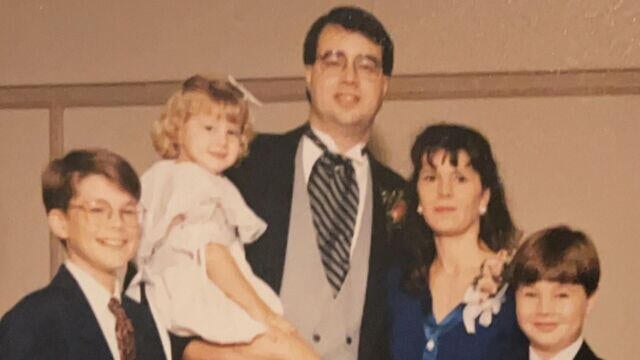
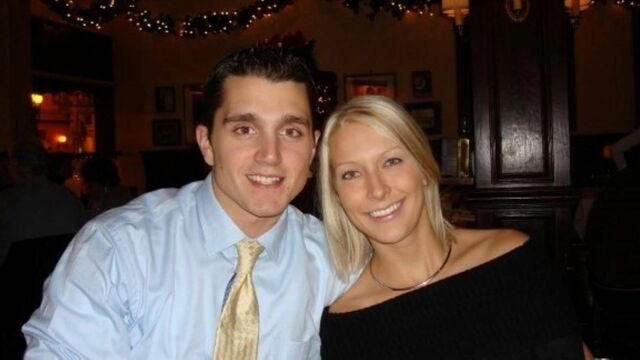
The groom was a man Linda had met four years earlier, Patrick Duffey, a radio engineer, gun enthusiast, and private pilot. She just said it was like her dream come true and she couldn't be happier. They seemed happy as a family. They understood each other.
RICHARD SCHLESINGER:
00:07:48
Patrick's sister, Catherine Hunt, says Patrick and Linda were soulmates and playmates. They were kidding with each other, joking with each other. We just always just joking around with each other and being silly and having a good time.
RICHARD SCHLESINGER:
00:08:02
And it was that silliness that became a cornerstone of Linda's story when she explained to police what happened the day she killed her husband. Then I came into the family room, and he was sitting on the sofa.
RICHARD SCHLESINGER:
00:08:17
She said they had just come back from a doctor's appointment. Patrick had chronic circulation problems. Linda said he'd been planning to go to the shooting range. [GUNSHOTS] His 38, one of three revolvers he kept in the house, was nearby. We keep it in this little locked box--
RICHARD SCHLESINGER:
00:08:36
Linda told police she usually stayed away from the guns, but that day, she picked up the 38. And the story got stranger as it went on. We do this little silly thing. We always relate little silly conversations to cartoons that we've seeing when we were younger and stuff. And he does this silly little Elmer Fudd voice, "no more bullets." And she claims she said to him, "no more bullets" in Elmer Fudd's voice. No more bullets. And she said his response was, "No more bullets." No more bullets.
RICHARD SCHLESINGER:
00:09:07
She said it was a game they played all the time, and that when her husband said, "No more bullets," in his Elmer Fudd voice, she took it to mean the gun was empty and that it was safe to try something Patrick had taught her. She said that she then wanted to impress him by showing him she can shoot cowboy style. [GUNSHOTS]
RICHARD SCHLESINGER:
00:09:29
It's called fan firing, and any fan of westerns knows it. You hold the trigger down and keep pulling back the hammer so the gun fires quickly. [GUNSHOTS] He told me there was no bullets in the gun.
RICHARD SCHLESINGER:
00:09:46
She says, once she started fan firing, she couldn't stop in time to avoid hitting her husband, who leaned into the line of fire. And the next thing I know, [CRIES] his head was right there. The statement about the fan firing-- it just didn't sound right.
RICHARD SCHLESINGER:
00:10:06
But his partner, Detective Sean McCarthy, who had heard his share of crazy explanations from suspected killers, listened to that panicked 911 tape, listened to Linda's story and concluded the story was just wacky enough to be true. The overwhelming feeling that I got from her was she was odd at best and eccentric at worst.
RICHARD SCHLESINGER:
00:10:32
After they interviewed Linda for an hour, they let her go home. And when you left work that day, did you have in your mind that she was a suspect? No.
RICHARD SCHLESINGER:
00:10:45
His gut told him Linda was innocent, but he'd need more. He'd need science. The muzzle of the firearm was between a distance of 1 and 7 inches from his head. [GUNSHOTS] [SOMBER MUSIC]
RICHARD SCHLESINGER:
00:11:11
When he first studied the scene where Linda Duffey killed her husband, Detective Sean McCarthy was pretty sure it was an accident. He believed her story that she had reenacted their favorite Bugs Bunny cartoon-- No more bullets. No more bullets.
RICHARD SCHLESINGER:
00:11:29
--and then fan fired the gun. And when he talked to Linda later that day-- Start with when you got up this morning.
RICHARD SCHLESINGER:
00:11:38
--she said nothing that made him doubt her. It is my fault. No, it's not your fault. It's just that we need to understand--
RICHARD SCHLESINGER:
00:11:48
Laren and McCarthy were beginning to understand more about what happened inside the Duffey home, especially after they talked to the medical examiner who had just done an autopsy on Patrick Duffey. There was a second gunshot wound. [EERIE MUSIC]
RICHARD SCHLESINGER:
00:12:06
Linda Duffey claimed this was an accident, but she had shot her husband in the head not once, but twice. And believe it or not, even seasoned investigators can miss that kind of clue at the crime scene. You could not see the second gunshot wound? Well, because dried blood and the amount of blood and coagulated blood, we weren't privy to the second gunshot wound. What did you make of that? Well, it certainly was a red flag.
RICHARD SCHLESINGER:
00:12:38
But it was not just a red flag for McCarthy's partner, Shannon Laren. It was more like a bright red arrow pointing right at Linda Duffey. There were so many highly improbable events that would have had to have all lined up for this to actually have been an accident. They didn't line up.
RICHARD SCHLESINGER:
00:12:58
Still, Sean McCarthy was not convinced. Why didn't you just say, this has got to be murder? Because I needed to be convinced to myself that this was murder. The last thing in the world I want to do is send an innocent person to prison for the rest of their lives.
RICHARD SCHLESINGER:
00:13:13
It wasn't enough for McCarthy to know what happened. He wanted to know why it happened. We struggled to find a compelling motive. And we looked and we looked and we looked. But they couldn't really find one. The Duffeys seemed to be an average middle class family living here in the LA suburbs. There was a life insurance policy on Patrick, but they'd bought that decades earlier. Plus, there was no evidence of cheating. And considering her eccentric personality, Detective McCarthy could not just dismiss Linda's story. OK, maybe this could have happened the way she said, because she's so quirky and eccentric.
RICHARD SCHLESINGER:
00:13:54
But it was about to get a little harder for McCarthy to believe Linda's story-- [SUSPENSEFUL MUSIC] --because of Tracy Peck, the firearms expert for the sheriff's department, who was brought into the case by McCarthy and Laren. Remember, according to Linda, she fired the way they did in the movies. [GUNSHOTS] It is possible to do that pretty easily with the right kind of gun. This is the kind of gun that you can fan fire, right? Correct. So this is a single-action revolver. This type of firearm is fired by cocking the hammer and pulling the trigger.
RICHARD SCHLESINGER:
00:14:37
The guns they used in the cowboy movies were single-action guns. You can easily keep firing quickly-- [GUNSHOTS] --by pulling and releasing the hammer while the trigger is held back. When the hammer is fanned, the cylinder will rotate with this type of gun, so it will fire the cartridges-- [CLICKING] --in the chambers of the cylinder as it's being fanned. The Duffey's had two single-action revolvers in the House, but the gun Linda used to shoot her husband was not one of them. It is a double-action revolver, and there's a big difference. The shooter simply pulls the trigger, which accomplishes both cocking the hammer and releasing the hammer, and the gun will fire.
RICHARD SCHLESINGER:
00:15:25
Two rapid fire a double-action revolver, the shooter has to do all sorts of things at the right time and in the right sequence. Is this gun designed to be fired that way? No. For the purposes of this case, I essentially invented a way in which I would conceivably fan this, and that included pulling the trigger, releasing the trigger, fanning the hammer, pulling the trigger, releasing the trigger, and fanning the hammer, but doing it pretty quickly. [GUNSHOTS]
RICHARD SCHLESINGER:
00:15:59
And Peck says it's very hard to aim while doing all that. She says the unexpected, deafening noise of the gun and the recoil would have alarmed Linda if she didn't know the gun was loaded. According to Peck, it would have been next to impossible for Linda, who claims to be an amateur, to shoot her husband twice rapidly by accident, especially since the wounds were so close together. [EERIE MUSIC] I don't find it a very believable story. I still wanted to believe her, but it clearly couldn't have gone down the way that she said that it went down.
RICHARD SCHLESINGER:
00:16:40
By now, Detective McCarthy was all but certain that Patrick Duffey's death was no accident, but the two detectives felt they didn't have enough to prove it. Because of a heavy workload, it took two years. But in January 2009, McCarthy and Laren brought Linda back in for another chat. The video wasn't working, but you can still hear their conversation. LINDA GWOZDZ (ON RECORDING): He showed me how to do it really fast. He goes, you've got to do it like the cowboys. Well, in the second interview, I think we were both convinced that this was a murder.
RICHARD SCHLESINGER:
00:17:16
They showed her a video of Tracy Peck fan firing the gun. I think she was certainly surprised when we explained to her how difficult it would be. I could tell the light bulb went on in her brain, and she said, I got to at least change the story a little bit.
RICHARD SCHLESINGER:
00:17:34
Linda now said she and her husband had practiced fan firing with an unloaded revolver for years. LINDA GWOZDZ (ON RECORDING): Maybe, like, 15, 20 times.
RICHARD SCHLESINGER:
00:17:45
Did you believe her this time? No.
RICHARD SCHLESINGER:
00:17:48
But the detectives wanted to give Linda one last chance to show them how she fired the gun. And they made her an unusual offer. Meet us at the range. We'll bring an exact replica, and show us that you can fire this gun in the manner that you said.
RICHARD SCHLESINGER:
00:18:06
The detectives were certain Linda would not kill again. So they let her go home again and waited to hear from her about their offer. Days turned into weeks, and then months, and life went on at the homicide bureau. We changed partners. And when that happens, you start getting new cases, and other cases start falling to the wayside.
RICHARD SCHLESINGER:
00:18:32
As the years passed. Linda might have thought she was off the hook, but her past was about to catch up with her. The district attorney said, I'm going to file this case, and you need to go get her. [SUSPENSEFUL MUSIC]
RICHARD SCHLESINGER:
00:19:02
With no news for nearly five years, Patrick Duffey's brother John and sister Catherine hunt, thought the police had decided his death was an accident and had closed the investigation. But Catherine says she had a hard time believing what Linda told her when she called on that awful day. She was incoherent. And I said, what happened? He was cleaning his gun, and it accidentally went off.
RICHARD SCHLESINGER:
00:19:33
Linda had told the police that she had shot Patrick by accident, but later that night, she told his siblings he'd shot himself. Could you picture him having that kind of an accident? No, absolutely not. We were raised with guns. And we were taught to empty our weapons before even entering the house. And that was the number one rule. It was hard to believe that he had done something like that.
RICHARD SCHLESINGER:
00:20:00
And Catherine learned she was right the day after Pat died, when she met Linda at the funeral home. I said, where was he shot? And she went like this, just like that. That's when it hit me that he didn't shoot himself. I said, so tell me what really happened. She said, oh, you're going to hate me. You're going to hate me. You're going to hate me. I said, no, I'm not going to hate you, but I need to know what the truth is. And I said, did you shoot my brother in the head? And she said, yes. [EERIE MUSIC]
RICHARD SCHLESINGER:
00:20:33
It was there in the funeral home where Catherine first heard the tale of Elmer Fudd. Pat had told her, "No bullets"--
RICHARD SCHLESINGER:
00:20:43
No-- "No bullets," like Daffy Duck and Elmer Fudd, because they would talk in cartoon characters sometimes. She thought the gun wasn't loaded, and it went off. I couldn't quite understand why she'd lied. If it was an accident, it was an accident. But she had lied to us.
RICHARD SCHLESINGER:
00:21:04
But the police still had to prove she had lied to them about why she shot him. Detectives had interrogated her twice and released her twice. The second time they let her go, they'd made that unusual offer to meet her at the firing range. We even told her, it can be at your convenience.
RICHARD SCHLESINGER:
00:21:23
They weren't shocked when they didn't hear back from her. And several months later, they stopped by the Duffeys' house and saw a For Sale sign. Her sons were home. And they said, she's on her honeymoon in Italy.
RICHARD SCHLESINGER:
00:21:37
Two years after the shooting, Linda Duffey was Linda Gwozdz, newly married to Lawrence Gwozdz, who anyone in the saxophone world knows is a world class player. [CLASSICAL MUSIC] When we googled him, he was playing in Carnegie Hall.
RICHARD SCHLESINGER:
00:21:57
And once again, when wedding bells rang, so did Julie Prendergast's phone. She asked me, would I sing in that wedding? And I said, what? Linda, I'm not coming to your wedding. Something's not right surrounding the death of Patrick?
RICHARD SCHLESINGER:
00:22:15
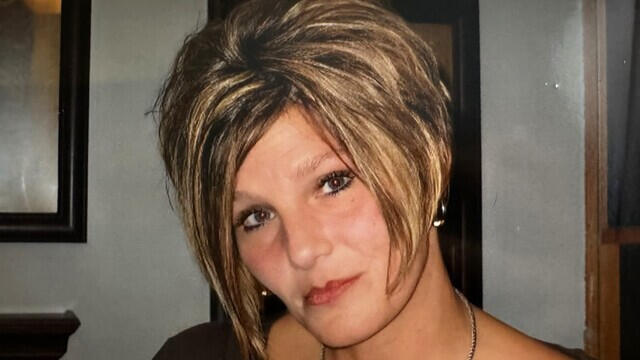
Julie says she was uneasy with how Linda just moved on. She dyed her hair blonde. She was wearing different style of clothes. She seemed to be walking on air, on clouds, like, oh-- just as happy as can be.
RICHARD SCHLESINGER:
00:22:29
A year after shooting her first husband, Linda met Gwozdz online. She moved to Mississippi, where her new husband was a music professor. She was out of sight, but for detectives Laren and McCarthy, she was not out of mind. Did you forget about this case? Was there a period of time where-- Oh, no. Absolutely not.
RICHARD SCHLESINGER:
00:22:51
When their workload with their new partners permitted, McCarthy and Laren each turned their attention back to Linda. [SUSPENSEFUL MUSIC] They wanted to take a new look at the blood evidence with a new expert, Paul Delhauer. He studied the photos and police reports and concluded that Linda had to be lying. Based on her statements, police believed Linda was claiming that she had fired quickly and from the same spot. She moved, and the relative position of the gun to the head changed. RICHARD SCHLESINGER (VOICEOVER): We are standing next to the couch on which Patrick Duffey died. Delhauer said the blood evidence told him a lot, especially these tiny stains on Linda's clothing and the walls called spatter, which he says came from the first shot. The barrel has to be within about three inches of the head in order to produce the spatter.
RICHARD SCHLESINGER:
00:23:47
Delhauer says the second shot created a large pool of blood on the floor in the exact spot where Linda said she was standing. She would have been getting jets of blood hitting her. Did Linda Duffey have any blood on her? Very little. Very, very little.
RICHARD SCHLESINGER:
00:24:06
Police thought they now had proof that Linda was lying. She didn't have enough blood on her after the shooting to support her story. Laren and McCarthy thought they knew what really happened. She took aim, fired one round while he was sleeping, realized he wasn't dead, comes back on target, fires the second round, and that's why they're within 2 inches of each other.
RICHARD SCHLESINGER:
00:24:31
They believe Patrick's death wasn't an accident. It was an execution. By 2012, the new prosecutor assigned to the case was eager to move ahead, and police began talking to Linda's co-workers. Boy, that was very revealing. They consistently talked about how she was so charming. But then as time went on, they started finding out that she was this compulsive liar.
RICHARD SCHLESINGER:
00:25:00
And Julie Prendergast had a few stories to tell about her one-time friend's record when it comes to telling the truth. We all have one gallbladder. Linda had hers removed three times. Linda just always needed to seem to want to have attention.
RICHARD SCHLESINGER:
00:25:18
It was enough for McCarthy. I became absolutely convinced that we need to prosecute her. [SUSPENSEFUL MUSIC]
RICHARD SCHLESINGER:
00:25:27
So finally, in May 2012, five years after Patrick Duffey's death, Detective McCarthy flew to Mississippi, where Linda and her new husband were living in a comfortable home and she had gotten a job at the university. You knock on the door. What's her reaction? Her reaction was, I thought the investigation was all over.
RICHARD SCHLESINGER:
00:25:51
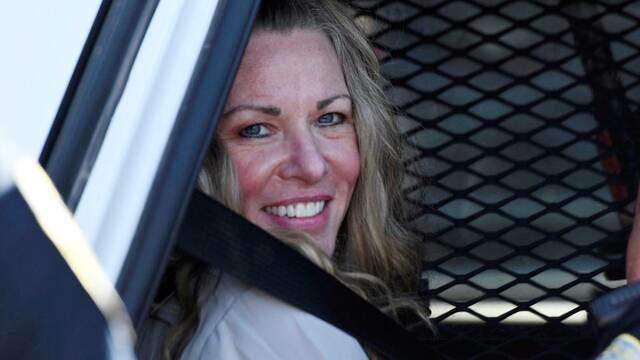
The investigation wasn't over McCarthy arrested Linda Duffey Gwozdz-- [GUNSHOT] --for murder, and everyone was in for some surprises. [SUSPENSEFUL MUSIC] It's been six years since Linda Duffey shot her husband to death. And she thought she was going on with her life with a new husband, a new house, a new look, and a new town. But now she's going on trial for murder.
REPORTER:
00:26:33
Tuesday, her freedom came to an end.
RICHARD SCHLESINGER:
00:26:36
And Joseph Low is her attorney. Unfortunately on this particular day, she was going to play with a gun again, like she'd done so many times before, and she rapid fired it and hit the top of his head. It's a complete accident.
RICHARD SCHLESINGER:
00:26:47
He'll argue that based partly on the words of Elmer Fudd-- No more bullets.
RICHARD SCHLESINGER:
00:26:52
--Linda thought the 38 revolver was empty. Did you ever consider the possibility that this-- what we'll call a Bugs Bunny defense, for lack of a better term-- could be true? 0% chance it's true.
RICHARD SCHLESINGER:
00:27:06
Deputy district attorney Robert Villa says in 27 years on the job, he's never seen a defense rely, even partly, on a cartoon. Bugs is having a conversation with Daffy Duck and Elmer Fudd.
RICHARD SCHLESINGER:
00:27:24
Watching a prosecutor parrot a Bunny was a first for us, too. But an official transcript of the cartoon had to be made. "What do you know? No more bullets." And then Bugs Bunny says, "No more bullets." As they're having this conversation, just as she went to fan fire the gun, he laid down and put his own head right in front of the gun. It's so ridiculous. You know and I know that strange things do happen. Strange things happen. This wasn't one of them. He was asleep. She shot him in the head twice. It was that simple? Open and shut? For me, it was. But it wasn't so simple for the jury. Over two weeks, they heard three recordings of Linda telling authorities about cartoon rabbits and cowboy fan firing. They also heard days of testimony from dueling experts about whether Linda's explanation made any sense at all. It was a lot for the jury to consider. It was difficult. For every expert, there's another one who can tell you a different story. RICHARD SCHLESINGER (VOICEOVER): The defense questioned whether prosecution expert witness Paul Delhauer-- She would have been getting jets of blood hitting her.
RICHARD SCHLESINGER:
00:28:35
--was really an expert at all. The jurors deliberated for a day but could not reach a verdict. Very few of us thought the intent was there. So how do you convict somebody when it could have happened exactly the way she explained it?
RICHARD SCHLESINGER:
00:28:51
With a deadlocked jury, the judge had no choice. He had to declare a mistrial. So you will be discharged on this case. It sends a clear message that the jury wasn't willing to convict on murder. Were you disappointed? I'm always disappointed when there's no verdict, because that means I have to do it again.
RICHARD SCHLESINGER:
00:29:14
And roughly one year later, with Linda having remained in jail-- Good morning, everybody.
RICHARD SCHLESINGER:
00:29:19
--Villa was doing it again. This time, his case will be very different-- He laid down on the couch.
RICHARD SCHLESINGER:
00:29:27
--streamlined and simple. His wife came up to him, put a gun between 1 and 7 inches from his head, and pulled the trigger. Some time went by. She pulled the trigger again.
RICHARD SCHLESINGER:
00:29:39
He says the Duffeys' marriage was strained, and she thought she might have to take care of her ailing husband. She's like, I'm not going to wait on this guy for the rest of his life. This was a premeditated and deliberate murder.
RICHARD SCHLESINGER:
00:29:53
For his opening arguments, defense attorney Joseph Low brings his own sofa to present this as a simple case. No motive, no intent, no crime. Pat was her best friend, and she was his. One of the things they loved to do is to watch cartoons together. They were goofy.
RICHARD SCHLESINGER:
00:30:16
But there are many aspects to this trial that are, if you will, offbeat. One of you asked the clerk about how these cameras work. Well, they're only on me.
RICHARD SCHLESINGER:
00:30:27
Judge John Torribio has a reputation for lightening the atmosphere for the jury. I'm the star, so don't worry.
RICHARD SCHLESINGER:
00:30:35
But things quickly get serious when the DA takes them back to the moment right after Linda Duffey shot her husband. LINDA GWOZDZ (ON RECORDING): My husband was going to go shooting, and he was showing me how to use a gun, and I shot him. It's hard to make out some of the words because she just-- she can't even talk. LINDA GWOZDZ (ON RECORDING): The gun didn't have any bullets. I thought that's what he told me. She sounds terrified and frantic to me. What did she sound like to you? She sounds like someone who is acting. [EERIE MUSIC] May I use the firearm to demonstrate? Just aim it at the jury. [LAUGHTER]
RICHARD SCHLESINGER:
00:31:15
Tracy Peck tells the jury Linda had to pull the trigger on this gun twice-- [GUNSHOT] --to get two bullets to fire. [GUNSHOT] If I do not release the trigger, the cylinder will not advance.
RICHARD SCHLESINGER:
00:31:29
The big surprise in this trial is what prosecutor Bob Villa leaves out.
BOB VILLA:
00:31:35
I'd ask that People's 1 through 35, be admitted into evidence. And with that, I rest. I rested my case after, basically, 2 and 1/2 days.
RICHARD SCHLESINGER:
00:31:42
Unlike the first trial, there is very little dense forensic testimony about blood stains. And most crucially-- Your last name's Duffey?
RICHARD SCHLESINGER:
00:31:51
--he does not introduce Linda's taped interviews with police where she first discussed Bugs Bunny. There was no need for Bugs Bunny. No need unless she took the stand.
RICHARD SCHLESINGER:
00:32:03
Villa has thrown defense attorney Joseph Low a curveball. Since the defense isn't allowed to introduce the interrogations unless the state does first, the only way jurors will hear Linda Duffey's side of the story is if she takes the stand and exposes herself to cross-examination. Were you hoping she would take the stand? Absolutely. Were you ready? Absolutely.
RICHARD SCHLESINGER:
00:32:29
Low begins his defense with a good offense. His first witness is the detective who, at first, did not think Linda was a murderess. When you're done asking your questions, you allowed Mrs. Duffey to go home.
SEAN MCCARTHY:
00:32:47
Correct. Talking to her was very convincing to me. She was eccentric, and how could she harm anybody? So you would not let somebody who you thought had just committed a murder go back out on the street if you had the power of arrest. Isn't that correct, sir?
BOB VILLA:
00:33:04
Objection, relevance.
JOHN TORRIBIO:
00:33:04
Sustained.
SEAN MCCARTHY:
00:33:05
That night, I liked her. As the investigation went on, I liked her a lot less.
RICHARD SCHLESINGER:
00:33:11
Low tries to paint a sympathetic picture of Linda-- Sir, how are you feeling right now? A little nervous.
RICHARD SCHLESINGER:
00:33:17
--by calling her sons, Sean and Thomas. She's a very emotional, caring person. We were always really happy. They liked cartoons a lot. They were always making funny jokes to each other and always poked fun at each other and stuff.
RICHARD SCHLESINGER:
00:33:32
The defense has a very big decision to make. Will Linda take the stand herself? And if she took the stand, we were going to hear all about Bugs Bunny. Ms. Gwozdz, do you wish to testify? No, sir.
RICHARD SCHLESINGER:
00:33:47
Linda has decided not to take the stand, so her lawyer worries the jury will hear nothing about fan firing. And then he comes up with an idea. So I'd like to refer the court and counsel to page five of the 911 transcript.
RICHARD SCHLESINGER:
00:34:03
He finds a reference to it in the 911 tape prosecutors have already introduced. A long time ago, he showed me how to pull the thing back on top of the gun and pull the trigger real fast.
RICHARD SCHLESINGER:
00:34:14
So Low is allowed to call firearms expert Lance Martini, who says fan firing a double-action gun, like Linda claims she did-- [GUNSHOTS] --is not so far-fetched after all. This can't be done. It's not overly common, but it certainly can be done. Sir, is it humanly possible to shoot more than one round in less than a second, double-action mode? Yes, it is. There's no way. Absolutely no way it happened that way. This was an execution.
RICHARD SCHLESINGER:
00:34:43
These jurors never got to see any cartoons, but they did see one animation produced by the prosecutor. It is no laughing matter. It attempts to answer a deadly serious question, what happened to Patrick Duffey?
BOB VILLA:
00:35:00
He's asleep watching television. [GUNSHOTS]
RICHARD SCHLESINGER:
00:35:04
The video doesn't leave much to the imagination, although the defense in closing arguments says it and the rest of the state's case are all a fantasy. She accidentally shot her husband. It ain't right and it's not fair to guess somebody into a conviction, to guess somebody into a concrete tomb.
RICHARD SCHLESINGER:
00:35:24
So it all comes down to whether it's one word or two from the jury-- Correct.
RICHARD SCHLESINGER:
00:35:29
--guilty or not guilty. [SOMBER MUSIC] The jury' present. The counsel and the defendant are present. And you've reached a verdict or verdicts?
JOHN TORRIBIO:
00:35:46
Would you please--
RICHARD SCHLESINGER:
00:35:46
It's been a long road, now nearly seven years since Patrick Duffey died and one year after a jury deadlocked in his wife's first murder trial. This time, the jury comes back in just over 24 hours. We, the jury, in the above entitled action, find the defendant, Linda Doreen Gwozdz, guilty of the crime of second degree murder of Patrick Albert Duffey. In violation of Section 187--
RICHARD SCHLESINGER:
00:36:13
The guilty verdict floors Linda. [SOMBER MUSIC] It hits her lawyer hard, too. For his part, the prosecutor is more relieved than anything else. I'm pleased that I don't have to try it a third time. You saw her, the way she reacted. Yes, I've always thought she was an actress. So that was-- [CLICKS TONGUE] that was her moment. Honestly, that's the first time I saw her really cry.
RICHARD SCHLESINGER:
00:36:42
Patrick Duffey's sister Catherine has waited years for this day. She didn't get away with murdering my brother.
RICHARD SCHLESINGER:
00:36:51
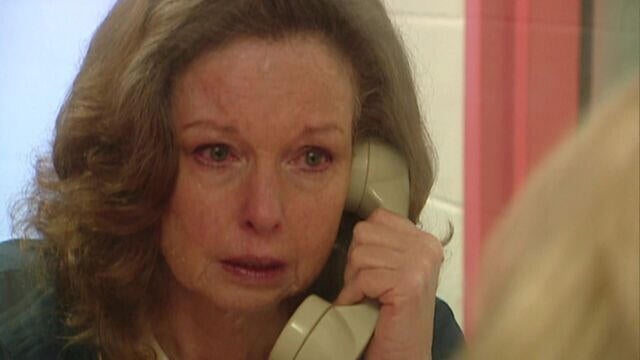
When it comes time to sentence Linda three months later, it's her last chance to address the court, and she speaks. I wanted to let all of you know [CRIES] how grieved I feel. Most of all to Patrick and my beautiful sons, Sean and Thomas because you lost such a loving, wonderful father.
RICHARD SCHLESINGER:
00:37:19
Her sons try their best to ask for leniency. If there's anything you can do to help out with my family, that's all I can ask. I believe she's innocent, and I will till the day I die.
RICHARD SCHLESINGER:
00:37:33
Linda's second husband, Larry Gwozdz, also appeals to the judge. To assert that this was a premeditated, purposeful act, I'm sorry. It's unacceptable to me. Look at these two people. Beautifully in love. Why? Because she's a wonderful human being who doesn't deserve this. But the judge doesn't have much leeway. In this particular instance, the law mandates 40 to life. My oath requires that I impose that. I was like, you did this to yourself. We found it curious that one jury could not agree on a verdict at all, and a second convicted Linda in a day. It is ironic, but in these two trials, it is apparently true that in the case against Linda Duffey Gwozdz, less is more. If I remember correctly--
RICHARD SCHLESINGER:
00:38:33
We sat down with jurors from both trials to see why one jury quickly reached a verdict-- Andrew Dixon, murder in the second Danielle Wang, second degree murder.
RICHARD SCHLESINGER:
00:38:44
--while the other never did. Brandi Jones, not guilty. Pamela Enriquez, murder in the second. Where's the gun? 1 to 7 inches--
RICHARD SCHLESINGER:
00:38:53
Remember, the jury that convicted Linda only heard the bare-bones prosecution. Makes this impossible to happen the way she says.
RICHARD SCHLESINGER:
00:39:01
Very little about fan firing or cartoons. They heard a lot more than you heard. And we can only make the decision based off of the evidence that we heard.
RICHARD SCHLESINGER:
00:39:13
The jurors from both trials, the ones who heard the long story and the ones who heard it made short, sat around our table and pondered, while less may be more, is it enough? And you're putting a woman away for the rest of her life. So present everything. I think I really have to agree with Brandi. Maybe all the evidence should be presented. Did you know she gave an interview to the police? Mm-mm.
RICHARD SCHLESINGER:
00:39:39
Would you have liked to-- I would have loved to hear what she had to say. Would that have changed my decision? Don't know. Possibly. If you had heard everything, do you think it would have affected the deliberations? Absolutely.
RICHARD SCHLESINGER:
00:39:54
And even though they made their decision, some of the jurors who convicted Linda still have questions. Did it bother you that they never said exactly why she did it? Yeah, it did. How did you get over that? I'm not over it. I still want to know. When I heard the guilty verdict, I said, yay, justice is finally served.
RICHARD SCHLESINGER:
00:40:18
Julie Prendergast has no doubt the second jury did the right thing by finding her former friend guilty, and she wonders how Linda's life, which was once so happy, became so tragic. I'm sad for everyone involved. Those two boys lost their father, and now they're losing their mother. It's a tragic story in every way you can think about it. [SOMBER MUSIC]
WOMAN:
00:40:49
I can only describe it as evil, something horrible.
ANNOUNCER:
00:40:52
From 48Hours,this is Trained to Kill: The Dog Trainer, The Heiress, and TheBodyguard.
MAN:
00:40:58
He couldn't control his obsession.
ANNOUNCER:
00:41:00
Who was the hunter, and who was the hunted? Follow and listen on the free Odyssey app or wherever you get your podcasts. [SOMBER MUSIC] [AUDIO LOGO]