Karmelo Anthony prosecutor breaks silence after trial, defends verdict and jury selection

Now that the gag order has been lifted and the trial is over, the lead prosecutor of Karmelo Anthony and the Collin County district attorney are both speaking out about the case.
Prosecutors showed, for the first time, a knife that they say is identical to the one Karmelo Anthony used to kill Austin Metcalf.
"The blade itself was about 3.5 inches long. It's not particularly a quality knife, but as you saw and heard and the jury saw and heard, you know, unfortunately, it had fatal, lethal consequences."
Collin County First Assistant District Attorney Bill Wirskye presented the prosecution's case against Anthony in court.
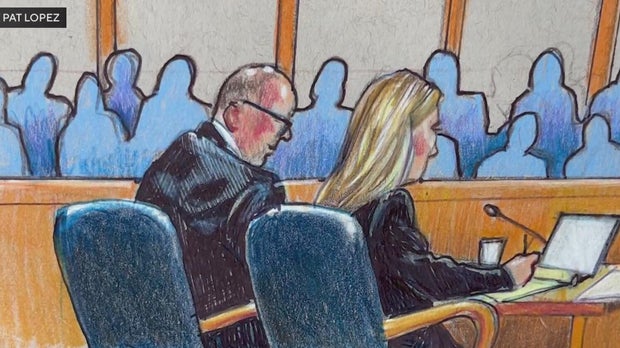
He said justice was served with the 35-year prison sentence.
"Well, we're just gratified that 12 local citizens saved our way," said Wirskye. "When you bolted down and got in a courtroom, the facts of this case were very simple. This was never about race. This was really never about self-defense."
Wirskye also defended the lack of Black jurors chosen for a murder trial involving a Black defendant.
"We had 12 jurors, actual jurors, and we had six more alternates," he said. "And they represented a diverse cross-section of our Collin County community."
In a statement to CBS News Texas, Anthony's attorney Mike Howard offered this about the trial:
"After the conclusion of the trial yesterday, we gave the court our official notice that Karmelo Anthony is filing an appeal. We believe there are several important issues for the appellate courts to consider. An appeal is the next part of the legal process and a right afforded every American."
There were hundreds of people outside the courthouse during the trial and many more on social media who have been trying to influence the outcome of the case for more than a year.
Collin County District Attorney Greg Willis says his office had to overcome efforts by influencers to create fabricated evidence that involved manipulated videos and photos.
"So, the jury got to see what was what was noise and what the person, what that person actually saw or heard that day at the track meet," Willis said. "And so, as long as we can still do that, then I'm not concerned about any technological advances or AI or whatever."


