Genetic genealogy, DNA from trash help solve Arlington killing 14 years after woman found stabbed 100 times, police say
A renewed push by Arlington's cold‑case unit has apparently solved one of the city's most brutal homicides, 14 years after police say a woman was stabbed nearly 100 times in her apartment.
Arlington police have charged Mayra Velasquez, 42, with capital murder in the 2012 killing of Irasema Chavez, 32. Velasquez is being held in the Tarrant County Jail.
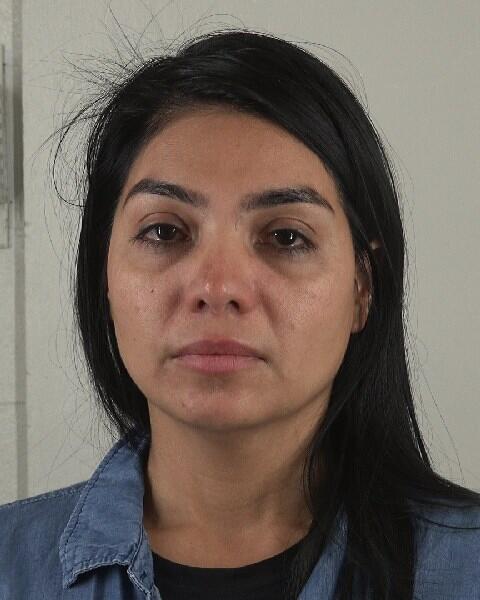
The case remained unsolved for years until new forensic analysis identified Velasquez, closing a mystery that had shaken an Arlington neighborhood and frustrated investigators.
According to authorities, Chavez was found dead with numerous stab wounds on Jan. 20, 2012, after family members checked on her at the Aspenwood Apartments on South Collins Street. Police found no signs of forced entry, leading investigators to believe she knew her attacker.
No immediate suspects were named, DNA evidence failed to match anyone in databases at the time, and witnesses were able to provide limited information.
Arlington police say they pursued numerous leads over the years but were unable to identify a definitive suspect until Velasquez's arrest.
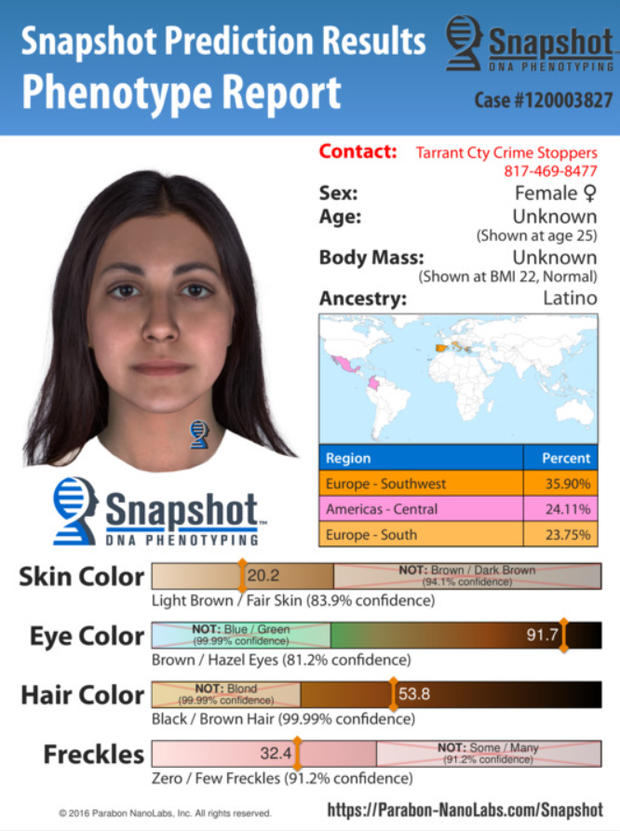
In 2016, Arlington police provided Parabon NanoLabs with a DNA profile developed from blood found at the scene. Using that profile, Parabon created a prediction of the suspect's physical appearance.
Genealogy team brought in to assist in the case
In November 2024, the Arlington Police Department's homicide unit consulted the FBI Dallas Field Office regarding the use of investigative genetic genealogy (IGG) in the case. The FBI agreed to assist through its IGG program.
In April 2026, IGG's work produced a significant lead that detectives used to develop further evidence. Police did not disclose the nature of the new evidence, but it was sufficient to obtain a warrant for Velasquez's arrest.
In a news release, police said Velasquez was "at one time a close friend of Ms. Chavez." They said Velasquez lived just a few miles from the crime scene.
DNA sample taken from suspect's trash
In May 2026, detectives obtained a sample of Velasquez's DNA from discarded trash and sent it to a crime lab for further testing.
The results showed Velasquez's DNA was a match to the blood droplet recovered from the bedroom television stand in Chavez's home, detectives confirmed.
"Detectives note it is common during stabbing attacks for an assailant to inadvertently cut themselves, which is how they believe Ms. Velasquez's blood was left at the crime scene," Arlington Police said in a news release following a press conference on Wednesday detailing how the case unfolded.
Police said the motive for the stabbing is still unclear.
CBS News Texas reporter Briseida Holguin says Velasquez previously worked as a realtor and more recently as a sales representative for a local limo company. People who knew her told Holguin that they were surprised and shocked to learn of her arrest.
This isn't the only case in North Texas that has seen genetic genealogy used. CBS News Texas has recently covered how police also used it to solve two decades-old kidnapping cases in our series called The Long Hunt.


