Trump's $400 in unemployment aid: When would it start?
Even if states can provide the benefit, it could take several weeks for workers to receive it, experts say.
Watch CBS News
Even if states can provide the benefit, it could take several weeks for workers to receive it, experts say.

Taxpayers will soon no longer own a piece of General Motors. The government plans to sell its remaining 31 million shares of the auto giant by the end of the year. Taxpayers spent nearly $50 billion bailing out the company five years ago.
All eyes will be on Ben Bernanke as he is set to deliver a major speech that could contain clues about future central bank actions. Analysts will be on alert for any mention that Fed officials might want a lower unemployment rate before increasing short-term interest rates from zero - which would be bad news for savers. Jill Schlesinger reports.

An unexpectedly solid October jobs report helped push the stock market to an all time record high of 15,761 on Friday. Bloomberg TV anchor Deirdre Bolton joins "CBS This Morning: Saturday" with a closer look at the numbers on jobs.
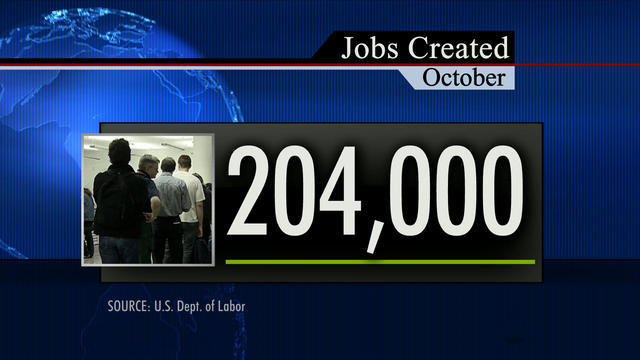
The Labor Department said 204,000 jobs were created in October, in spite of the government shutdown. With the holidays approaching, help-wanted signs are going up at retailers. Anthony Mason reports.
The October jobs report revealed employers led an unexpected surge, hiring more than 200,000 additional workers, but the jobless rate ticked up to 7.3 percent. Norah O'Donnell reports.
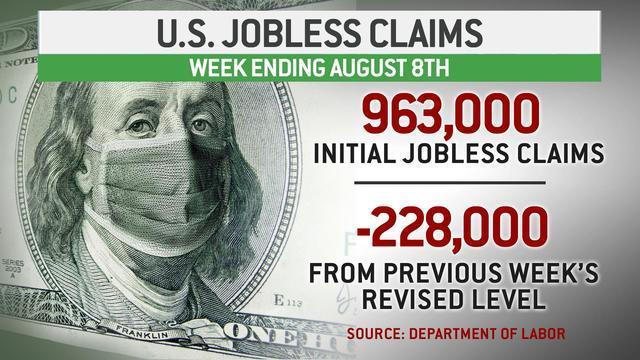
An additional 963,000 Americans filed new unemployment claims for the week ending August 8th. This is the first week since March that initial jobless claims dropped below 1 million. Frances Stacy, the director of portfolio strategy at Optimal Capital, joined CBSN to break down the numbers.
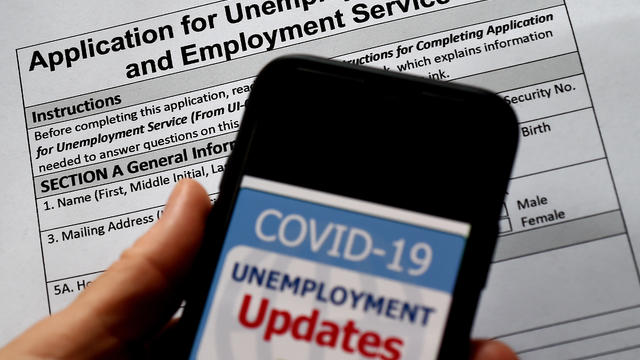
Fewer than expected people filed for unemployment last week, though numbers remain far higher than before the pandemic.
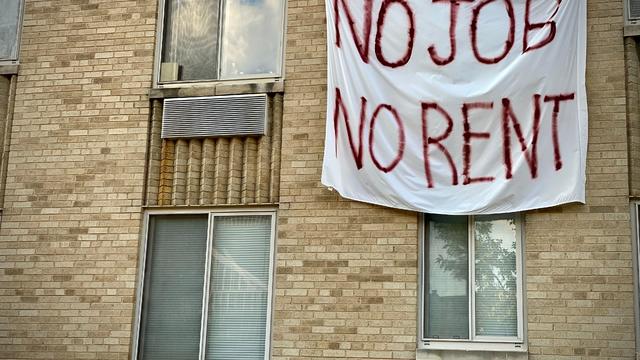
Additional benefits could be exhausted within six weeks, while some workers could receive less than $400 per week.
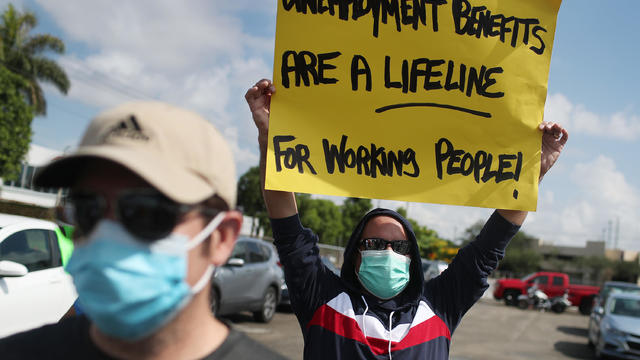
As their tax revenue plunges, many states question if they could afford to contribute extra jobless aid.
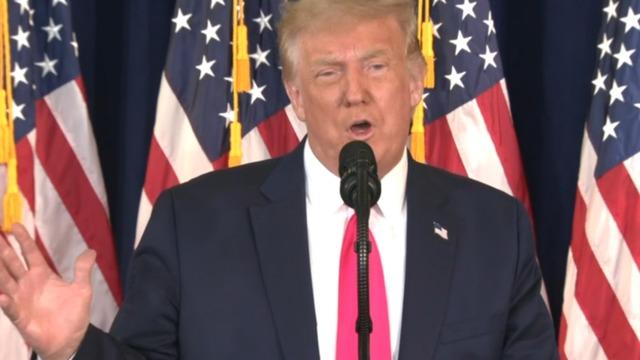
Many state governments are already facing budget crunches caused by the coronavirus pandemic.
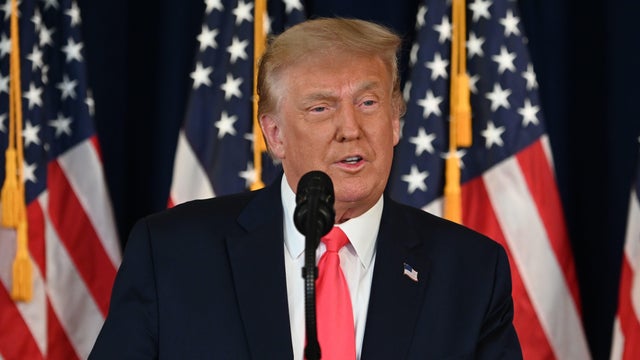
Unemployment benefits at $400 a week were included, lower than the previous rate of $600 a week.
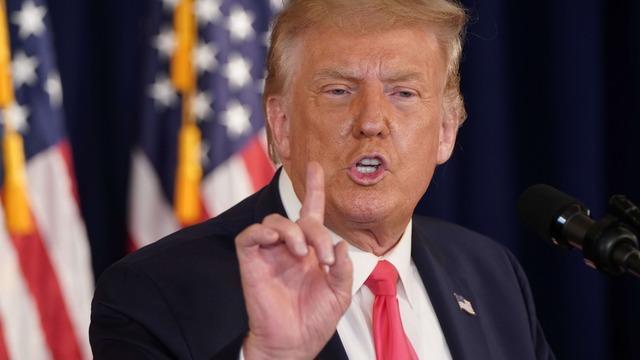
After coronavirus relief bill negotiations collapsed, President Trump signed four executive orders aimed at providing financial aid to Americans. Democrats have decried the actions as unconstitutional, and they will most likely be challenged in court. CBS News' Paula Reid joins CBSN's Lana Zak with the latest.
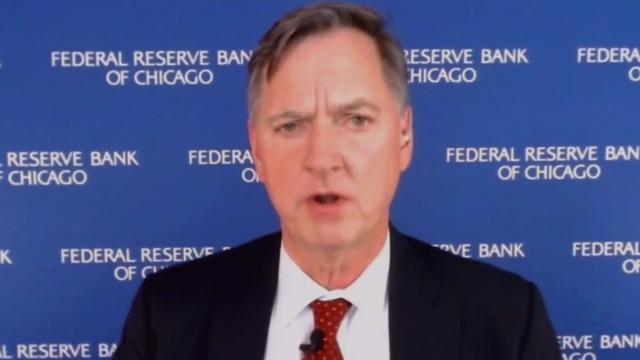
The president of the Federal Reserve Bank of Chicago said additional federal aid is needed to address the economic impact of the pandemic.
President Trump signed several executive orders on economic relief amid the coronavirus pandemic, including an extra $400 a week in unemployment benefits. Under the CARES Act, the added benefits came out to an extra $600 per week. Watch his remarks.
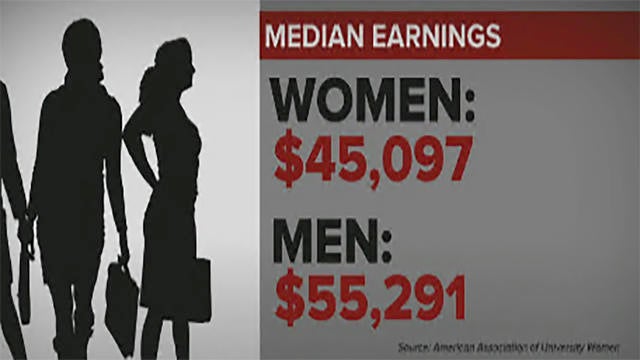
The Equal Pay Act passed in 1963, making gender-based wage discrimination illegal. However, more than 50 years later women are still paid less than their male counterparts. The pandemic could be making the situation worse, with women suffering more job losses than men. For Black and Latina women, the gap is even bigger. Michelle Miller explains.
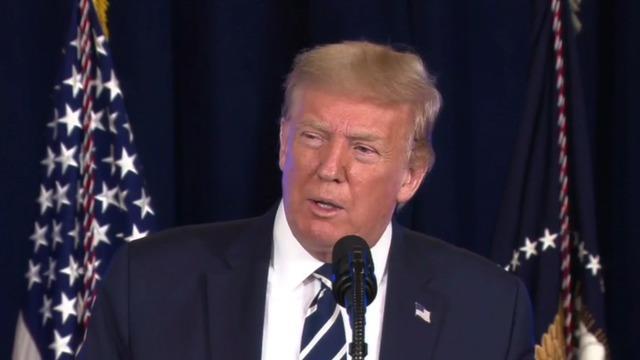
President Trump called a sudden press conference Friday evening where he signaled he will take executive action on unemployment, student loans and evictions after lawmakers were not able to reach a deal. However, the president was vague about when he would do this or if he really had the power to decide issues that are usually left to Congress, as tens of millions of Americans remain in limbo. Paula Reid reports.
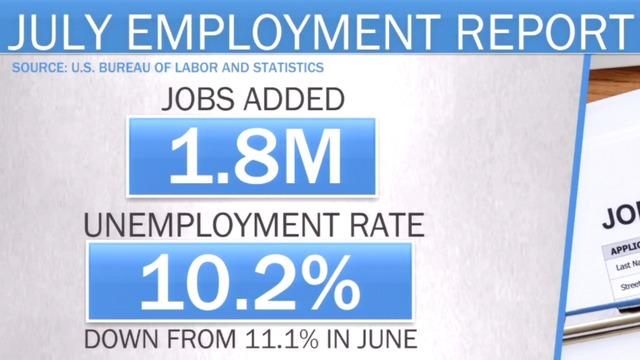
A July jobs report that saw 1.8 million new jobs created and a lowering of the national unemployment rate comes amid negotiations in Washington over a second stimulus package. However, the pace of hiring appears to be slowing as more states slow down or roll back their reopenings. CBS News senior business analyst Jill Schlesinger joins "CBS This Morning: Saturday" for what this all means, and what the numbers say about the future of the U.S. economy.
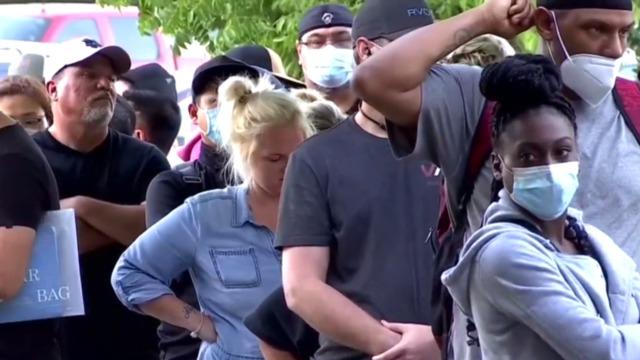
Unemployment stimulus talks ground to a halt on Friday as the unemployment rate dropped to 10.2%. It is unclear what the White House can do to restore federal unemployment benefits that lapsed for millions of Americans last week. Nancy Cordes reports.
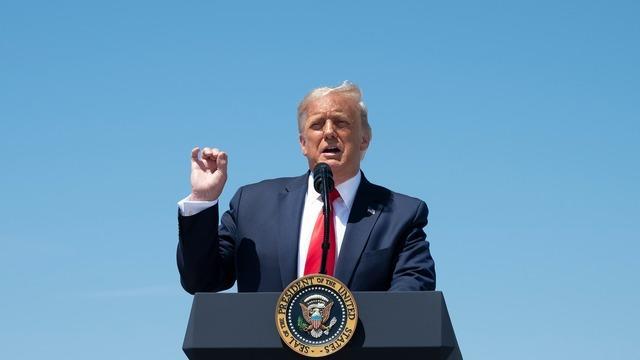
President Trump is considering taking executive action as lawmakers remain deadlocked in stimulus negotiations. CBS News White House correspondent Weijia Jiang joins CBSN to talk about the latest.
Millions thrown out of work because of pandemic are straining to afford the basics now that an extra $600 a week in federal help has expired.
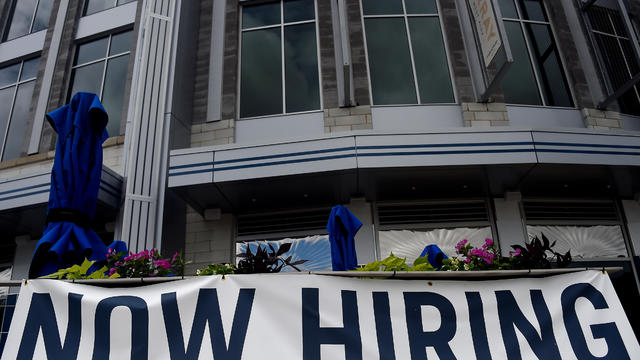
So far, less than half of all the country's jobs lost during March and April shutdowns have returned.
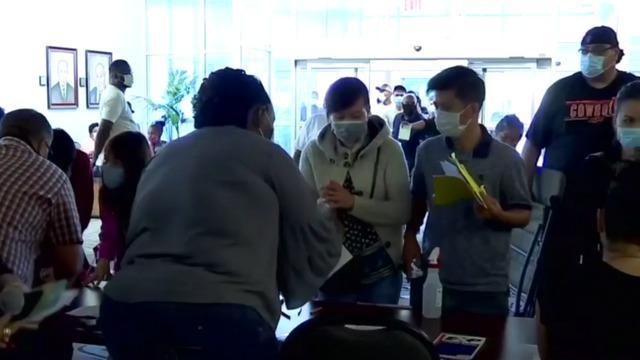
Nearly 1.2 million workers applied for unemployment benefits last week, marking the 20th straight week with claims crossing one million. Mark Strassmann reports.
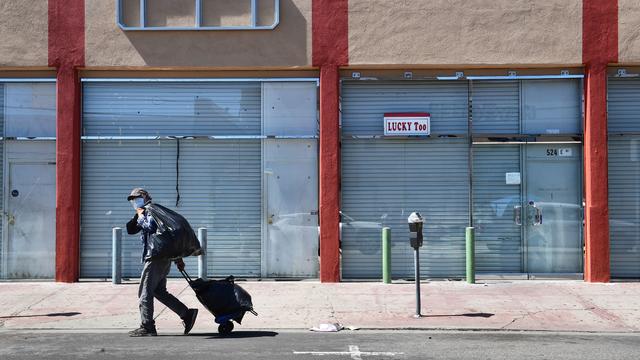
The number of people applying for initial unemployment benefits fell below 2 million for the first time since March.
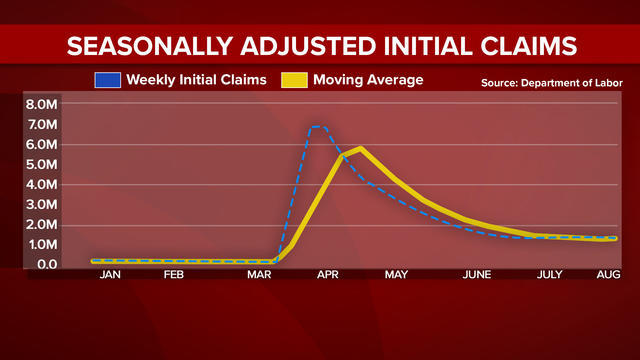
1.18 million Americans filed new claims for unemployment last week as the government continues to struggle with a second coronavirus stimulus package. Norm Champ, former director of the Division of Investment Management at the SEC, joins CBSN with insight into these numbers and why they might signify a slow reopening of the economy.