Read the Supreme Court's decision on affirmative action in college admissions
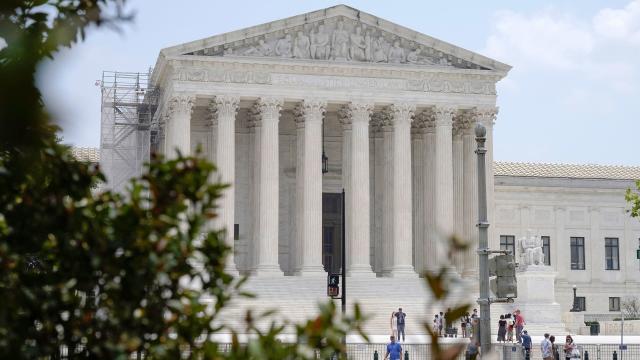
The Supreme Court on Thursday ruled that race-conscious admission policies of Harvard College and the University of North Carolina violate the Constitution.
Watch CBS News
The Supreme Court on Thursday ruled that race-conscious admission policies of Harvard College and the University of North Carolina violate the Constitution.
The Supreme Court ruled Tuesday in a case involving the power of state legislatures. By a vote of 6-3, the high court rejected a ruling that would have given legislatures more autonomy over federal elections, and in drawing partisan congressional maps. CBS News chief Washington correspondent Major Garrett joined "America Decides" to explain the decision.
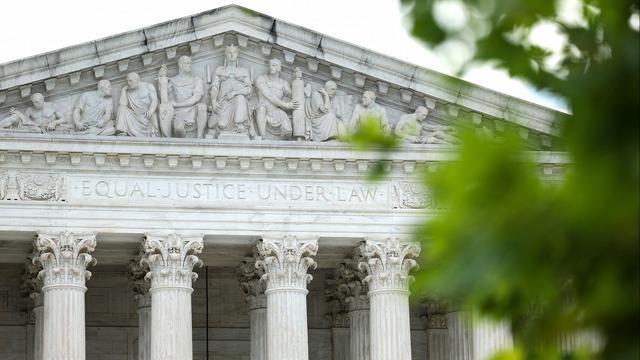
The Supreme Court Tuesday overwhelmingly rejected a controversial conservative theory that would have drastically changed federal elections in the U.S. The case stemmed from challenges to North Carolina's congressional map -- which the state's high court rejected as illegal gerrymandering. Jimmy Hoover, Supreme Court reporter at the National Law Journal, joins CBS News to break down the ruling and its implications for future elections.
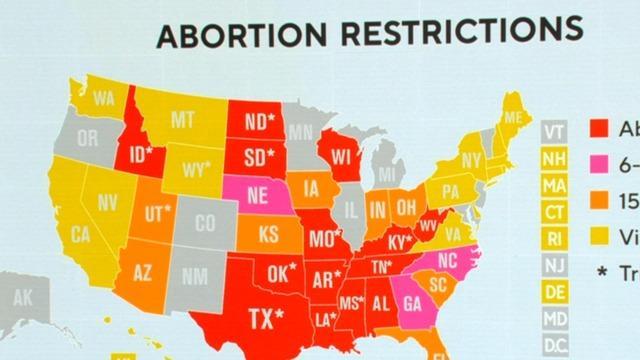
It's been one year since the Supreme Court overturned Roe v. Wade, transforming abortion access nationwide. There is now a patchwork legal system in America as a result of the decision in Dobbs v. Jackson Women's Health Organization. John Dickerson examines where abortion access stands state-by-state.

The law specifically aims to protect New York doctors who use telehealth systems to prescribe abortion pills for patients in states where abortion is banned.
The Supreme Court dismissed the dispute after agreeing in May to consider the Biden administration's showdown with House Democrats.
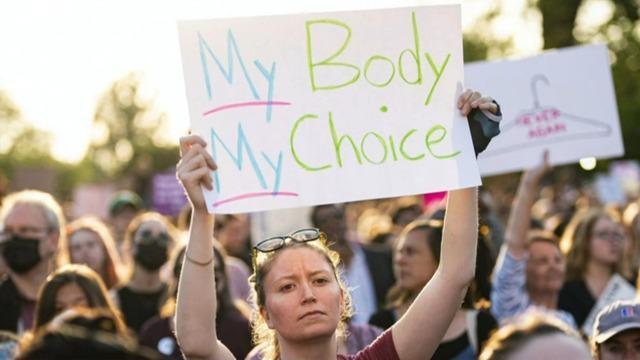
Nearly a year after the Supreme Court overturned Roe v. Wade, the Democratic National Committee is launching a billboard campaign about abortion access in New York City and across battleground states. CBS News political and economics reporter Sarah Ewall-Wice has more.
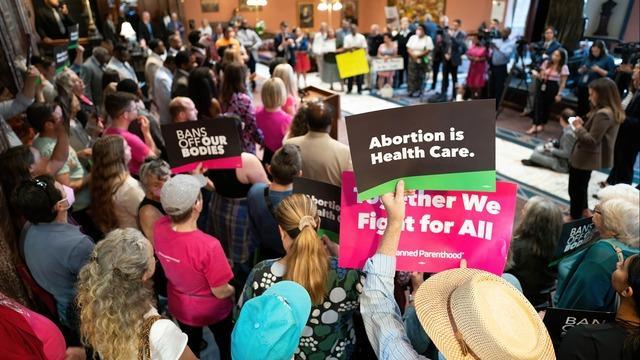
Saturday marks one year since the U.S. Supreme Court overturned Roe v. Wade. New CBS News polling reveals how Americans currently feel about the decision. CBS News political correspondent Caitlin Huey-Burns reports.
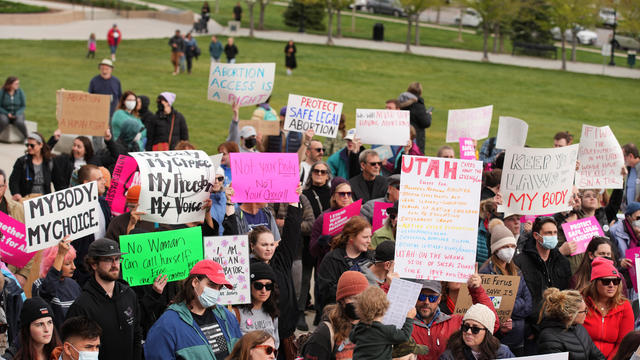
Many women's concerns now extend beyond abortion access to health and reproductive care.
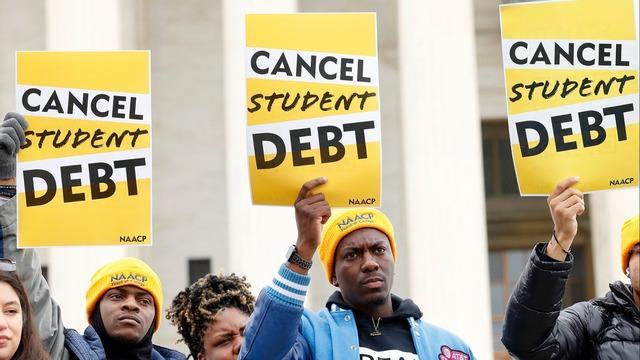
Millions of Americans will soon need to make payments on their student loans for the first time in more than three years. The payment pause -- which had been sparked by economic worries from the pandemic -- will end in a few months. Sameer Gadkaree, president of the Institute for College Access and Success, joins CBS News to discuss how the resumption of payments will impact borrowers.
The Supreme Court ruled 7-2 in the case challenging the Indian Child Welfare Act.

The Supreme Court says it won't review North Carolina's decision to stop issuing specialty license plates with the Confederate flag.

The Supreme Court on Thursday ruled Alabama's redrawn congressional map likely violates a key part of the Voting Rights Act of 1965. CBS News election law contributor David Becker joins to discuss how the case could have larger implications for future U.S. elections.

Decision weakens labor protections by potentially discouraging employees from going on strike, worker advocates say.

Harlan Crow, the GOP donor who gave both gave gifts and paid for luxury vacations for Supreme Court Justice Clarence Thomas, said in an interview with The Atlantic that he would rather not talk about his relationship with the justice. The author of the piece, Graeme Wood, joined CBS News to break down the situation.

The Supreme Court has again weakened the power of the Environmental Protection Agency. This time it involves wetlands. Jess Bravin, Supreme Court correspondent for the Wall Street Journal, joins CBS News to break down the court's latest ruling and its implications for the environment.

Chief Justice John Roberts says there is more the Supreme Court can do to "adhere to the highest standards" of ethical conduct.

The Supreme Court on Thursday decided to maintain the status quo for social media platforms, meaning companies cannot be held legally liable for what someone posted. Adam Liptak, Supreme Court reporter for The New York Times, joins CBS News to discuss what the decision means for the future of the internet.

The Supreme Court has issued an opinion favoring social media companies in the case of Twitter v. Taamneh. The case centered around the issue of whether a social media platform can be liable for "aiding and abetting" a terrorist attack. CBS News legal contributor Jessica Levinson has more.

The court sidestepped a ruling that could have limited the scope of a federal law known as Section 230 that serves as a powerful shield for internet companies.

There's a growing push on Capitol Hill for ethics reform within the Supreme Court. Some are even suggesting the high court adopt new rules with outside oversight and enforcement. It follows recent ethical questions raised by Justice Clarence Thomas' failure to disclose gifts and luxury travel on his financial reports. John Martin, a retired judge of the United States District Court for the Southern District of New York, joined CBS News to talk about the push for ethics reform.

Kenneth Smith was scheduled to be put to death by lethal injection for the 1988 murder-for-hire slaying of a preacher's wife.

Congress is considering legislative action on ethical standards at the Supreme Court after reports about gifts and financial arrangements Justice Clarence Thomas accepted from GOP donor Harlan Crow.

Imagine if justices of the Highest Court in the Land had to live under a code of ethics just like us mere mortals – such as reporting when they've accepted gifts from wealthy collectors of Nazi memorabilia! Imagine that!

A new ProPublica report, finding Republican donor Harlan Crow paid private school tuition for Supreme Court Justice Clarence Thomas' grandnephew, is raising concerns on Capitol Hill and increasing calls for ethics reform for the nation's highest court. CBS News chief legal correspondent Jan Crawford has more on reactions from lawmakers.