
Astronomers find 2 gigantic planets lighter than cotton candy
The featherweight pair — orbiting a star 1,110 light-years away — are the biggest exoplanets found to have less density than cotton candy.
Watch CBS News
The featherweight pair — orbiting a star 1,110 light-years away — are the biggest exoplanets found to have less density than cotton candy.
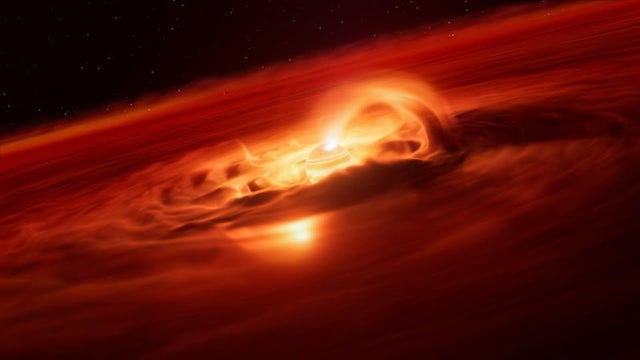
ESO's Very Large Telescope has observed a rogue planet and revealed that it is eating up gas and dust from its surroundings at a rate of 6 billion tons a second.
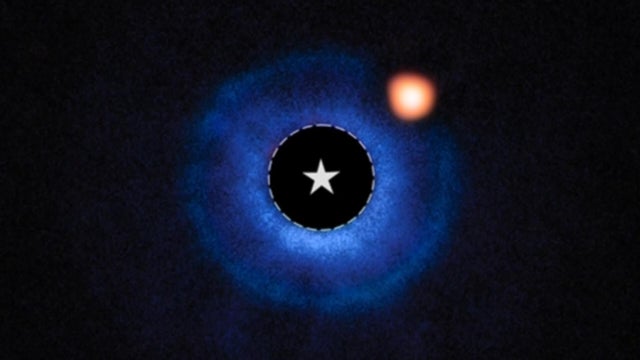
NASA's James Webb Telescope has captured unprecedented pictures of a newly discovered exoplanet, a planet that is outside our solar system.
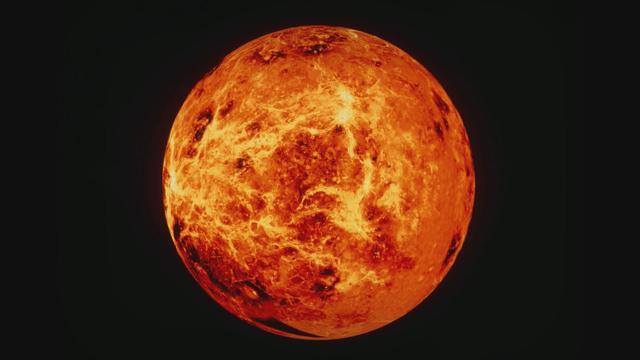
Scientists say Venus may hold important insights into some of humanity’s biggest challenges today. As NASA gears up for its Mars 2020 mission, CBS News’ Jeff Glor spoke to some who are looking to Earth’s mysterious neighbor.
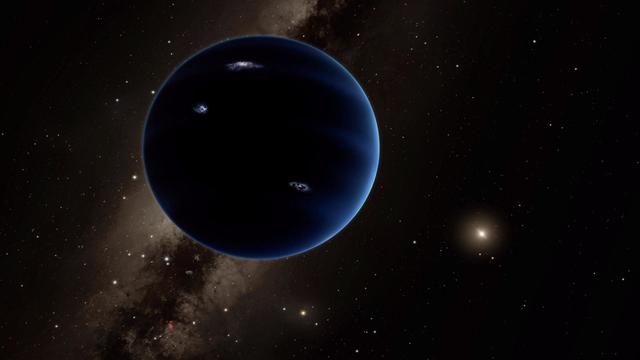
U.S. astronomers hunting for "Planet Nine" have instead stumbled on what appears to be a new dwarf planet in the solar system's outer reaches.

In California, we learn how the site of past environmental disasters could be a key to America's clean energy future. Then in Florida, we explore restoration efforts to reverse years of devastation in the Everglades. Watch these stories and more on Eye on America with host Michelle Miller.

The Hubble Space Telescope "opened a new window to the universe" when it launched into space. Now, 35 years later, NASA is releasing some stunning images to celebrate.
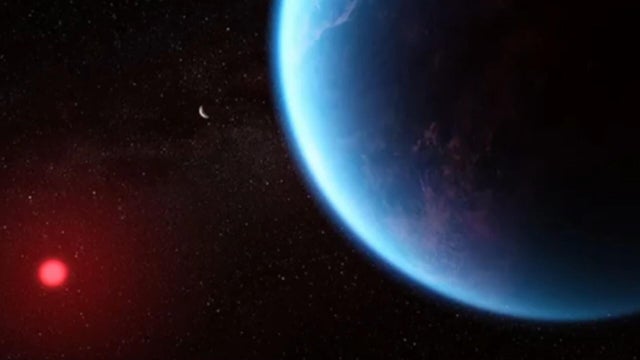
Astronomers say they have discovered "the strongest evidence yet" of life on a distant planet, although, they stress that more research is needed. Chief astronomer and planetarium director of the Franklin Institute Derrick Pitts joins "The Daily Report" to discuss.

A British-U.S. team of researchers detected signs of two chemicals in the planet's atmosphere long considered to be "biosignatures" indicating extraterrestrial life.
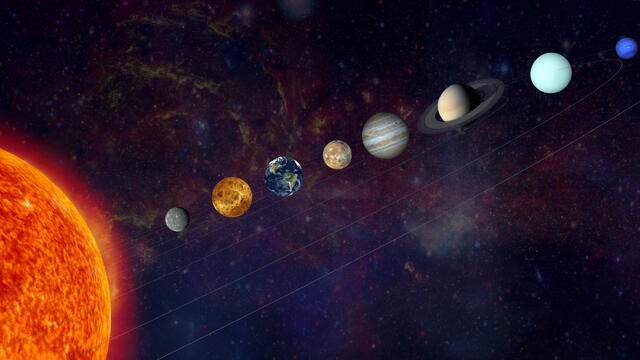
Mercury, Venus, Mars, Jupiter, Saturn, Neptune and Uranus could be visible, but not all can be seen by the naked eye.
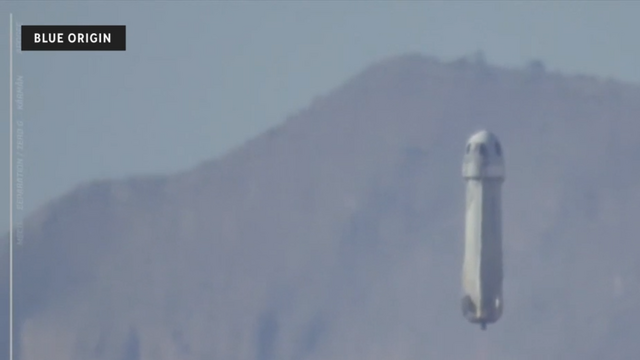
Blue Origin's 10th space tourism flight, nicknamed "Perfect 10," took off from West Texas on Tuesday. The six-person crew launched into suborbital space on the New Shepard Rocket and landed safely 10 minutes later. Franklin Institute chief astronomer Derrick Pitts joins "The Daily Report" to discuss.
The head of planetary defense at the European Space Agency discusses 2024 YR4, an asteroid with a small chance of striking Earth eight years from now.

Researchers said this was the fastest wind ever measured in a jetstream that goes around a planet.
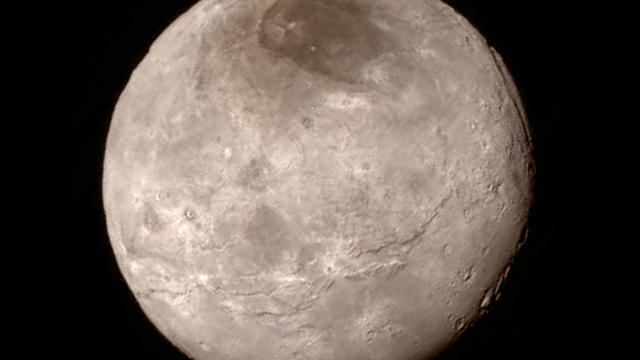
Researchers used observations from the Webb Telescope to identify carbon dioxide and hydrogen peroxide on the surface of Charon, Pluto's largest moon.

The world is struggling to manage growing piles of plastic waste, and a new report is bringing to light the problem of burning plastics. Annually, the world produces 440 million tons of plastic each year, but the majority of plastic is often tossed in the trash. CBS News senior national and environmental correspondent Ben Tracy has more.

You may have heard that six planets were set to align in a rare "parade of planets" this morning. Experts say it wasn't the "spectacular celestial event" you were promised – and shared when you should really watch.
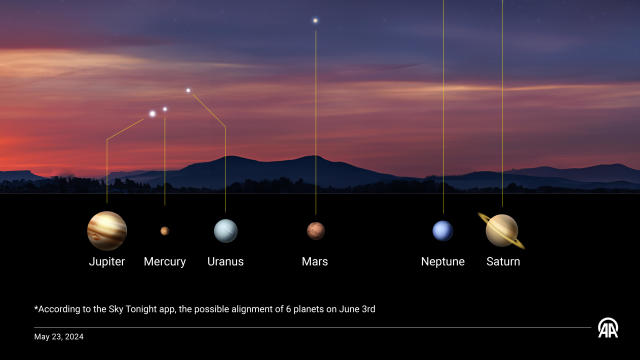
The orbits of six planets will bring them to the same side of the sun to create a "planetary parade" in early June.

The so-called super Earth — known as 55 Cancri e — is among the few rocky planets outside our solar system with a significant atmosphere.

Climate change could cause a $38 trillion income loss per year globally by 2049, according to a new study by the Potsdam Institute for Climate Impact Research. CBS News' Lilia Luciano breaks down the numbers.

"We in Arizona haven't forgotten about you, Pluto," the state representative who introduced the bill said.

A new report from the World Wildlife Fund says that the world needs to overhaul the way we get food to save the planet. They also revealed startling data about Earth's animal population. CBS News' Ian Lee has the details.
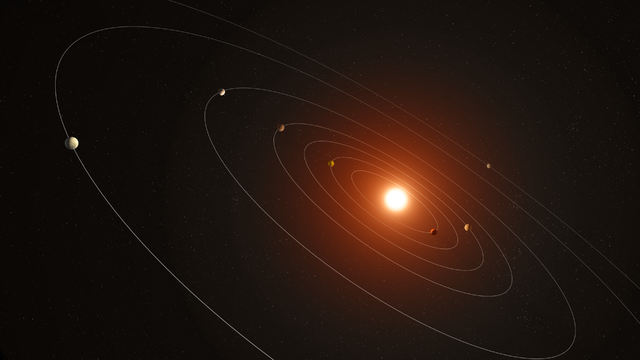
NASA described the planets as "scorching" and "bathed" in heat emitted by a distant host star.
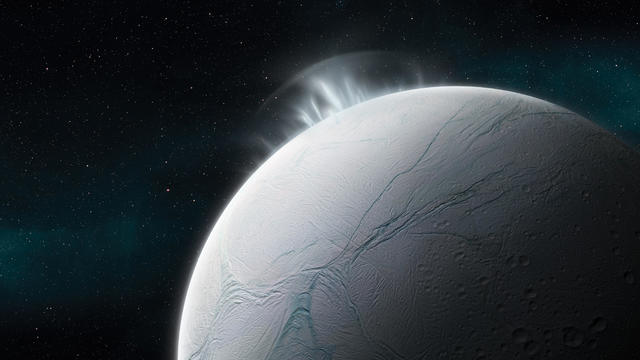
The new discovery makes Enceladus' ocean the only one outside of Earth known to contain all six elements needed for life.
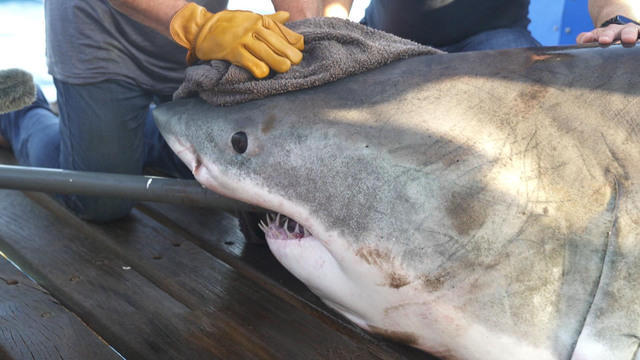
The great white shark is one of the most infamous ocean-dwellers on the planet, and now, researchers are on the verge of discovering where they mate in the Atlantic. Carter Evans joined those scientists 12 miles off the coast of North Carolina.
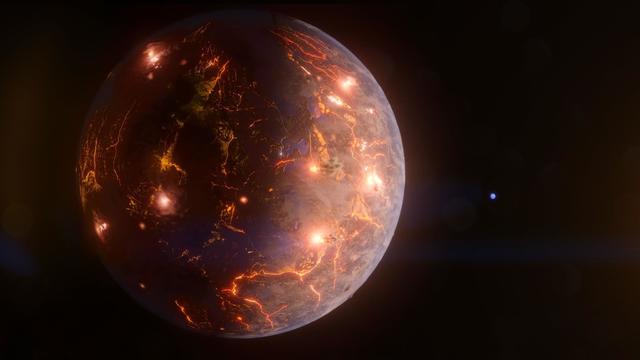
The planet is in the Milky Way, about 86 light-years away from our own solar system.