Trump imposes new tariffs on dozens of countries
President Trump is imposing new tariffs on dozens of countries accused of failing to crack down on forced labor. CBS News politics reporter Kathryn Watson has the latest.
Watch CBS News
President Trump is imposing new tariffs on dozens of countries accused of failing to crack down on forced labor. CBS News politics reporter Kathryn Watson has the latest.
The U.S. on Thursday launched a 13th straight night of strikes against Iran after President Trump threatened Iran and the Houthis with "major military punishment." Retired Marine Col. Mark Cancian joins with analysis.

Sources say the United States military is building up its forces in the Middle East as President Trump warns that it will hold Iran accountable for any Houthi attacks. Meanwhile, Saudi Arabia has yet to respond after President Trump said the Saudis would have to join the Abraham Accords in order to finalize the U.S.-Saudi nuclear deal. CBS News' Kathryn Watson breaks it all down.

Emerson College has found that on a generic ballot, Democrats hold an 11-point lead over Republicans, 53% to 42%, heading into the midterm elections. Political strategists Mark Bednar and Mo Elleithee join with analysis.
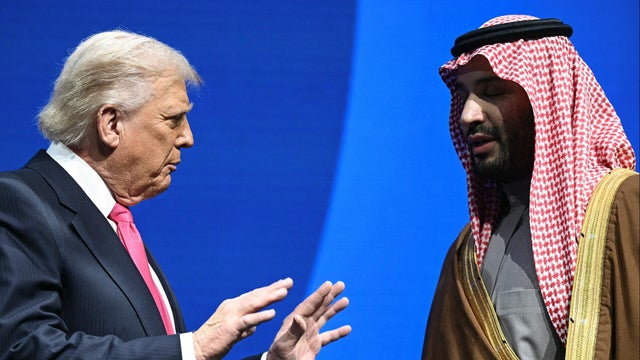
After signing a nuclear accord with Saudi Arabia, President Trump says that the agreement hinges on the Saudis establishing diplomatic relations with Israel, which they have refused to do. CBS News chief foreign affairs correspondent and "Face the Nation" moderator Margaret Brennan has the latest. Then, former CIA Deputy Assistant Director for Counterterrorism Joe Zacks joins with analysis.
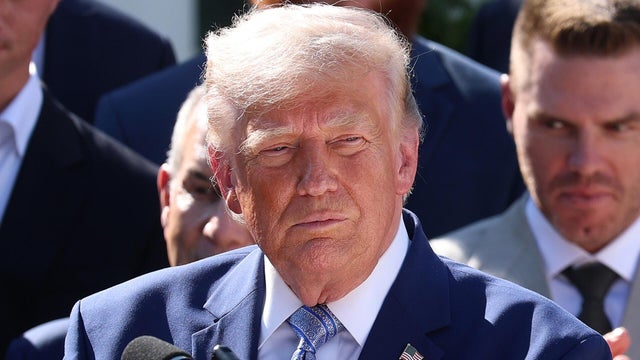
A major escalation in the Iran war may be coming, with President Trump telling Axios on Thursday he's considering a "massive attack." CBS News chief White House correspondent Nancy Cordes has the details.

White House press secretary Karoline Leavitt answered questions from reporters Thursday on a number of topics, including the U.S.-Saudi nuclear deal, China's artificial intelligence technology and more. Following the briefing, CBS News' Aaron Navarro shared his takeaways.

The House on Thursday voted to direct President Trump to end the war with Iran, after four Republicans joined Democrats to rebuke the president over his handling of the conflict.

President Trump said Thursday on social media that Saudi Arabia must agree to join the Abraham Accords as a contingency on a U.S.-Saudi Arabia nuclear agreement. In a separate post, he threatened Iran and its Houthi allies with "major military punishment." CBS News' Kathryn Watson has more.

The U.S. is moving B-1 bombers and refueling jets, as well as medical personnel, deeper into the Middle East. CBS News national security analyst Aaron MacLean has more on what it could mean.
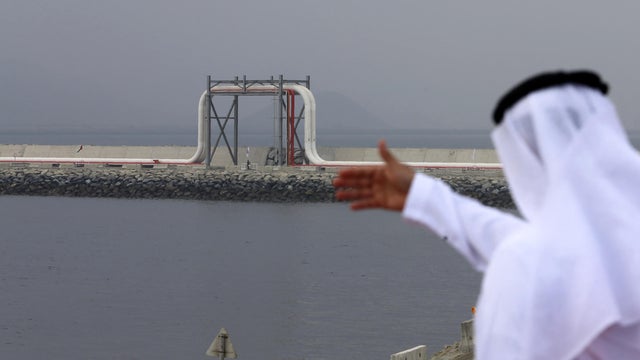
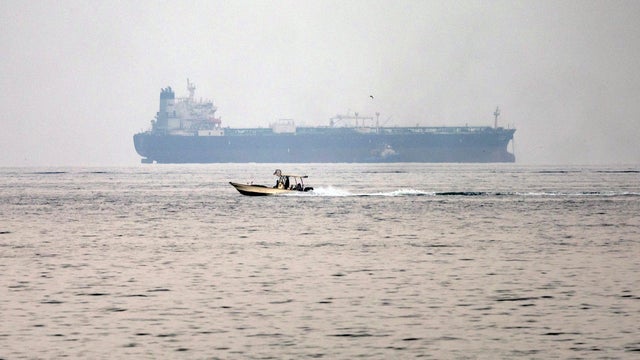
As Iran's attacks keep ship traffic through the Strait of Hormuz to a trickle and oil prices surge, Gulf states are planning to invest billions in pipeline alternatives.

The House passed a resolution to limit President Trump's war powers and direct him to end military operations in Iran after four Republicans joined Democrats on the vote. CBS News' Nikole Killion has more.

The U.S. moved military assets, including B-1 bombers, into the Middle East amid the 12th straight night of airstrikes on Iran. CBS News' Charlie D'Agata and Aaron Navarro have the latest.

The U.S. and Saudi Arabia have signed a deal that could allow the oil-rich nation to create a civilian nuclear program. The deal has drawn concerns that nuclear technology could potentially spread to U.S. adversaries in the Middle East. Matthew Bunn, the co-principal investigator at Harvard University's Project on Managing the Atom, weighs in.
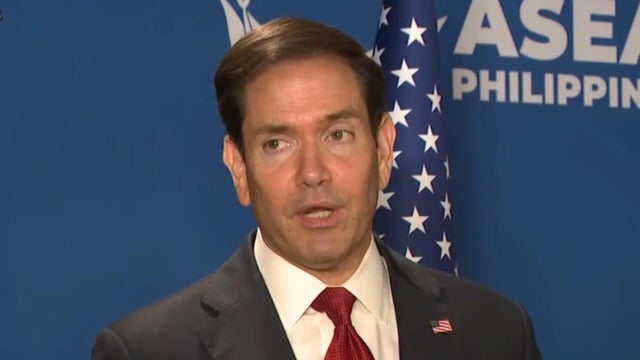
The U.S. struck Iran for a twelfth consecutive night. President Trump renewed threats to target Iranian infrastructure, and Secretary of State Marco Rubio said Iran will continue to pay a high price until negotiations continue. CBS News' Aaron Navarro has more.

The U.S. launched a 12th straight night of strikes against Iran on Wednesday, which continues to target Gulf nations in retaliation. The strikes come as President Trump issues a new warning to Iran and the bodies of fallen U.S. service members return home. Nancy Cordes reports.

There are new signs of a U.S. military buildup in the Middle East. More aerial refuelers have been deployed to places like Israel while flight trackers show B-1 bombers leaving bases in the U.K. Charlie D'Agata has more.

The U.S. launched an 12th night of strikes against Iran Wednesday, hours after President Trump attended the dignified transfer of four service members killed in the war. CBS News' Eleanor Watson reports.

The House on Wednesday passed a bill to restrict lawmakers from stock trading, along with the National Defense Authorization Act. Julia Manchester, White House correspondent for The Hill, and Dave Levinthal, senior editor for NOTUS, join "The Takeout" to discuss.

The Trump administration announced a landmark agreement with Saudi Arabia on Wednesday that allows the Middle Eastern country to develop a civilian nuclear program on its soil. CBS News senior White House correspondent Weijia Jiang has the details.
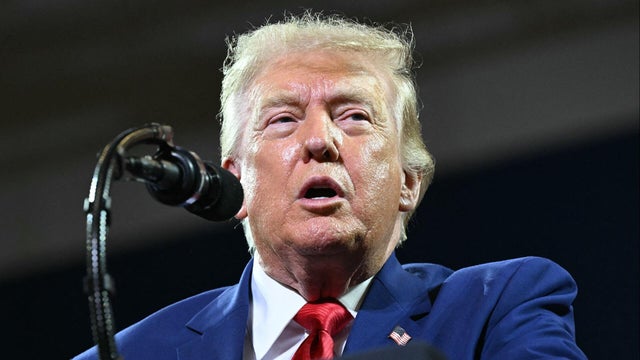
President Trump on Wednesday said that for every Iranian drone or missile attack in the Strait of Hormuz, the U.S. will "bomb and destroy one bridge or power plant." Iran said if the U.S. hits civilian targets it will seek to halt all oil flow from the region. CBS News' Charlie D'Agata and Samantha Vinograd have the latest.

The U.S. and Saudi Arabia are sealing the deal on a civilian nuclear program. Wall Street Journal national security correspondent Michael Gordon joins CBS News to discuss his reporting on the agreement.

Trump and Iran trade threats to attack energy infrastructure; Trump administration officially announces nuclear agreement with Saudi Arabia.

President Trump spoke at a high school in Marietta, Georgia, on Wednesday, after attending a dignified transfer for four U.S. troops killed in the Middle East. CBS News congressional reporter Taurean Small has the latest.

CBS News National security analyst Aaron MacLean breaks down President Trump's threats against Iranian infrastructure and the United States' new nuclear deal with Saudi Arabia.