Chaos at U.S. airports as screenings cause delays
CBS News transportation correspondent Kris Van Cleave reports on the coronavirus' impact on travel worldwide.
Watch CBS News
CBS News transportation correspondent Kris Van Cleave reports on the coronavirus' impact on travel worldwide.

Today on "Face the Nation," as the president declares a national state of emergency over the coronavirus, a special look at the two areas Americans are most concerned about -- the health and economic risks posed by the disease.

The Trump administration's expanded European travel ban has overloaded U.S. airports with travelers returning home. Due to the new restrictions, many airlines cut up to 75% of their international flights. Kris Van Cleave reports.

President Trump praised the Federal Reserve for cutting interest rates to near zero while Vice President Mike Pence updated Americans on coronavirus testing. Watch the White House briefing.

President Trump and Vice President Mike Pence led off the Coronavirus Task Force briefing Tuesday by talking about the latest in testing and guidelines to help stop the spread of the pandemic across the country. Watch their remarks.

There are now more than 9,400 reported coronavirus cases in the U.S., across all 50 states. The death toll has jumped to at least 152. President Trump now says he considers himself a wartime president because of the pandemic. Wednesday night, he signed a $100B emergency aid package into law. The bill includes free virus testing for every American, paid sick leave and expanded unemployment benefits. Weijia Jiang reports on how else the federal government is scrambling to contain the disease.

President Trump announced that a drug commonly used to treat malaria could possibly be used to treat coronavirus symptoms, after it goes through clinical trials. However, officials maintained that currently, there is no drug on the market that is FDA-approved to treat coronavirus. Meanwhile in Congress, Senate Majority Leader Mitch McConnell unveiled a financial aid package to help small businesses and industries deeply affected by the coronavirus, like airlines. The proposal has gotten criticism from Democrats, who say it does more to help corporations than workers. Weijia Jiang breaks down what else Washington, D.C. is doing to try and contain the coronavirus' spread.

President Trump expressed optimism on Thursday when he announced that a drug commonly used to treat malaria has been FDA-approved to ease symptoms of the coronavirus. Dr. David Agus joins "CBS This Morning" to discuss this and other options currently being tried and tested to help battle the illness.

Capitol Hill lawmakers are racing to pass a trillion-dollar coronavirus economic relief package that could send direct payments to millions. Democrats who oppose the Republican-written bill say it is friendlier to corporations than to workers. The debate comes as President Trump ruled out ordering a national lockdown, while virtually shutting down the U.S. border with Mexico. Ed O’Keefe breaks down how the federal government is looking to contain the coronavirus’ spread.

President Trump and top administration officials insisted Saturday that they're moving quickly to provide critical supplies to health care workers as they struggle to fight off surging coronavirus cases. On Capitol Hill, lawmakers are working to approve a major relief package by early next week. Ed O'Keefe reports.

President Trump said the major disaster declarations in New York and Washington state have been approved and he will approve California's request "soon." The president also said the Federal Emergency Management Agency (FEMA) is working to assist states hardest hit by the coronavirus pandemic. Watch his remarks here.

President Trump on Monday signaled he wants the economy to be back in full swing as quickly as possible amid the ongoing coronavirus crisis. Watch his remarks here from the White House.

At a briefing Tuesday, New York Governor Andrew Cuomo said it's not an "either-or" choice to protect public health or save the economy in the coronavirus crisis. "My mother is not expendable. And your mother is not expendable," he said. He also urged President Trump to use his powers under the Defense Procurement Act to produce more ventilators and other medical supplies. Watch his remarks.

White House coronavirus response coordinator Dr. Deborah Birx says the coronavirus is so widespread in New York that anyone who leaves the area should self-quarantine for 14 days to reduce the risk of spreading COVID-19 to other communities. Watch her remarks.

During a coronavirus task force update Wednesday night, President Trump outlined the emergency declarations he has approved for New York, California, Washington state, Iowa, Louisiana, Texas and Florida. Watch his remarks here.

President Trump on Friday signed a massive relief bill to respond to the significant economic fallout of the coronavirus pandemic, after it was approved by a voice vote in the House earlier in the afternoon. Watch his remarks and the signing.

President Trump said Friday during the Coronavirus Task Force briefing that what he wants from governors is for them to be "appreciative," singling out governors who have criticized the federal government's response, particularly when it comes to the procurement of medical equipment like ventilators. Watch his remarks.
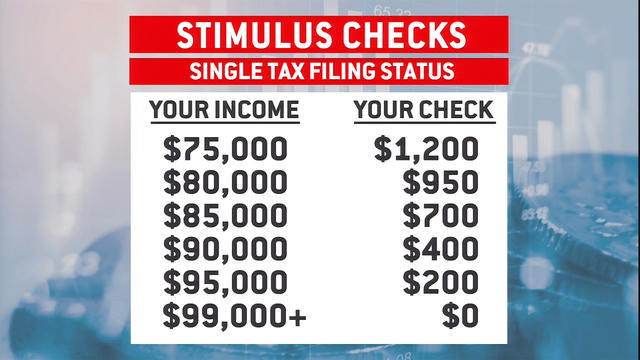
The CARES Act, signed into law on Friday, is the largest economic stimulus package in history. The bill allocates $2.2 trillion to people and businesses negatively impacted by the coronavirus’ effects on the economy. Jill Schlesinger joins “CBS This Morning: Saturday” to explain if and how the stimulus will affect you.

President Trump said Saturday he is considering an "enforceable" quarantine affecting residents of the metro New York area amid the coronavirus pandemic. New York Governor Andrew Cuomo said shortly afterward that he doesn't "even like the sound of it" and said he had not spoken to the president about it.

President Trump spoke before the departure of the Navy hospital ship the USNS Comfort to New York, the state hardest hit so far by the coronavirus pandemic. Watch his remarks.

President Trump announced Sunday the nationwide social distancing guidelines will remain in place until April 30, saying the "peak" of the coronavirus pandemic is expected in two weeks. Mr. Trump said he expected the country to be "well on its way to recovery" by June 1. Watch his remarks from the White House Rose Garden here.

President Trump says the U.S. has now conducted more coronavirus tests than any other country, but it still lags far behind per capita. Meanwhile some governors say they still don't have the equipment they need. CBS News White House correspondent Weijia Jiang joins CBSN to talk about the latest.

President Trump is telling Americans to prepare for a "very painful" two-week period as the coronavirus death toll continues to climb. CBS News White House correspondent Weijia Jiang joins CBSN to talk about the latest.

President Trump said he's considering domestic travel restrictions as the coronavirus continues to spread across the U.S. CBS News White House correspondent Weijia Jiang joins CBSN from Washington to talk about the latest.

The document asks whether facilities are in compliance with local orders and can protect those at higher risk for "severe illness."