Sunday 9AM ET on CBS
11AM ET on the CBS News app
Sunday 9AM ET on CBS
11AM ET on the CBS News app
Watch CBS News
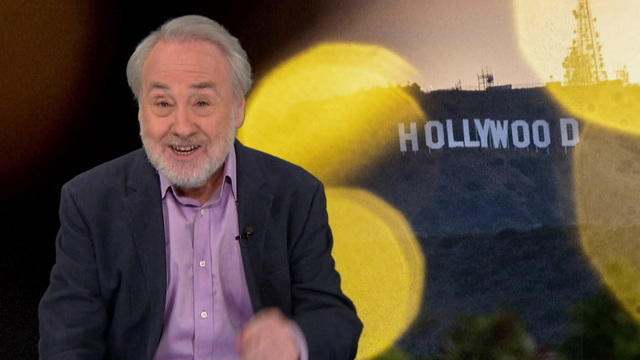
Everyone, it seems, is angry at the Academy Awards, and amid this maelstrom our film critic offers his predictions for this year's award-winners, and why he believes this might be the most freakishly riveting Oscar ceremony yet.

They took millions, even billions of years to form, but gemstones can capture our awe in a flash. Correspondent Faith Salie visits the recently-reopened Mignone Halls of Gems and Minerals at the American Museum of Natural History in New York, where visitors can eye these beautiful superstars of geologic history.

After years of standup in which he's complained about his five young children, comedian Jim Gaffigan has discovered something truly terrifying: being the father of five older children.
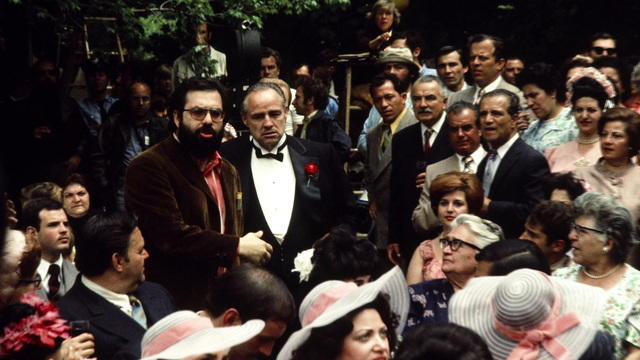
When "The Godfather" opened in March 1972, director Francis Ford Coppola's drama about a mob family forever changed how we look at gangster films. Correspondent Tracy Smith talks with Coppola, and with stars Robert Duvall, James Caan and Talia Shire, about the making of a classic that, 50 years later, movie lovers still cannot refuse.
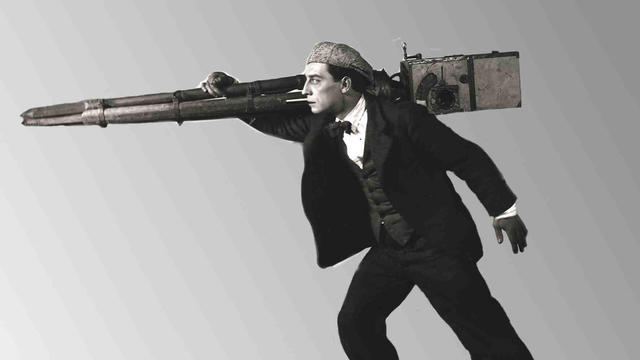
He was a vaudeville performer from the age of four, a silent-film star in his 20s, and the writer and director of some of the greatest comedy films ever made. Yet Buster Keaton never quite achieved the fame of Charlie Chaplin, and, at the peak of his success as an independent filmmaker, he signed a studio deal that he would call "the worst mistake of my life." Correspondent David Pogue talks with biographer Dana Stevens, and with comic actor Bill Irwin, about Keaton's artistic ingenuity, stunts, and innovations that inspire filmmakers to this day.

Historian Douglas Brinkley remembers the trailblazing Secretary of State and U.N. Ambassador, who promoted NATO enlargement while antagonizing despots around the world.

University of Pennsylvania swimmer Lia Thomas, a transgender woman, has smashed Ivy League records in the pool since switching from the men's team to the women's. Her winning streak has reignited a fierce debate: do trans women have an unfair biological advantage in sports? And are competitive fairness and trans inclusivity mutually exclusive? With 22 states recently introducing bills that would ban trans women and girls from sports, correspondent Lee Cowan talks to advocates and experts on both sides of this contentious issue.
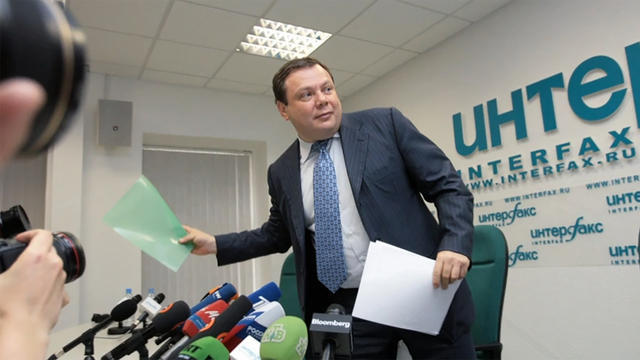
Targeted by the U.S. and its allies with sanctions because of their ties to the Kremlin, Russian oligarchs have found their accounts frozen and assets seized. Correspondent Seth Doane talks with Mikhail Fridman, a Ukrainian-born Russian oligarch now living in London, who cannot use his ATM card and resides in a mansion he can't sell. Fridman explains why he believes sanctions are not the answer to punishing Russia's leader Vladimir Putin. Doane also talks with Tom Burgis, author of "Kleptopia: How Dirty Money Is Conquering the World."
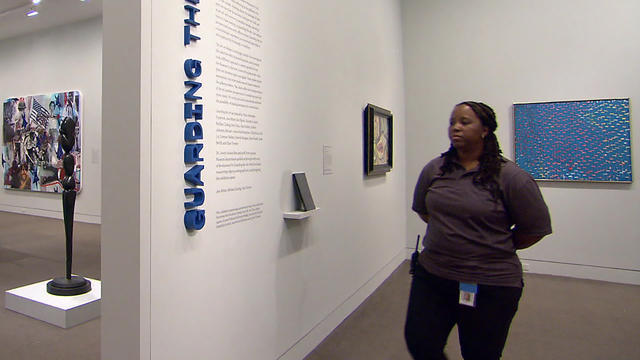
Museum guards probably spend more time with art on the walls than anyone else, but are rarely asked for expert opinions. At the Baltimore Museum of Art, a new show, "Guarding the Art," was organized not by the museum's curators, but by its very own security staff. Correspondent Kristine Johnson talks with guards who are offering their perspectives on the museum's collected works.

Inaugurated during the Cold War, Radio Free Europe/Radio Liberty broke through the Iron Curtain via shortwave radio, presenting news broadcasts to countries where freedom of the press was under assault. Today, its mission is even more critical, as it counters Kremlin propaganda about the war against Ukraine with uncensored news for Russian audiences via the Internet. Correspondent Christina Ruffini examines how the organization is evading a new generation of Russian censors.