Evidence of "bone-crushing" dog found at Tennessee fossil site
The university says this is the first evidence of a dog at the site that was a densely forested habitat with plants and tree-dwelling animals.
Watch CBS News
The university says this is the first evidence of a dog at the site that was a densely forested habitat with plants and tree-dwelling animals.
"There is no speculation here whatsoever," the study's lead author said. "These are things that have already happened."
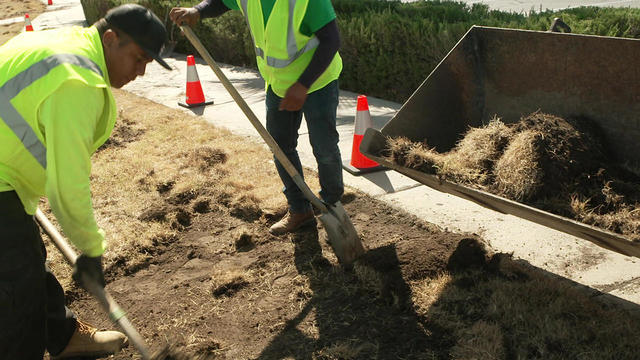
In a state where every drop of water counts, ornamental grass – which accounts for a large percentage of outdoor water use – has been banned in Southern Nevada, just one step being taken to address rising temperatures and shriveling reservoirs.

In a state where every drop of water counts, ornamental grass – which accounts for a large percentage of outdoor water use – has been banned in Southern Nevada. Correspondent Tracy Smith talks with climate and water experts about the steps being taken (or not) to address rising temperatures; and with astrophysicist Neil deGrasse Tyson about the lack of urgency he says is hampering humanity's ability to counter this existential threat to our planet.

Ten years ago, NASA successfully landed its fourth robot on Mars: the Curiosity rover. It has driven only 18 miles, but what a ride it has been. Michelle Miller has more.

Four rockets were launched from Earth on Thursday. Among them was a United Launch Alliance Atlas 5 rocket carrying a missile warning satellite into orbit for the Space Force. Jeff Bezos' Blue Origin launched six people briefly into space, including Vanessa O'Brien, the first woman to complete the Explorers' Extreme trifecta.

Tonga's Hunga Tonga-Hunga Ha'apai volcano spewed an unprecedented amount of water vapor into the atmosphere.
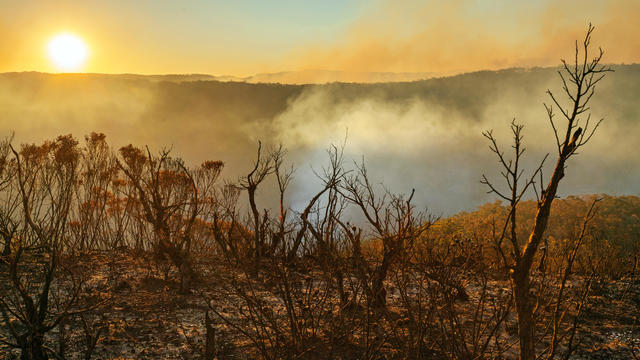
"Right now, I think we're being naive. We're not looking at the worst-case scenarios at all, really," says Luke Kemp of Cambridge's Centre for the Study of Existential Risk.

NASA is not trusting private citizens to travel to the International Space Station on their own.

If it continues, we may have to institute what's called a "negative leap second" – and some engineers say that would wreak havoc on IT systems.