The Invisible Problem: Understanding how carbon is warming the Earth
It's one of the most powerful forces warming the Earth, leading to increasingly severe droughts, wildfires and floods. It's also invisible. So how do we see start seeing carbon?
Watch CBS News
It's one of the most powerful forces warming the Earth, leading to increasingly severe droughts, wildfires and floods. It's also invisible. So how do we see start seeing carbon?

From ice to fossils, scientists describe how they go back in time to figure out how an increase in carbon dioxide affects our planet.

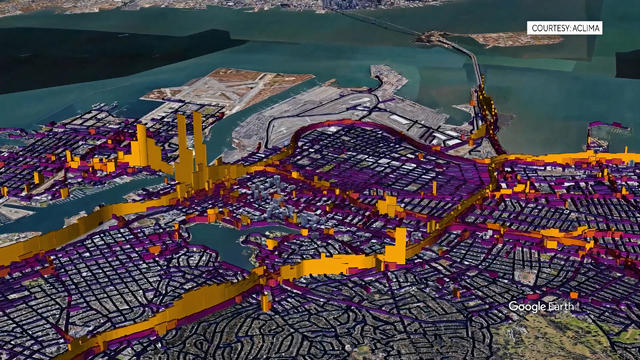
Davida Herzl's company, Aclima, operates a fleet of cars outfitted with tubes and sensors that analyze the air for 14 kinds of pollution.

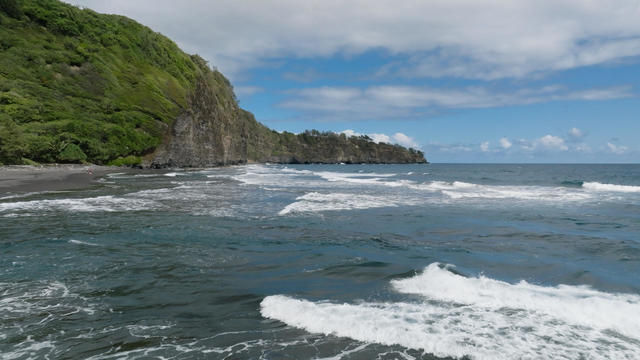
The Mauna Loa Observatory sits at over 11,000 feet above sea level on a volcano in Hawaii, up a narrow one-lane road through a lava field. It's there that scientists for the last 65 years have taken carbon dioxide measurements to track how much humans are altering our planet.

It's one of the most powerful forces warming the Earth, leading to increasingly severe droughts, wildfires and floods. It's also invisible. So how do we see start seeing carbon? In our new series "On the Dot," CBS environmental correspondent David Schechter explores how we can see this problem more clearly.

A global agreement in effect since 1989 has led to the phasing out out of nearly 99% of ozone-depleting chemicals.
Renewable sources of energy will account for 24% of the nation's energy in 2023, more than double what it was a decade ago.

With sea levels along U.S. shores expected to rise as much as 12 inches by 2050, residents of North Carolina's Barrier Islands, Galveston, Texas, and Pacifica, Calif., are grappling with changing coastlines, engaged in a battle that Mother Nature is winning.

A new NASA report says sea levels along U.S. coastlines are expected to rise as much as 12 inches by 2050, and by the end of the century 13 million Americans could be displaced and $1 trillion worth of property inundated. Correspondent Ben Tracy looks at how residents of North Carolina's Barrier Islands, Galveston, Texas, and Pacifica, Calif., are grappling with changing coastlines, engaged in a battle that Mother Nature is winning.
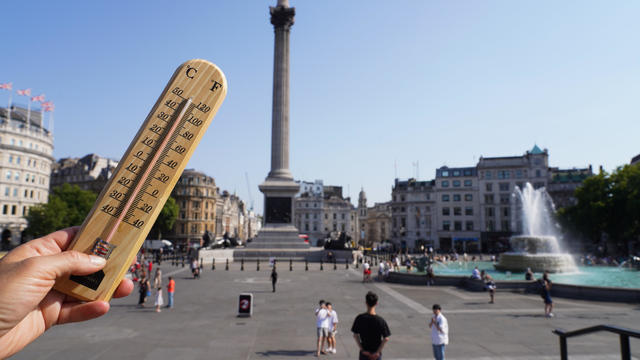
Researchers warn that if carbon dioxide emissions aren't rapidly reduced, this record-breaking heat will soon become the norm.