Staying safe when it's icy outside | Hey Ray
In the cold months, ice can provide a lot of fun activities to get you through winter.
Enjoying the ice should come with a solid understanding of what you are playing on. No matter the wintertime activity in which you participate on the ice, the first thing to remember is that ice can never be assumed to be completely safe.
Days or weeks of cold weather could provide what looks like a solid surface, but what is under the ice may not be as clear to see.
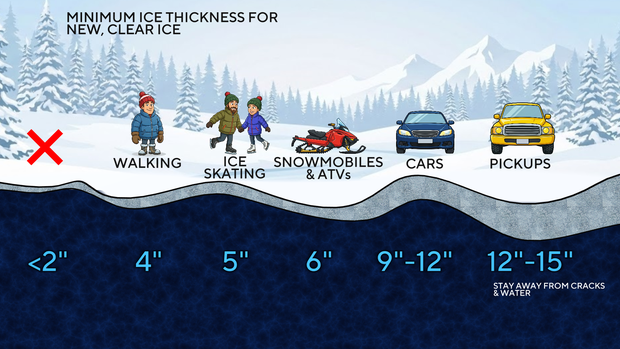
While Pennsylvania State Parks issues a Winter Report of snow and ice conditions, you still have to monitor the ice yourself, because conditions can change.
First, check the report to see if the park is reporting ice that is thick enough for the activity you want to do. When you get to the ice, you need to first visually inspect the ice yourself because conditions can change.
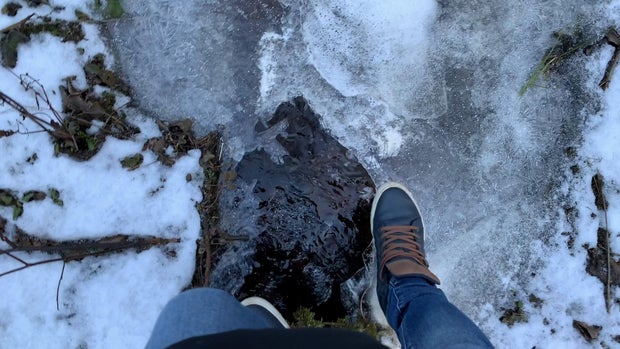
Look for feeder creeks and streams, and stay away from those areas.
The moving water means the ice is not structurally safe, even if it looks frozen over. If there are docks, trees, or anything sticking through the ice, you will want to avoid that area, too. Ice tends to be weak when things are sticking out of it.
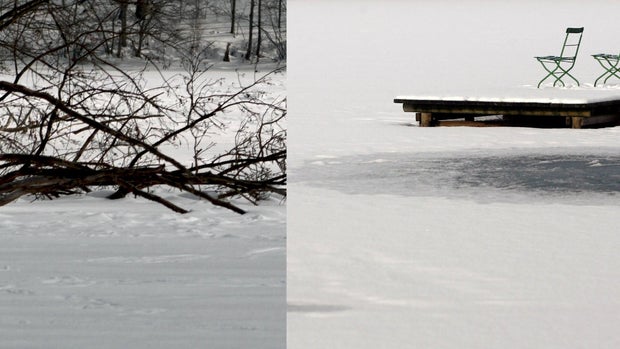
Stay away from wet spots. That means water is on the ice and could be a sign of cracks or ice too thin to support you. If the ice has a really dark, porous, or honeycombed appearance, that is a red flag too.
If an area passes your visual inspection, then make sure you have your safety supplies handy.
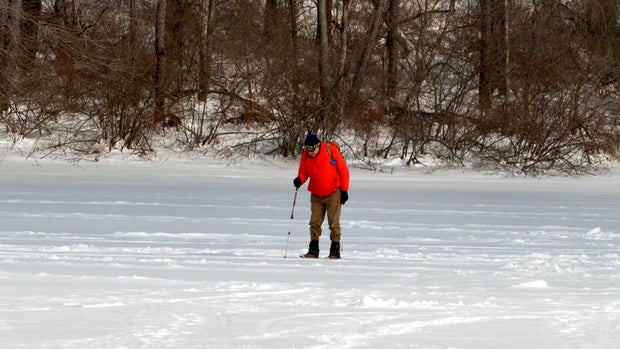
You will want a stick or pole to test the ice ahead of you as you walk. This will allow for some visual signs of thin or cracked ice to let you know if you need to turn around. Some awls, or handheld ice spikes, are important to have.
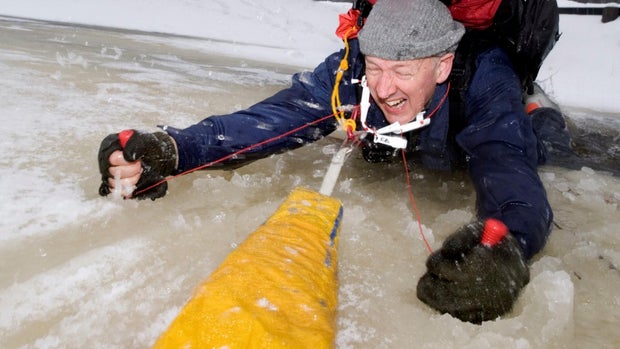
If you fall through the ice, they can provide a grip to help you pull yourself out of the water. Knowing that ice is never considered totally safe, a floatation device and rope are very important to have as well. That way, you can help yourself or someone else.
Ice over moving water, like rivers and creeks, is never safe, even though people used to do it all the time in the olden days. Just because they did it doesn't mean it is safe.
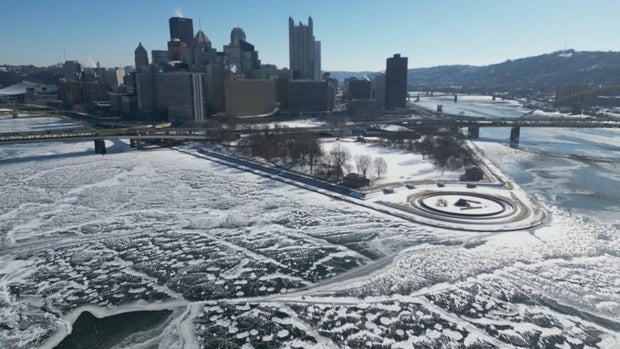
Since the water is moving, ice can have a wide range of thicknesses. The water levels change a lot in rivers and creeks; this can cause very dangerous weak spots in the ice as well.
Finally, never go on the ice alone.
Make sure you tell others where you are going and the times you expect to be there.