Lighting up a fluorescent bulb without light fixtures | Hey Ray
We are going to do a weird experiment with fluorescent lights today by trying to light them up, even though they will not be in a lighting fixture or connected to any electricity. It is a simple experiment that looks really cool if you know what to do.

Fluorescent lights are made of fragile glass and filled with mercury vapor, so you want to do this experiment under the supervision of a responsible adult.
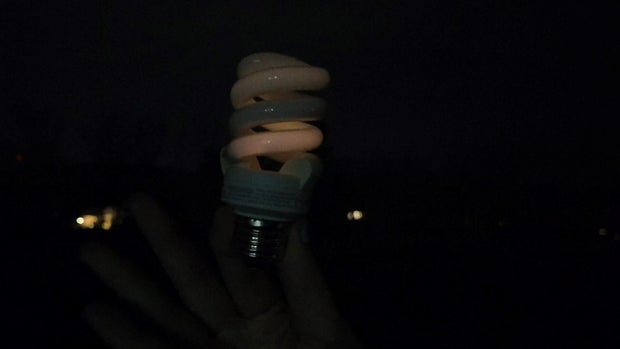
To do this experiment, you simply hold the fluorescent light up under high-voltage power lines. Never try to touch the lines. Just hold the bulb up. Like magic, they will light up…at least partially, even though they are not plugged into anything!
It is surprising to see them light up, so how does this experiment work? Well, the "how" starts with what makes up a fluorescent bulb.
According to the Edison Tech Center, fluorescent bulbs light up because they are ionizing the mercury vapor in the glass tube, causing electrons in the gas to emit photons at ultraviolet frequencies. That UV light interacts with a phosphor coating on the inside of the glass. This process converts the UV light into visible light!

Now, all of those things are inside the bulb, so what is happening to make them light up when they are not directly connected to electricity? Well, the first clue is the crackle you can hear under high-voltage power lines.
Remember, we need to ionize the mercury vapor in the tube. The crackle or buzz that high voltage power lines are known for is caused by the ionization of the air by the electric field around the conductor. Also, as the current moves through a power line, it creates an electromagnetic field. The Environmental Protection Agency says the strength of the electromagnetic field is proportional to the amount of electrical current passing through the power line and decreases as you move farther away. This means it increases as you get closer.
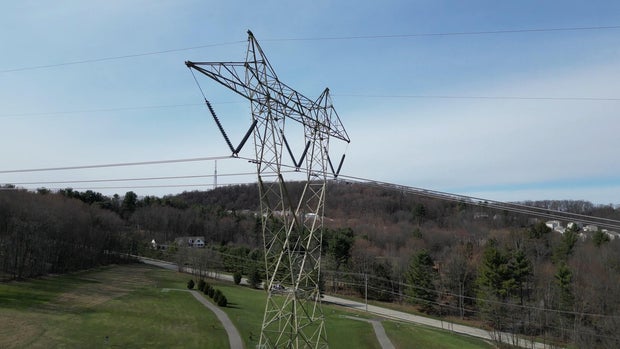
Standing under the power lines is definitely close enough! When you hold the tubes vertically, a potential difference in charges will exist across the tube; one end is slightly closer to the power lines, and the other is pointed to the ground.

According to Washington State University, the tube will light, showing the potential charges in the direction of the field, or in the direction of the power lines! These potential charges are enough to excite the mercury vapor, which emits UV light that interacts with the phosphor inside the bulb, making it light up, even though it is not plugged into or touching any electricity source!