Kicker, told to amputate leg after cancer diagnosis, beats the odds to resume pro sports career
Henry Nell's career pushed his body to the limit. He played rugby professionally in his home country of South Africa. Then he moved to the United States and began playing arena football, an indoor version of American football played on a slightly smaller field. He played for multiple teams across two leagues, always serving as the kicker.
In 2021, he began to feel some stiffness in his knee. Nell brushed it off as a strained muscle. When it didn't go away, he assumed it was a sign of aging. But in 2025, when he was playing for the Albany Firebirds, the team trainer recommended an X-ray.
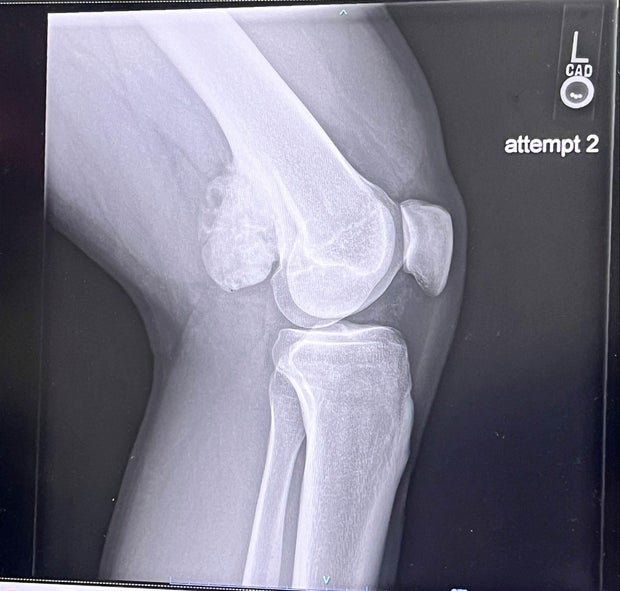
The scan showed a mass behind his knee. Nell tried to convince himself that it was just a cyst or a pocket of fluid. But it was diagnosed as parosteal osteosarcoma — a rare, slow-growing type of bone cancer. The tumor had been growing for years, doctors said.
Hearing the word "cancer" wasn't the scariest part, Nell said. The terror came when he met with a local oncologist, who recommended amputation.
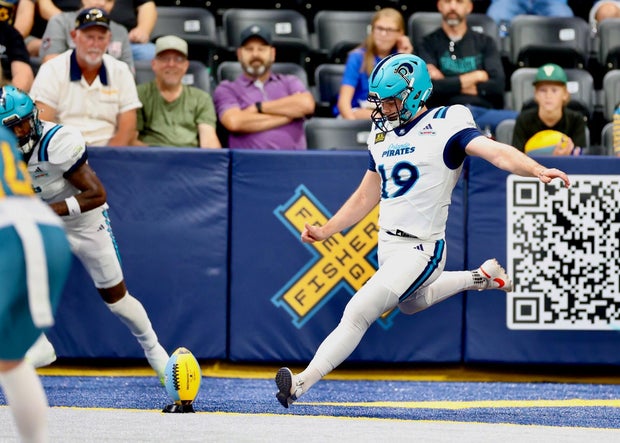
"I felt like, nothing could get better, like everything's caving in. My sports career is in jeopardy. My whole rest of my life is in jeopardy," Nell recalled. "If we have to amputate the leg, what's the next 60, 70 years of my life going to be? What effect does that have on my family? Is my wife going to push me in a wheelchair? All these thoughts ran through my head. It was one of the most frightening times I've ever experienced."
A second opinion and a complex plan
Nell and his wife, a physical therapist, wanted a second opinion. They traveled to New York City to meet with Dr. Nicola Fabbri, a surgical oncologist and chief of the Division of Musculoskeletal Oncology Surgery at NYU Langone Health who specializes in complex limb-preserving surgeries.
Fabbri proposed a plan that could let Nell treat the cancer and keep his leg. Parosteal osteosarcoma occurs at the surface of the bone. Fabbri would remove just enough bone to ensure the tumor was gone and couldn't grow back, then support Nell's knee with cadaver bone and metal plates.
"We sat down for almost an hour, and the last 10 minutes of us being there, I was just in tears," Nell recalled. "I couldn't even talk to the man. I felt so bad, but I was just crying because there was hope."
Fabbri felt sure he could help Nell keep his leg, but wasn't sure about his athletic career. The surgical plan posed a risk to two important ligaments: the anterior cruciate ligament, or ACL, and posterior cruciate ligament, or PCL. Removing the necessary bone and tissue could damage them, Fabbri said. They might even need to be removed entirely.
The operation was scheduled for July 2025, three weeks after the end of Nell's season. As it neared, he hoped for the best.
"I was like, 'I might retain all my ligaments. He'll go, he'll scoop the cancer. Five hours later, we'll start our recovery process,'" Nell said. "But nothing like that actually happened."
"This has never been done before"
It took Fabbri about 11 hours to complete Nell's operation. When Nell awoke, Fabbri delivered upsetting news: He had needed to remove both ligaments to excise the cancer.
When Nell heard that, his "world shattered once more." The development "made it significantly harder to see the light at the end of the tunnel," he said.
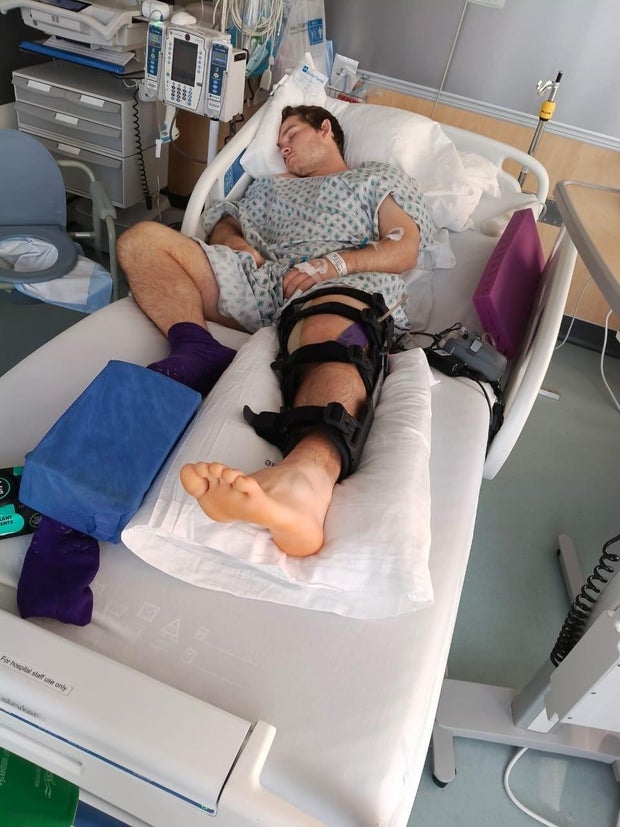
The rest of Fabbri's plan had been a success. Two metal plates, 12 screws and cadaver bone were successfully supporting Nell's knee. And it was better than the amputation that had first been suggested. After his spirits recovered, Nell began to ask Fabbri about next steps. But Fabbri didn't have the answers.
"I kept asking 'Do you think I'll be able to play again? Do you think I can kick again?' And his answer was, 'You go and tell me. This has never been done before,'" Nell said. "He was like, 'If you go and do it, we can tell our next patient it's possible.'"
Six weeks after the surgery, Nell was cleared to put weight on his leg. He surrounded himself with a team that could support his recovery, which included physical therapy and strength training. Fabbri oversaw the regimen to make sure Nell wasn't pushing too hard.
The professionals estimated that it would take Nell about 18 months to regain normal day-to-day function, and wouldn't guess when he could be back on the field.
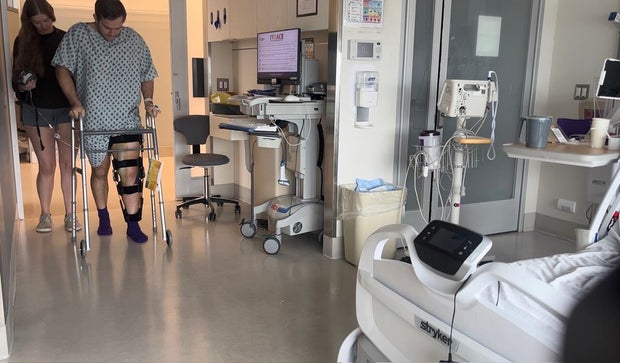
But within three months of surgery, Nell was doing well enough to lightly jog and kick. The small steps kept him inspired. He continued to amp up his regimen, taking careful notes with Fabbri about what he was doing and when.
Less than a year after the operation, he was well enough to return to the field with the Kansas Barrels for their season opener. The team took home a win, Nell said.
"It was a big moment in my life," Nell said. "It's something I will forever cherish."
"Leaving a legacy behind"
Nell "rarely thinks about the leg" these days. He played for the Barrels, then with the Orlando Pirates. He and his wife recently went on a hiking trip in Peru. He'll participate in another season of arena football in the spring of 2027. He is also beginning to practice rugby with a local team — "just to see if my body can still do it."
Nell remains cancer-free, Fabbri said. Because the entire osteosarcoma was removed, the odds of recurrence are low, Fabbri said, adding that the longer Nell goes without a recurrence, the better the chance that he'll never have one.
Nell said he hopes his experience will give hope to the next person who receives a seemingly devastating diagnosis.
"In the football world, everyone talks about leaving a legacy behind, and what have you done for the game, and I've thought about that for a very long time," Nell said. "For me, it's if I can just help one person or change the life of one person that's feeling hopeless right now."


