SEPTA unveils ambitious "Accelerate" plan to modernize transit system

SEPTA is rolling out an ambitious plan for the future as the transit agency continues to modernize, but transit leaders said they can't do it without a little help.
On Tuesday, SEPTA unveiled its "Accelerate" plan, which would see upgrades across the system — new train cars, shorter wait times and upgrades to stations. It's also a new pitch to state lawmakers in hopes of ending years of funding fights.
"Imagine a region where SEPTA is a reason to move here, to work here, to locate or expand a business here," SEPTA General Manager Scott Sauer said.
"Now the timing is right to think bigger about what SEPTA can be," SEPTA board chair Ken Lawrence said.
Part of the plan is already underway. SEPTA rolled out its new bus network Aug. 23, the transit system's first comprehensive redesign in its six-decade history.
The goal of the changes is to make the bus network more efficient, more reliable and easier to navigate.
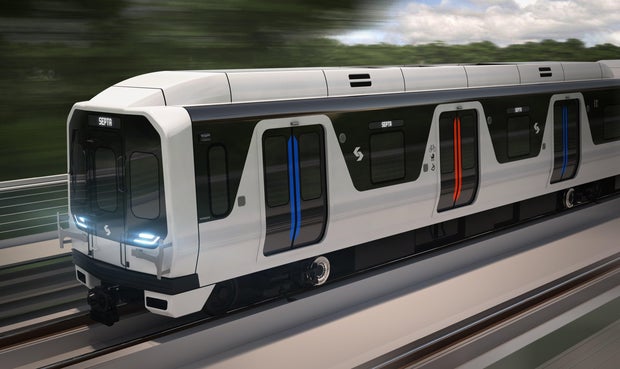
SEPTA unveiled renderings of new trolley cars set to hit the tracks in 2029, followed by new L cars in 2030.
Officials also said SEPTA plans to put out a bid by the end of the year to replace its aging Silverliner IV rail cars, which had to be pulled off the tracks after a series of fires last year.
"We still have yet a B [Broad Street Line] and M [Norristown High-Speed Line] fleet replacement program that we have to do," Sauer said. "And only about 30% of our major rail stations are fully accessible. We have a lot. It's an ambitious plan."
The agency is also calling for upgrades across the system, including running subway trains every three to four minutes and some Regional Rail lines every 15 minutes. There are also plans for upgrades at dozens of older stations.
"This is what it takes to move to a best-in-class transit system," Sauer said.
The announcement comes less than a week before state lawmakers are due back in Harrisburg. And next year, SEPTA faces a $192 million hole in its operating budget.
For years, SEPTA has struggled to get state funding during budget time. But officials said they've spent the last two years honing in on some of lawmakers' biggest concerns. Crime is down on the system, as is fare evasion. SEPTA said it has worked to be more efficient and save where it can. They have also increased cleaning efforts.
Riders said they've noticed a difference.
"I've been riding it for a lot of years. It's definitely improving," Dave Campbell of Ardmore, a frequent Regional Rail rider, said.
"It's very bright," Marcus, looking around Drexel Station, said. "And very safe, I think."
Even some of the pieces in the Accelerate plan that are in motion are not fully funded. SEPTA officials said they're set to take on $1 billion in debt to get the new Regional Rail cars, and more money is needed for the trolley work. That doesn't even count the other pieces of the vision that haven't started.
But this pitch for funding will also be a tactical shift for SEPTA leaders. In the past, the transit agency leaned into "doomsday" scenarios and "fiscal cliffs" if funding didn't come. But Sauer said he wanted to take a different approach and show lawmakers what funding would get them.
"What we want to show is yes, we're doing all we can with what we have. Look what we can do with proper and stable investment," Sauer said. "Are we going to get there in 50 years, 25 years, or 10 years? That's the decision that gets made."
Sauer did not put a price tag on the entirety of the plan. But he said he wanted to show lawmakers the agency has a vision for the future. And right now, they're hoping that vision can bring them one thing:
"What we're really looking for is stability. Dedicated funding," Sauer said. "Something we can count on."
State lawmakers are slated to return to Harrisburg on Monday, Sept. 28.


