"Inception," "The Karate Kid," "The Incredibles" among films newly named to National Film Registry
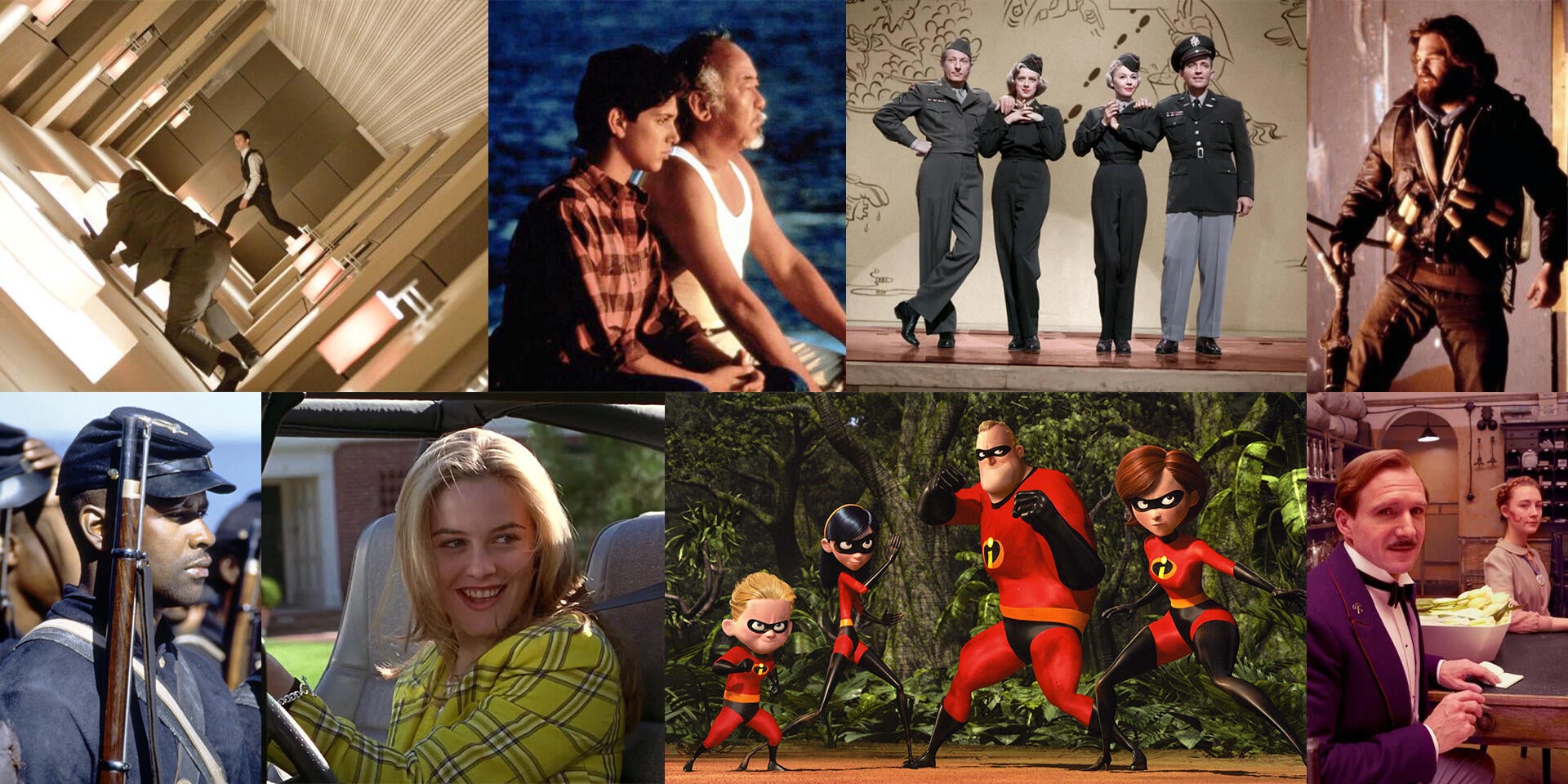
Christopher Nolan's sci-fi thriller "Inception," the heartwarming tale of mentorship "The Karate Kid," John Carpenter's horror film "The Thing," and the Pixar animated superheroes fantasy "The Incredibles" are among the films named today to the Library of Congress' National Film Registry, to be preserved for future generations.
Also among the latest additions:
- "The Big Chill," a Motown-flavored story of Boomers grappling with middle age.
- The Civil War drama "Glory," which won Denzel Washington his first Academy Award.
- "Philadelphia," a legal drama about a gay man fighting for his rights, which won Tom Hanks his first Oscar.
- Wes Anderson's picaresque comedy "The Grand Budapest Hotel."
- The teen romantic comedy "Clueless," Amy Heckling's updated take on the Jane Austen novel "Emma."
- "Before Sunrise," Richard Linklater's romance starring Julie Delpy and Ethan Hawke, which spawned two sequels.
- The Jim Carrey comedy "The Truman Show."
- "Frida," starring Salma Hayek as artist Frida Kahlo.
- "The Hours," a trilogy of stories connected through the writings of Virginia Woolf, starring Meryl Streep, Julianne Moore and Oscar-winner Nicole Kidman.
- Two classic Hollywood musicals, "White Christmas" and "High Society."
Among the nonfiction films that have been selected:
- Ken Burns' first documentary, the Oscar-nominated "Brooklyn Bridge."
- "Say Amen, Somebody," a celebration of gospel music.
- "The Loving Story," about a couple's fight against laws banning interracial marriage.
- "The Wrecking Crew," about Los Angeles session musicians who performed on some of the most successful recordings of the 1960s and '70s.
Each year, as part of its mandate to preserve our nation's motion picture heritage, the Library selects 25 films for the Registry, chosen for their cultural, historic and aesthetic importance. Begun in 1989, the Registry includes movies of all fiction and non-fiction genres (from comedies, westerns, musicals and science fiction, to experimental films, animation, newsreels and even home movies). Candidates are nominated by filmmakers, academics and film fans. These latest additions (the announcement of which had been delayed due to last fall's government shutdown) have increased the list to 925.
There were 7,559 film titles submitted for consideration this year, with "The Thing" receiving the most requests from the public. [To submit nominations for films to be inducted in the Registry, click here.]
"When we preserve films, we preserve American culture for generations to come," said Acting Librarian of Congress Robert R. Newlen. "These selections for the National Film Registry show us that films are instrumental in capturing important parts of our nation's story."
Turner Classic Movies will screen a selection of this year's Registry additions on Thursday, March 19, beginning at 8 p.m. ET.
Select Registry titles are also freely available online in the Library's National Screening Room.
Below are details of each of this year's 25 additions.
"Before Sunrise" (1995)
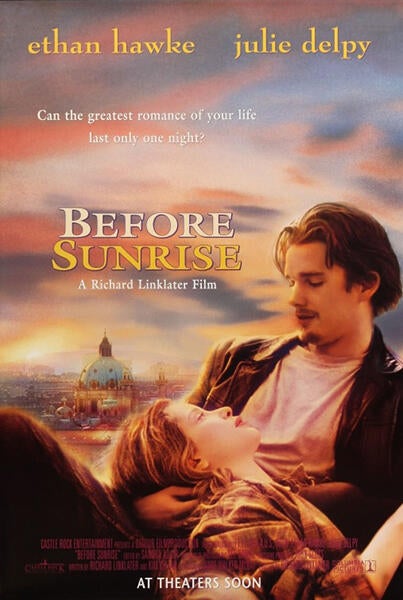
Jesse (Ethan Hawke) and Celine (Julie Delpy) meet on a train headed to Vienna, and decide to spend the evening walking the streets, talking about life, love, death and possibly every other topic two young potential lovers might discuss when visiting an unfamiliar city. The weight of their present lives – the breakups of relationships and their dissatisfaction with themselves — lead to, if not epiphanies, then at least a reassessment of where their lives may be headed.
Richard Linklater previously directed the Austin, Texas-set "Slacker," and "Dazed and Confused." This romantic drama — inspired by a night he'd spent wandering a city with a young woman — was heavily rewritten once Hawke and Delpy were cast. But what is basically a 101-minute conversation between two strangers opens up into an examination of time and its possibilities — ideas that would percolate into his 2014 feature "Boyhood," which was shot over a span of 12 years.
Jesse and Celine would reconnect in the sequels "Before Sunset" (which earned a best adapted screenplay Oscar nomination for Linklater, Delpy, Hawke and Kim Krizan) and "Before Midnight." They also shared a cameo in Linklater's 2001 animated feature, "Waking Life."
"Brooklyn Bridge" (1981)
The first documentary by Ken Burns, "Brooklyn Bridge" is a history of building the New York City landmark, and its impact on the popular imagination ever since. Narrated by historian David McCullough (who later narrated Burns' epic TV series "The Civil War"), it was nominated for an Academy Award for best documentary feature.
"The Big Chill" (1983)
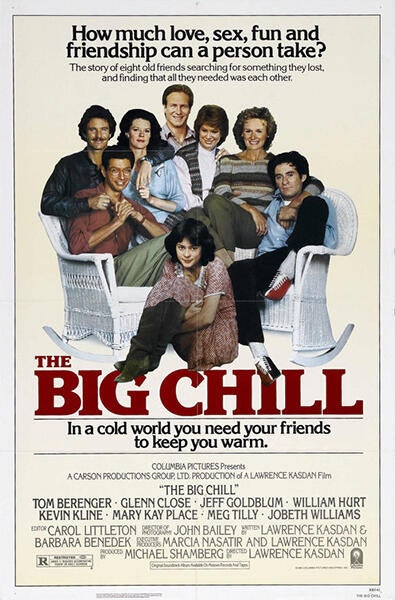
Lawrence Kasden's Oscar-nominated comic-drama, co-written with Barbara Benedek, stars a glowing cast (William Hurt, Kevin Kline, Oscar-nominee Glenn Close, JoBeth Williams, Tom Berenger, Jeff Goldblum, and Mary Kay Place) as boomer friends from the '60s whose lives have diverted, drifted apart, or been sucked into the complacencies and concessions of middle age. Attending the funeral of one of their friends, they reexamine the direction of their lives, lost idealism, and second chances.
A beautifully written and acted paean to a generation, "The Big Chill" revels in a soundtrack of '60s classics with a heavy Motown vibe (though the Rolling Stones' "You Can't Always Get What You Want" provides the perfect send-off at the memorial service). With Don Galloway, and Meg Tilly as the younger lover of the group's late friend, who just happened to be played by Kevin Costner, whose flashback scenes were cut. (To make up for that, Kasden cast Costner in his 1985 western, "Silverado." Not a bad deal.)
"Clueless" (1995)
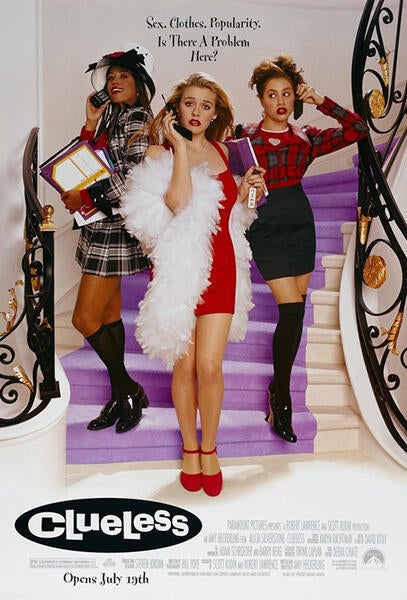
Jane Austen's immortal novels have been inspiration for numerous film and TV adaptations (including one with zombies). One of the most delightful was Amy Heckerling's "Clueless," an updating of "Emma," in which Cher (Alicia Silverstone), a popular and stylish teenager from an affluent Beverly Hills family, tries to steer the romantic entanglements of students and teachers at her high school, only to fail at her attempts for herself.
After being asked to develop a TV show about "cool kids" rather than "nerds," Heckerling was initially rebuffed because she wasn't focusing on male characters. (As if!) But she persisted, with a lead female who, like Austen's Emma, may have been clueless about nothing except her own heart. "You can have emotional intelligence, and you can have some sort of heart intelligence, and I think that might be more important in some ways," Heckerling told "CBS This Morning" in 2015.
With Paul Rudd, Stacey Dash, Brittany Murphy, Elisa Donovan and Wallace Shawn, "Clueless" won Heckling the National Society of Film Critics award for best screenplay, and spawned a TV series and an Off-Broadway musical.
"Frida" (2002)
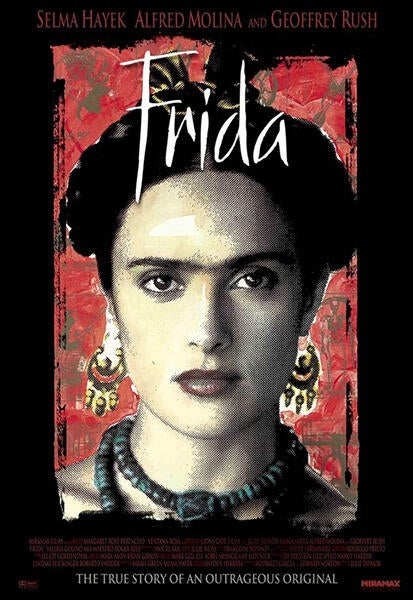
Mexican artist Frida Kahlo began painting while recuperating from a debilitating bus accident. Her future husband, muralist Diego Rivera, encouraged her to continue. But their turbulent life together (he was unfaithful to her, even cheating with Frida's sister, and she refused to play the victim, cheating back at him) would be channeled by Kahlo into her art.
Salma Hayek, a star in Mexican soap operas who became a Hollywood A-Lister with "Desperado," "Fools Rush In" and "Wild, Wild West," spent eight years developing the film. As co-producer, she recruited director Julie Taymor (Broadway's "The Lion King") and co-star Alfred Molina, and got friends like Antonio Banderas, Ashley Judd and Edward Norton to appear. The film was nominated for six Oscars (including for Hayek as best actress), and won two (for makeup and for Elliot Goldenthal's original score).
"It was important for me to make it," Hayek told "Sunday Morning" in 2002. "In the journey of making this film, so many wonderful things happened. I learned how to make a movie, how to get it off the ground, how to get a script right, how to develop it, how to nurture it. I learned a lot of things about myself and I grew a lot. And I got to see a dream come true."
"Glory" (1989)
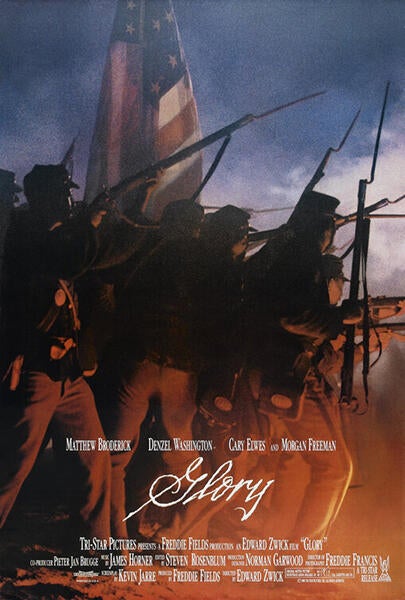
For this stirring Civil War drama, Denzel Washington won his first Academy Award for his performance as Trip, a runaway slave who has joined the all-Black 54th Massachusetts Infantry Regiment, seething defiance and mordant humor as he fights against both his fellow Black soldiers and their White commanders (played by Matthew Broderick and Cary Elwes), before accepting he must fight with them.
The regiment plays a critical role in the Union Army's campaign, overcoming disrespect from Whites, until they lead an assault on Fort Wagner in South Carolina – basically, a suicide attack upon the Confederate forces holed up there. With Morgan Freeman and Andre Braugher. Directed by Edward Zwick, with Oscar-winning cinematography by Freddie Francis.
"The Grand Budapest Hotel" (2014)
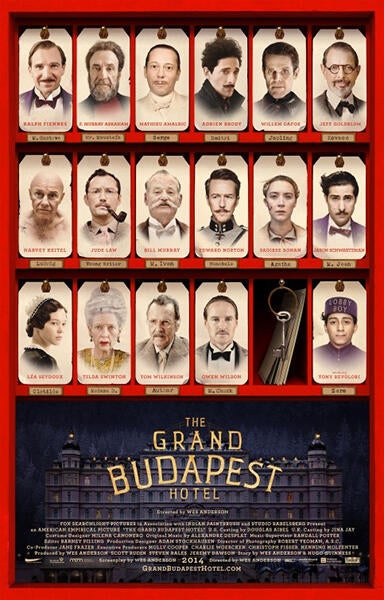
The worlds of Wes Anderson could only exist in films (and maybe in pop-up books). His whimsical and precisely-staged tales play on the artifice of cinema as much as on the heightened emotions of their characters. One of his best films, "The Grand Budapest Hotel," set at a luxury European resort between the wars and featuring a starry cast, is a beautifully constructed tale of love, crime, and civilization on the edge.
Its piece de resistance is a chase through the mountains on skis and toboggan between hotel concierge M. Gustave (Ralph Fiennes) and his faithful lobby boy, Zero (Tony Revolori), and arch villain Jopling (Willem Dafoe). This is no James Bond chase through real mountains; it's a playful construction of miniatures and puppets that a child might fashion while playing indoors during a snowstorm — invigorating, and the most joyful life-or-death chase you will ever witness.
"High Society" (1956)
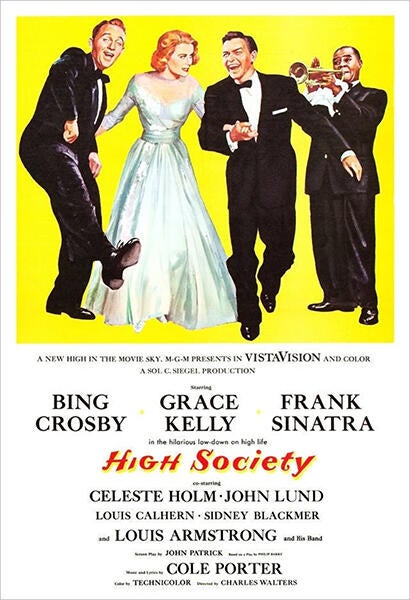
George Cukor's delightful 1940 romantic comedy "The Philadelphia Story," starring Katharine Hepburn as a socialite preparing for a wedding in the face of an ex-husband (Cary Grant) and an amorous reporter (James Stewart), was one of the earliest additions to the National Film Registry.
It became the basis of the Cole Porter musical "High Society," filmed in Technicolor and VistaVision, and starring Bing Crosby, Frank Sinatra, and Grace Kelly (in her final film role before marrying Prince Rainier III of Monaco). The score includes Porter's "True Love," and features Louis Armstong and His Band.
"The Hours" (2002)
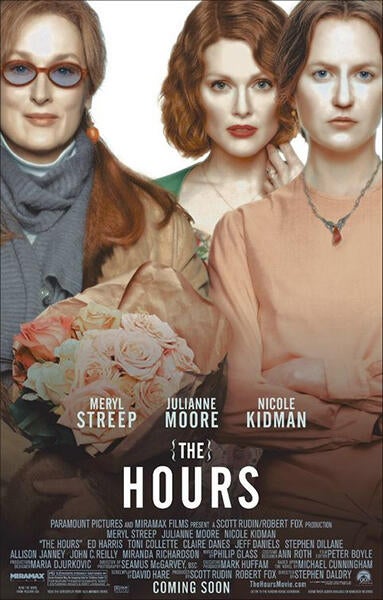
The 1925 Virginia Woolf novel "Mrs. Dalloway" was the inspiration of Michael Cunningham's Pulitzer Prize-winning 1998 novel, "The Hours," which examines the lives of three women in three different time periods, one of whom is Woolf herself.
Directed by Stephen Daldry, the film (which mirrors the stream-of-consciousness style of the book's narrative) stars Nicole Kidman as Woolf (a performance for which she won an Oscar), struggling with writing and with being bi-polar; Julianne Moore as a dissatisfied 1950s housewife and mother who begins reading "Mrs. Dalloway"; and Meryl Streep as a woman in 2001 throwing a party for a friend dying of AIDS.
Told together, the overlapping stories deal with issues of mental illness, lives of quiet desperation, and the pitiless march of time. One character laments having to "face the hours … the hours after the party. And the hours after that."
"Inception" (2010)
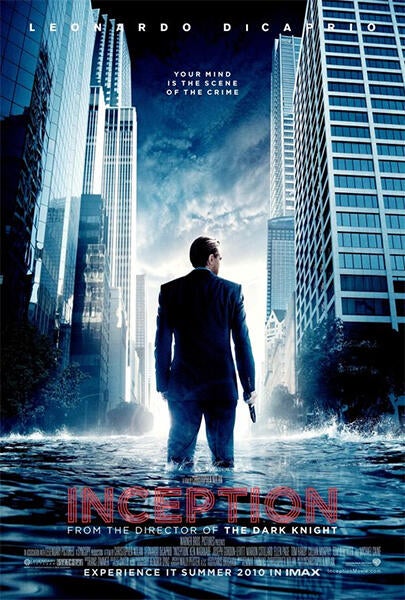
In Christopher Nolan's imaginative and complex sci-fi thriller, Leonardo DiCaprio stars as Dom Cobb, a corporate espionage agent, whose job is to steal secrets from the deepest recesses of a target's subconscious — entering shared dream states and manipulating them to extract what is hidden. But then he is contracted to instead implant an idea — inception — into the mind of a man set to inherit control of his father's corporation.
Visually stunning in design and cinematography, with a haunting Hans Zimmer score, "Inception" is at its heart a moving portrait of a man seeking to return home to family, who must manipulate the dream states of others, and conquer his own subconscious fears, in order to get there. Costarring Joseph Gordan-Levitt, Marion Cotillard, Ken Watanabe, Ellen Page, Tom Hardy and Cillian Murphy.
"The Incredibles" (2004)
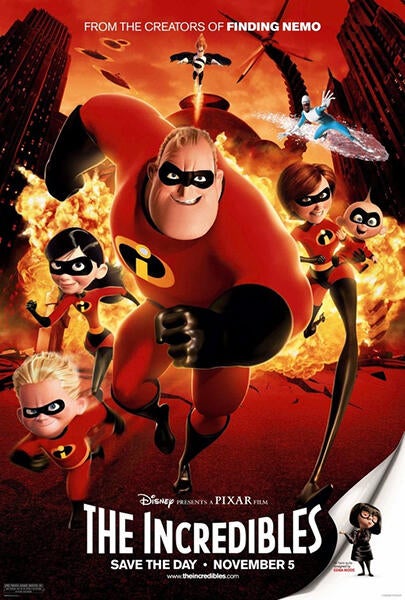
Written and directed by Brad Bird, "The Incredibles" is one of Pixar's best, an irresistible parody of superhero and spy movies, wherein superheroes — thanks to all their metropolis-damaging heroics and lawsuits — are forced into a government-operated witness relocation-like program. Consequently, we have dull suburban dad (a.k.a. Mr. Incredible), dissatisfied suburban mom (Elastigirl), and kids who bring their superpowers back in play once a vengeful villain arrives on the scene.
Voices by Craig T. Nelson, Holly Hunter, Samuel L. Jackson, Sarah Vowell, Jason Lee, and Elizabeth Peña, with Bird himself voicing the character of Edna Mode, designer of the Incredibles' most incredible wardrobe.
"The Karate Kid" (1984)
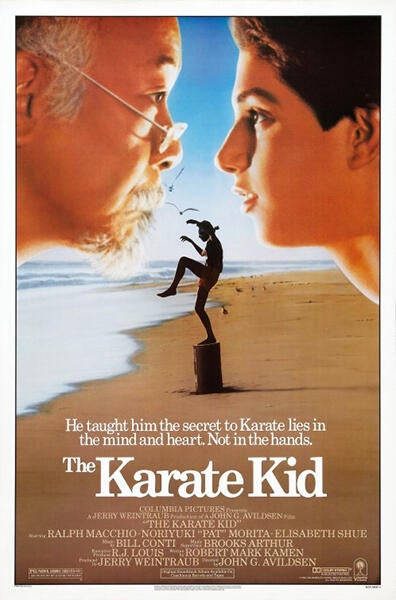
Directed by John G. Avildsen ("Rocky"), "The Karate Kid" is a fish-out-of-water tale (young Daniel LaRusso, a Jersey kid, moves to Los Angeles), a sports competition story (LaRusso competes in a martial arts competition), and the loving story of a mentor (the wise Mr. Miyagi, played by Oscar-nominee Pat Morita) passing on life lessons to his acolyte. LaRusso winds up learning about a lot more than just facing down a bully.
Released during a summer of big-budget blockbusters like "Ghostbusters" and "Indiana Jones and the Temple of Doom," "The Karate Kid" came in number four at the box office. "It was this little engine that could," Macchio told "CBS Sunday Morning" in 2024, "that became must-see moviegoing at a time when that's what you did in the summer — you went to the movies. There was no phone to hang out on, or streamers to just watch what you want when you want it. And it just grew from there."
The film grew a following that continued for two sequels; a 1994 sequel with Mr. Miyagi teaching a young girl; a 2010 reboot featuring Jackie Chan; a 2025 return, "Karate Kid: Legend," with both Chan and Macchio; and a TV series, "Cobra Kai," with Macchio and William Zabka, reprising his role as bully Johnny Lawrence.
But was Johnny really the bad guy? Part of the franchise's enormous fan appeal is the online discussion about who was really the bully of the original film, which even became a plot point in the sitcom "How I Met Your Mother."
"The Lady" (1925)
Norma Talmadge stars in this silent drama about a music hall singer who marries up into nobility, only to be cast out by disapproving parents, who wind up taking her son, leading to her fall as a woman of the streets.
Talmadge, the star of such pictures as "Secrets" and "Smilin' Through," also produced "The Lady." But despite being one of the most popular and glamorous stars of the era, her career did not survive the transition to sound films.
"The Lady," an example of the majority of silent pictures that are lost in part or whole (it was long missing a reel), was recently restored and preserved by the Library of Congress.
"The Loving Story" (2011)
Nancy Buirski's documentary about Mildred and Richard Loving, the couple who fought Virginia's Jim Crow-era miscegenation laws, eschews narration, instead using archival footage and interviews with those involved to tell a quiet but forceful story that is both a cry for justice and a romance. The Lovings' years-long fight to live together as husband and wife led to the 1967 Supreme Court decision that found laws banning interracial marriage to be unconstitutional.
The film, which played in festivals in early 2011 before being broadcast on HBO, won an Emmy.
"The Maid of McMillan" (1916)
Last year several 16mm student films by Adaora "Zora" Lathan, created while she studied at the University of Illinois in the 1970s, were added to the Registry as examples of experimental cinema. "The Maid of McMillan," a 15-minute silent film shot in 1916 by students at Washington University in St. Louis, is considered the first student film — a whimsical romance, performed by members of the Thyrsus Dramatic Club, about the captain of the track team in love with a co-ed. In 2021 a surviving 16mm print was scanned at 4K and preserved on 35mm, thanks to support from the National Film Preservation Foundation.
"The Oath of the Sword" (1914)
A lost silent film until it was recently rediscovered at the George Eastman Museum, "The Oath of the Sword" was the first production by the L.A.-based Japanese American Film Company, employing Japanese American actors to tell the story of young lovers separated when Masao (Tomi Mori) travels to America to attend university, while Hisa (Hisa Numa) stays at home in Japan to care for her father. The circumstances lead to tragedy, once Masao discovers she has married another.
"Philadelphia" (1993)
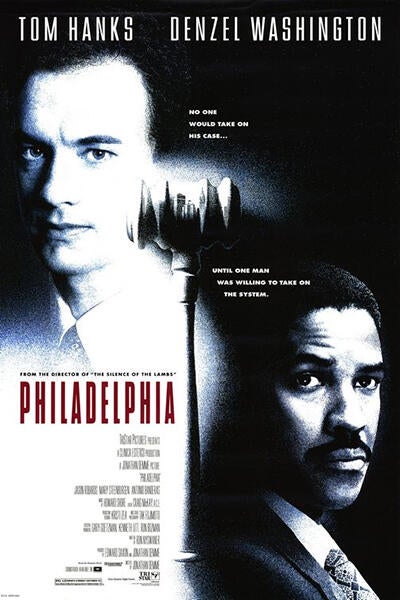
Jonathan Demme ("The Silence of the Lambs") directed this legal drama starring Tom Hanks as a gay attorney suing his law firm for firing him after it was discovered he had AIDS. Denzel Washington played a homophobic lawyer hired by Hanks to fight for his cause.
"Philadelphia," the first major studio film to address the HIV/AIDS crisis, won Hanks his first Academy Award for best actor.
In a 2017 appearance at the Tribeca Film Festival, Hanks remarked on a seemingly obvious point of cinema: "If you ever want to have a great moment in a motion picture, walk out a door and make sure they just put up a Bruce Springsteen song." That song, "Streets of Philadelphia," won an Oscar, too.
"Say Amen, Somebody" (1982)
George Nierenberg's acclaimed documentary is a joyful celebration of gospel music, features such artists as Thomas A. Dorsey, Mother Willie Mae Ford Smith, the Barrett Sisters and the O'Neal Twins. The film was recently restored in 4K with a 5.1 stereo soundtrack.
"Sparrows" (1926)
Mary Pickford both starred in and produced "Sparrows," a silent Southern Gothic about a teenage girl seeking to save young children from a "baby farm," navigating an alligator-filled swamp and fending off kidnappers and the farm's evil owner. It was the pigtail-wearing Pickford's last child-like film role (she was 34 at the time). Directed by William Beaudine and an uncredited Tom McNamara.
"Ten Nights in a Barroom" (1926)
This Prohibition-era silent drama, based on an often-filmed temperance play by William S. Pratt, was produced by the Colored Players Film Corporation, and features a Black cast dramatizing the story of an alcoholic who changes his ways after his daughter is killed in a bar fight.
Colored Players Film Corporation, based in Philadelphia, produced four films, only two of which (this and 1929's "The Scar of Shame") survive today.
"The Thing" (1982)
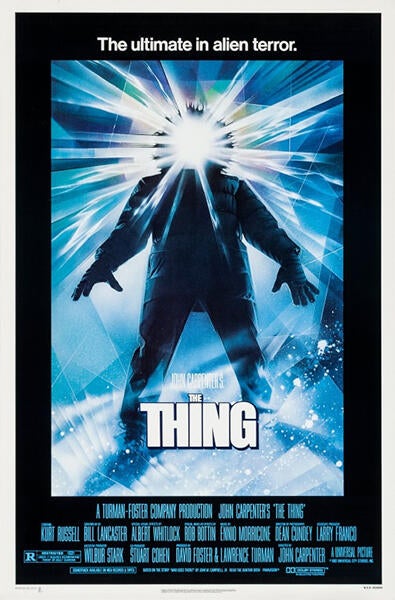
A remake of the 1951 sci-fi film, "The Thing From Another World," John Carpenter's rendition is both more faithful to the John W. Campbell Jr. novella "Who Goes There?" and also much, much gorier, thanks to revolutionary makeup effects by Rob Bottin. At an Antarctic research station, a shape-shifting alien creature — in the initial guise of a dog — takes over and metamorphoses into a variety of beings, supplanting the humans until their mutual distrust and isolation lead to paranoia and violence.
Released in what is perhaps the Golden Year of movie science fiction, "The Thing" was not a hit initially (it was competing against a feel-good extraterrestrial movie, "E.T."), but it developed a cult following via cable TV and home video. It is now ranked by many as Carpenter's best. Starring Kurt Russell, Keith David, T.K. Carter, Wilford Brimley, Richard Dysart and Donald Moffat, it features an unsettling score by Ennio Morricone that projects isolation, desolation and paranoia, building on just two notes, underscored by haunting synthesizer chords and what sounds like a beating (human?) heart.
"The Tramp and the Dog" (1896)
The oldest of these new additions to the Registry — and shortest, at about one minute — "The Tramp and the Dog" is a silent comedy, filmed in the Rogers Park neighborhood in Chicago, in which a hobo tries to steal a pie from a woman's backyard, only to be met with a very protective dog. Previously thought to be a lost film, a copy was discovered at the National Library of Norway in 2021.
"The Truman Show" (1998)
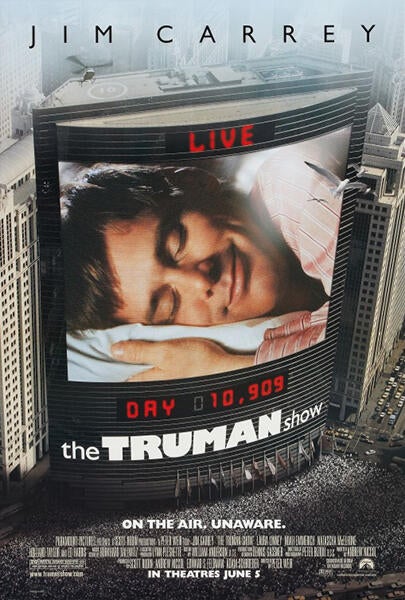
Jim Carrey was one of the most popular performers in the 1990s, with such hits as "Ace Ventura: Pet Detective," "The Mask," "Dumb and Dumber" and "Liar Liar." But one of his most arresting films was "The Truman Show," in which he plays a man oblivious to the fact that his entire life is being fed to a global audience as a live 24/7 reality TV show. Truman Burbank's paranoia about leaving the safe haven of his community (actually a TV studio within a giant dome, complete with sitcom-friendly neighbors and demonstrative weather) begins to ebb when he detects that something is not right — and he launches a bid for freedom.
Directed by Peter Weir and written by Andrew Niccol (both Academy Award-nominees), "The Truman Show" is more than just a comic take on a man expanding his horizons and breaking free from convention; it also speaks to the high price paid for celebrity and ratings, and the huge apparatus created to sustain it.
Oscar-nominee Ed Harris is terrific as Christof, the Svengali-like TV maestro who, by the end, tries to convince Truman not to leave his artificial world: "I know you better than you know yourself. … You're afraid. That's why you can't leave. It's OK, Truman, I understand. I have been watching you your whole life. I was watching when you were born. And I was watching when you took your first step. I watched you on your first day of school. The episode where you lost your first tooth! You can't leave, Truman. You belong here, with me. … Say something. Say something, goddamn it! YOU'RE ON TELEVISION! YOU'RE LIVE TO THE WHOLE WORLD!"
"White Christmas" (1954)
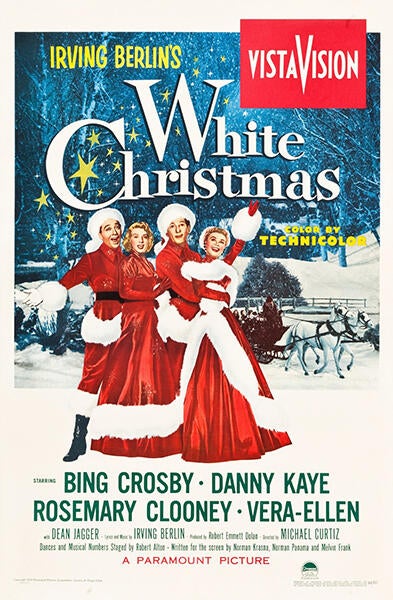
The Irving Berlin song "White Christmas," perhaps his most popular song ever, premiered on Bing Crosby's radio show at Christmas 1941, just weeks after the attack on Pearl Harbor. It would make its first movie appearance in the 1942 film "Holiday Inn." But it took a while for the song to gain legs.
"It was only when Armed Forces Radio began to play the song overseas and for American troops who found its images of a kind of Christmas on the home front so appealing," Jody Rosen, author of "White Christmas: The Story of an American Song," told "Sunday Morning" in 2006. "It was 1942, the first winter that American troops had spent overseas. So, these images of ... snowy American, New Englandy Christmas really spoke to the longing, nostalgia and homesickness of the troops for their homeland and for the sweethearts and wives and mothers and fathers they'd left behind. It was the enthusiasm of these troops that really propelled the song and made it a hit."
The Berlin classic became the basis of this holiday film favorite, which played off of war veterans' nostalgia in its storyline. Directed by Michael Curtiz, it starred Crosby, Danny Kaye, Rosemary Clooney and Vera-Ellen. it was Paramount's first VistaVision release, and the top-grossing film of 1954.
"The Wrecking Crew" (2008)
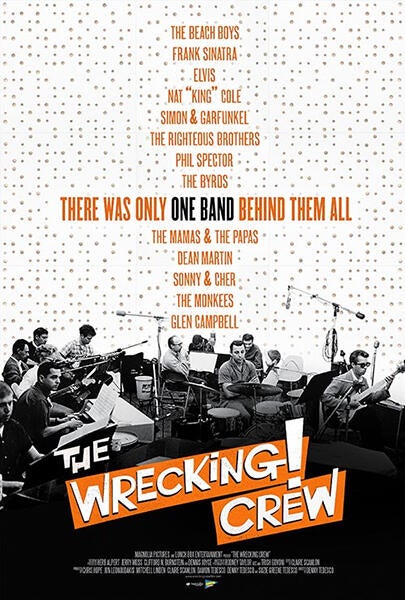
As Denny Tedesco was growing up in the San Fernando Valley, his dad, guitarist Tommy Tedesco, was working as a session musician for musical artists like Nancy Sinatra, Elvis Presley, Sonny and Cher, and the Beach Boys, along with films and TV shows like 'Batman." He was part of L.A.'s heralded cohort of session players known as "The Wrecking Crew."
Denny's documentary, honoring his father and the other Wrecking Crew members (including drummer Hal Blaine, bassist Carol Keye, and two who went on to become popular solo acts: keyboardist Leon Russell and guitarist Glen Campbell), garnered festival plays in 2008. But it took another seven years for Denny to complete the music clearance rights and licensing fees for the more than 100 songs clipped in the film before a national theatrical release could be worked out.
Tedesco told the Los Angeles Times in 2015 that it was a point of pride for him to actually pay for the music rights, instead of going hat-in-hand to individual bands asking to use tracks for free. "This is how my dad and all those people earned their living," he said. "I want the musicians to get paid."
For more info: