Brooklyn's Flatbush Avenue bus lane redesign sparks optimism and concern

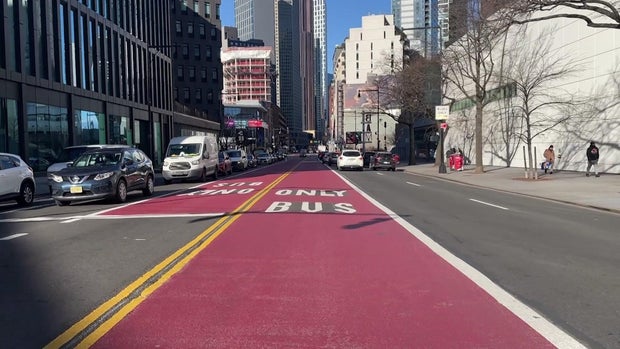
Big changes are coming to parts of Flatbush Avenue, one of Brooklyn's most congested thoroughfares, as New York City moves forward with a major bus lane redesign aimed at speeding up commutes and improving safety.
Commuters often joke that it can take nearly as long to walk parts of Flatbush Avenue as it does to ride the bus during rush hour. Transportation advocates say that's exactly what the city's plan is designed to fix.
"This has been a bus that's incredibly slow. It can go as slow as 4 miles per hour when there's a lot of traffic. So it's a really exciting change," said Alexa Sledge, director of communications for Transportation Alternatives.
Sledge said the project will affect tens of thousands of people who depend on public transit along the corridor.
"Sixty percent of households on and around Flatbush Avenue don't have a car. So these are people that are relying on public transportation, like the bus every single day to get where they need to go," she said.
One of the most dangerous streets in NYC
City officials classify Flatbush Ave. as a Vision Zero priority corridor, meaning it is considered one of the most dangerous streets in the five boroughs.
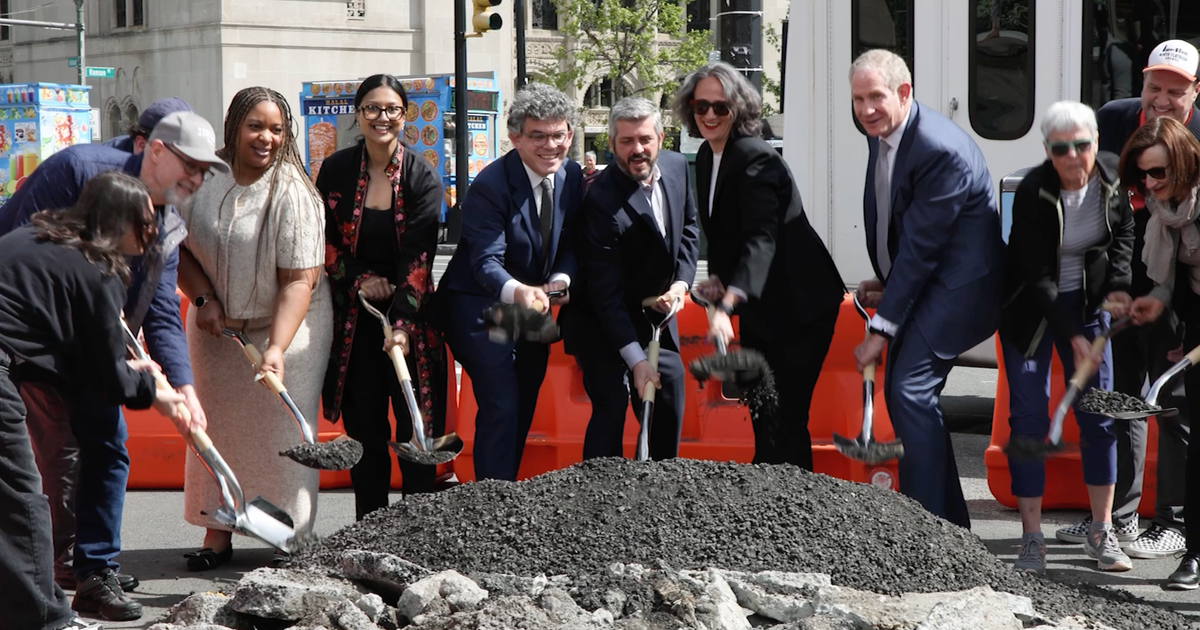
Installation of new center-running bus lanes began this fall on the stretch from Livingston Street to State Street, with plans to extend down to Grand Army Plaza.
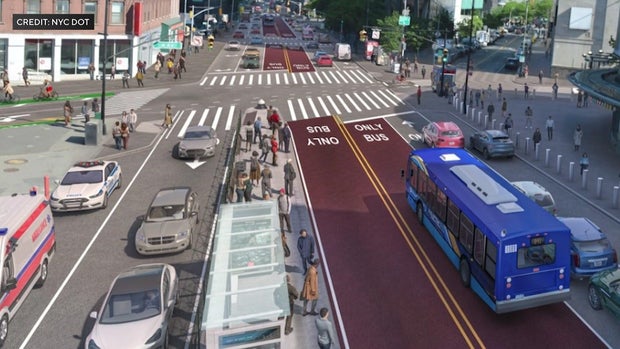
The plan also includes bus boarding islands, where riders wait on a small platform in the street rather than at the curb.
Accessibility concerns
Allan Rosen, retired MTA New York City Transit director of bus planning, said those islands could create new challenges.
"People with wheelchairs and walkers, and who have difficulty walking, will now have to cross the street just to get on the bus. And it's going to make traffic move at a standstill," Rosen said.
Some riders say they support improvements but feel the rollout has left out community voices.
"If you're going to do something like this, greatly increase the number of buses on this important avenue," says Jamell Henderson, a Crown Heights resident who regularly rides the bus.
"One of the things that I brought up and asked was how many residents did you interview ... and they only interviewed 100," Henderson said about his exchange with DOT leaders. "You bypassed the voices of the community."
"Any kind of change is going to have some growing pains"
Transit advocates say the long-term benefits outweigh the drawbacks.
Derrick Holmes, a digital strategist with the Riders Alliance, said debate is expected with any major transportation shift.
"Any kind of change is going to have some growing pains associated with it. What I always keep in mind is that we all want the same things. We all want better public transit. We all want safer streets," Holmes said.
In a statement, a spokesperson for the New York City Department of Transportation said the plan, "will make commutes fast and reliable for 132,000 daily bus riders and dramatically improve safety for everyone using the street," adding that it is still too early to fully judge the impact.
Construction is expected to resume in the spring, with the full project slated for completion in 2026.
Have a story idea or tip in Brooklyn? Email Hannah by CLICKING HERE.