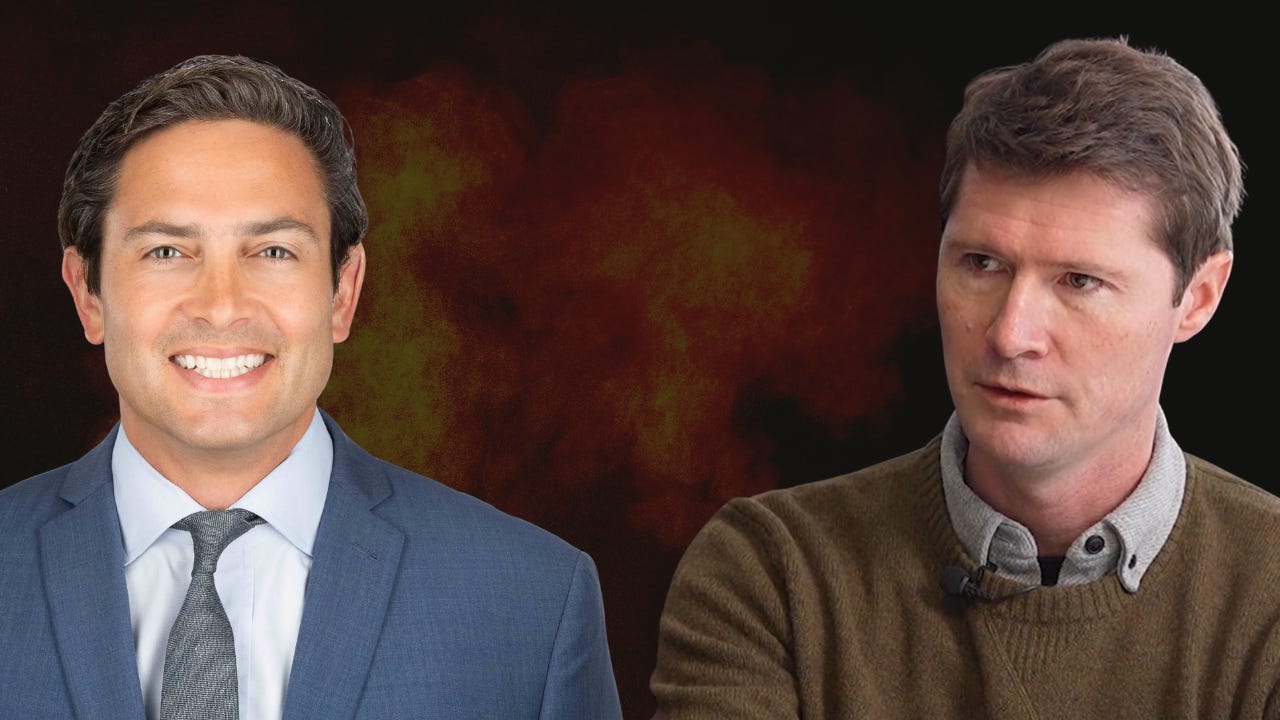
Transcript: Lt. Col. William Swenson (Ret.) and Command Sergeant Major Matthew Williams (Ret.) on "Face the Nation with Margaret Brennan," May 24, 2026
The following is the transcript of the interview with retired Lt. Col. William Swenson and retired Command Sergeant Major Matthew Williams (Ret.) that aired on "Face the Nation with Margaret Brennan" on May 24, 2026.
MARGARET BRENNAN: We're joined today by two Medal of Honor recipients, retired Command Sergeant Major Matt Williams and retired Lieutenant Colonel William Swenson. Both were awarded their medals for valor in battle during their service in Afghanistan, and it's good to have you both here.
COMMAND SERGEANT MAJOR MATT WILLIAMS (RET.): Thank you.
MARGARET BRENNAN: It's not often that we have guests with your background, with your experience, and we want to tap into some of your thoughts here, because it is pretty extraordinary when you read the description for the Medal of Honor. And I want to do that. It's the highest award for military valor in action, the Congressional Medal of Honor Society describes it as representing the values of bravery, courage, sacrifice, integrity, a deep love of country and a desire to always do what is right. What does it mean to you?
LT. COLONEL WILLIAM SWENSON (RET.): One of the things about military service is there's a universal component to it. Everyone who signs up to serve our country believes in the ultimate ideals of what we represent. As citizens, we have a free country. Being part of the military service is one of the ways to serve our country. In that service, you sign up potentially at great risk to yourself. In our cases, I think that we did nothing more than do our jobs. We were given the right training, we were given the right opportunities, but ultimately we were told that we needed to do something on that day specifically, and what set us apart is actions we did take, but ultimately there were actions that any other service member would have taken on behalf of that service.
MARGARET BRENNAN: You really believe that? Anyone else.
WILL SWENSON: I do.
MARGARET BRENNAN: Will, what do you think? What does this honor mean to you?
MATT WILLIAMS: Yeah, I think Will's exactly right. It's- it means the medal itself embodies service and sacrifice and patriotism and serving something greater than yourself, you know. And I think, you know, I think we both can say we joined the military at a time of great need. The country was in need of young men and women to serve and go fight, and in a war that was on two fronts in Iraq and Afghanistan, you know. And I chose my, my path specifically within special operations. And I was surrounded by phenomenal human beings every time we stepped out of the wire, you know, I was presented with- with an opportunity that day to serve the men to the left and right of me, and that's what I chose to do. And I'll echo what Will said. I don't think that, I firmly believe that everyone I've served with would do the same thing if given that opportunity. And you know, the fascinating thing about the medal itself is, is our story was captured and- and that's why we sit here today with this award around our necks, a lot- just like the 3500 other Americans that have been awarded the medal over our history. But I'll tell you with all honesty, I believe there's much more valor and heroism- heroism that has happened on the battlefield every single day. There's stories that just don't get captured. They don't get told, and that's what this medal actually represents. It's not me and Will here. It's, it's not who, who else wears the medal today. It's those that have never had their story told, or- or the folks that received the medal, you know, a relative picked it up at the White House in a shadow box because they never made it home. I think that's what this medal represents, and that's why it's so important.
MARGARET BRENNAN: Matt, you mentioned you served with people outside the wire. What do you mean by that? Are you talking--
MATT WILLIAMS: Every time that you you know you leave your fire base, you know you whether you get into vehicles or you get into helicopters or whatever you're going to do, you know you're going to go out there and you're going to face the enemy and and you have to be at peace with that. You have to understand that your training has has prepared you to be effective on the battlefield. And you have to have the trust in the men and the women to the left and right of you, that they're going to be there when, when they- when you need them to be there, and you'll be there for them at the same time. And that's how, that's how you're the most effective in combat operations. But, you know, I think it's more important than that, I think that's how you're most effective as a country. If you're willing to serve those to the left and right, if you serve your community, you know, be a part of something bigger than yourself, then, you know, it kind of puts everything else aside. We don't really have that much to fight about anymore, if you really think about it way.
MARGARET BRENNAN: Well, both of you, when we looked at your backgrounds, you were both headed towards the trajectory of some kind of service before you joined the military, whether it was the State Department or, I think, law enforcement, right? Do you think you're just sort of hard wired for that?
MATT WILLIAMS: You know, I'll jump in. I think, you know, in a way, I think I was. You know, I like to kind of joke, I was the little boy that never actually grew up. You know, I always wanted to be a police officer or join the FBI or- or wherever my path took me. But those, those ideals, those values, were, you know, they were- they were learned over time. It's how I was raised. You know, my father always taught me the value of hard work and integrity and being a person of, you know, trust, you know. And I think that was very important. And I understood at a young age that if you have the opportunity and the ability, you need to do something bigger than yourself, you need to look outside yourself. And to me, that was service. And, you know, and law enforcement was my form of doing that. It's- that- that was my goal. And of course, that trajectory changed quite drastically, and I found the military. And you know, it's something that I would still challenge everybody today, to consider the military as an option, because it's so important, and the lessons you can learn, the things you can do, really set yourself up for great success after your service. And I think that's something that, you know I would, I would ask most young men and women in America to consider doing.
MARGARET BRENNAN: And you were headed towards a career, possibly as a diplomat, as I understand it. And then 9/11 happened.
WILL SWENSON: 9/11 was a transformational event for our generation. I think that many of us who had set our path towards service, we saw that there was a moment that was being presented to us that required us to stand up and do what we felt was right. Whether it was military service or otherwise, many of us did hear that call. Every generation has a transformational moment. It doesn't require a 9/11 to understand the importance of serving one's country. And at that time, I had people that also heard a call and they heard a call to go serve in under-privileged schools or at the National Park Service or any number of other places. But specifically for me, national defense was where we needed to have our people. It's where I felt I was best placed, and ultimately it became the right choice.
MARGARET BRENNAN: It's interesting because when we were talking about the conversation with you two, it came up that this year will mark 25 years since 9/11 and there are now 25-year-old adults walking around this country who do not have those events as part of their living memory, right? They were so small. How do you explain to that generation, what was so galvanizing for you, that made you change the entire trajectory of your life and sign up for sacrifice?
WILL SWENSON: And what I'd say to that is, and there they are, serving without that galvanizing moment. Every generation stands up to serve. Every generation hears the call. There are different--
MARGARET BRENNAN: Less than one percent of the population, now active duty. 6% have past service. It's a smaller and smaller part of the population, but you aren't worried about that?
WILL SWENSON: I think that the people who are being asked to serve in a national security regimen, that's a smaller portion of our country, just because of the nature of warfare. We require a smaller military. We require different capabilities and different skills. There's still service, though. Again, service is not specifically military. It's universal. You can do anything to serve this nation, to serve your community and be a good citizen. But back to your point, our military service members do represent a fraction of the population and do carry a heavy burden. And this generation of 25-year-olds and younger, they didn't need the events of 9/11, that's part of their history. They didn't need that moment for them to go into service. They understood well that there was something worth fighting on behalf in this country, in what our values are, and that's why they are where they are.
MARGARET BRENNAN: Do you think, though, that there is that unifying factor right now behind service? I mean, the country feels very fractured at this moment in time, at least on this program, we have a lot of conversations about it. What do you think?
MATT WILLIAMS: You know, I think that there is the feeling, you know, I think that feeling is true and real, but I don't think it's as big as it seems, actually, and maybe that's just my hope. I hope that it's not. I hope that people can realize that we have so much to fight for and so much to be grateful for in this country. You know, I think we have a- we have a hard time. We dwell on our past quite a bit, and it's rocky. You know, we've had a rocky trajectory to get to where we are today, but we're still the greatest nation in the world, and we're still the freest country in the world. And those are things to be celebrated, but they're more importantly, the things to be protected and to Will's point- and I, I just retired from military in October, and my final job was- was a command sergeant major at one of the Special Forces Qualification Course battalions. And I got to see these young men that had raised their right hand, just like I did, you know, 20 years ago, to come and join the special operations community because it was the right thing to do. And they didn't need the extra call to service that we had- that we needed, you know, to get us across that line. They did it because it's the right thing to do. And I think- I think, and I believe that that's really still true and inherent in the youth of America. You know, I hope- I hope we can do a little bit better on some of the rhetoric and the way that we communicate with each other. That could obviously be a lot better. It would just be better for the country. But we have a lot to celebrate, and we have a lot to be thankful for, and we have a lot to serve for, you know. And I ask- I ask everybody, when I get the chance, you know, look, I'm not asking you to go strap on the uniform and carry a rifle into combat with the enemy, I just ask that you be a citizen worth that service, you know. And that's my challenge to people, is- is be worth the service and sacrifice that this young, 25-year-old is willing to go- go do on your behalf. I mean, if you think about that every day, we think that these kids are over there because they believe in it, and they believe that they're doing it for you personally. You know, I think that would kind of change our mindset a little bit and offer a little bit of relief from the rhetoric that we see so much of today.
MARGARET BRENNAN: That's a really profound way of thinking about Memorial Day, frankly--
MATT WILLIAMS: --Yeah, absolutely.
MARGARET BRENNAN: Which will be coming up on- this month. Do you think of particular people you served with on that day that our country marks, Memorial Day?
WILL SWENSON: Clearly those we serve with, it is a personal experience. We know people who have sacrificed at the greatest measure for this country, and one of the things that I always have to do is remember those who have given the ultimate sacrifice on behalf of these ideals. And what I like to do is remember not just them, not just their stories, but their families, and ensure that they always resonate in history, because their story is my story, their story will continue as long as we as a nation, remember that we have heroes that are willing to serve on our behalf, and their sacrifice and their loss needs to be remembered, so days like Memorial Day are so deeply important for us to continue as a country forward understanding what people are willing to give on behalf of it.
MARGARET BRENNAN: Do you have anyone particular in mind on Memorial Day?
MATT WILLIAMS: You know it's hard. You know there's people that come up almost every day, you know, and some are lost in combat, and some have just been lost along the way, unfortunately, you know. And somebody I think about quite often is my teammate, fellow Medal of Honor recipient, Ron Shurer who, who lived through combat. He lived to serve the Secret Service. He lived to serve on the counter assault team for the president, and he was taken from us due to cancer, you know, that's linked back to exposures in his time in Afghanistan and Iraq, the things that he done- had done and been exposed to. And he's somebody that- he's constantly on my mind because he was- he meant a lot to me, and he was a mentor to me in more ways than one, not only as a new guy, as a Special Forces operator, but then, as a Medal of Honor recipient, I got to live through him before I received my medal as well. And he's, he's constantly on my mind. But Memorial Day is a time to really take a pause and think about those, those folks that we've lost, and not only in combat directly, but we've lost since then as well. And to, you know, unfortunately, due to some- some other circumstances and decisions that people have made, which are all too tragic as well. And so I think that's really how I frame Memorial Day and think about it.
MARGARET BRENNAN: Will, when President Obama presented you the Medal of Honor, he said, quote, you 'remind us that our country can be at its best, a nation of citizens who look out for one another, who meet our obligations to one another, not just when it's easy, but also when it's hard.' Is it a burden to carry expectations like that with you when you enter private life?
WILL SWENSON: I think we have to remember that the crucible of war is unfair, and it does bring out both the worst of us and the best of us. In moments of great risk to our own lives, we do things that are inexplicable, and we see things that are almost at the level of miracles. People are coming together as a team to do things that ultimately flies in the face of good decision making, but ultimately, what they're doing is fighting on behalf of each other and on behalf of their country. And when I recognize that I received individual accolades from the president, one of the things that we have to remember specifically as Medal of Honor recipients is that we're the ambassadors to other people's stories. We're ambassadors to those whose stories were not told. We're ambassadors to those who were with us on the battlefield, Johnson, Johnson, Kenefick, Layton and Westbrook, and they didn't come home. Their stories are part of our story. We wear this medal as a representation of service, not as a representation of ourselves, and that is a weight that we as recipients of this award have to remember is our responsibility is to continue telling the stories, not just of us, but of everyone we served with and everyone who will serve.
MARGARET BRENNAN: That feels heavy. It feels like you will always be part of public service after going through something like this.
WILL SWENSON: I would say as Medal of Honor recipients, we are a very fair representation of America. We're a snapshot of this country. We come from towns, cities, all walks of life, different political views, and ultimately, we are a very democratic representation of the values of this country. But as recipients of this award, we have to take those backgrounds, some humble, some not, and with that, continue to try to lead lives that are emblematic of what this award represents.
MARGARET BRENNAN: And I understand both of you are continuing to try to help and to serve, particularly with veterans. Matt, President Trump said of you that you demonstrated unyielding service, unbreakable resolve and untiring devotion. Do you think of those words as a, as a burden or as an assignment for the rest of your life? How do you think of it?
MATT WILLIAMS: You know, I think it's probably a little of both, but, but I'll kind of frame it a bit differently, you know, to me, it's a privilege, because not everybody gets the opportunity to put this medal on, like I mentioned earlier. Well over 50% of the medals that have been awarded have been awarded posthumously. So to be able to stand there in front of the nation, in front of your family, in front of your peers, in front of your team, and have the President of the United States of America, present an award to you that you can never feel like you actually ever earned, because it's just impossible. You know, is extremely heavy, and it is a burden at the end of the day. And you know, one of our- my friends and fellow recipients, you know, Kyle Carpenter says it all the time, he calls it a beautiful burden, and I agree with him to a point, but I also, I also think it's a privilege, at the end of the day. It's a privilege to be able to continue to serve, serve our country, serve our people, serve our fellow recipients, and serve the fellow service members that are out there across the globe today, you know, operating on behalf of the United States of America, on behalf of our opportunity to sit here and do this show and have this conversation, and talk about things that are heavy and burdensome in a way that doesn't seem to matter as much when you think about what they're out there doing to make sure we can still do this.
MARGARET BRENNAN: Another key anniversary is Afghanistan. There has been so much scrutiny in this country over the war that ended five years ago this August. Hard to believe. America's longest war. I wonder how that sits with you. Since you both served on that battlefield, what do you think of those who sacrificed in that conflict? It's spoken about in so many different, heated ways. But for you, when you think of that war, how do you make sense of America's experience?
WILL SWENSON: As military service members, we were asked by our country to go serve overseas on behalf of the defense of the nation. It's as simple as that. We did our jobs. We did our jobs honorably, and we did our jobs to the measure that we left some of ours behind. There was loss of life because we believed in the mission, and ultimately, as service members, that's what we do. We serve to the best of our ability. When our nation calls us to serve.
MARGARET BRENNAN: Does that anniversary mean anything to you? Is it- is it difficult to hear people talk about the war? Do you want people to talk more about the war? Do you want them to talk more about people who had your experience?
WILL SWENSON: Our war is part of our history. Our service overseas is part of our history. If we don't tell these stories, we as a nation don't know how to always improve. We are an imperfect nation that's always trying to improve, and it's through our history as a lens that we look forward on how to do better next time.
MARGARET BRENNAN: When you told my colleague David Martin here that when you left the army, the word you chose was you felt confused. You felt confused about that time and that service. But do you still want people to sign up to serve today? You felt confused. How did you overcome that and come back to believe in this mission?
WILL SWENSON: There's no confusion in service. We understand again our role as military service members is to close with and destroy the enemy. That's our job. The confusion comes as a nation as to what objectively we want to achieve. That's a political question, and it's up to our politicians who have the very hallowed responsibility to ensure that the navigation of this nation and our priorities and the wars that we choose are worth the sacrifice of our service members and are necessary to the objectives of moving us forward as a nation and to be the global example of what we do as a country.
MARGARET BRENNAN: How do you feel about conversation about America's longest war? I mean, is it painful? Is it something we should do more of, or is it just so heated now that it's fraught?
MATT WILLIAMS: No, you know, I think we have to talk about it, you know, we have to learn from it. You know, you can, you can love it or hate it or agree with or disagree with it, and that's all fine, and that's your prerogative. And that's- that's part of living in a free country, you know? That's why we did what we did, so that you can disagree or like or hate or whatever it doesn't matter. You know, I think about it a little bit differently. You know, I'm not- I'm not sad about it. I know what I did over there. I know what I saw people do over there. My experiences have made me grow as a- as a husband, a father, as a man, and I think all those things are extremely important. You know, the crucible of combat, teaches you so much about yourself that you can never learn anywhere else, you know, how to deal with stress and how to move on and how to be a member of a team. All those things are important now, the war and how it ended and how maybe it took place, or the objectives that we achieved or didn't achieve are up for debate and up for discussion. And I think that's important. It's healthy. You know, I think we need to go through those things, and we need to have conversations about where we, you know, maybe we went wrong, or maybe we went right, or what we could have done differently so that- that we don't repeat, you know, the same situation over again. If we're not learning and growing as a country, then, yeah, then it's definitely not worth it. But I think that we're better than that, and I think we're going to take these opportunities and- and have discussion and dialogue around them, and ensure that, you know my son and, you know, everybody's sons and daughters in the future don't have to deal with something in a way that that we did, that we can have a little bit more finite objectives and finish our mission more appropriately, so that people don't have to be confused about their service. Now, to be very clear, I am not- I know what I served for. I know what I did. I know what we accomplished together as a team and as an ODA and as a Special Forces community writ large. And I'm very proud of that. I'm very proud of my service to Afghanistan. I have two young boys now, and it's something that we started to talk about, you know, with 9/11 in particular, as you mentioned earlier, and why service is important, and why I was, you know, I was fortunate. I deployed most of the time before they were born. But we now talk about those things because I think it's important, and I think that's important for the country as well.
MARGARET BRENNAN: Well said. I know you, Will, have said there's a responsibility now to the people left behind. What did you mean by that?
WILL SWENSON: The responsibility, ultimately, if we're specifically going back to the Afghan conflict, is on the Afghan people to choose what they want to be as a country. I think that our service, our sacrifice, what we did in that country, along with our Afghan partners, was an indicator that they have their own path to choose, and we showed them what it could be. And there were many, many Afghans who wanted to achieve the same vision, but it's up to them. They need to decide what they want to be as a country. They want to decide what their future is. But ultimately, what we showed them as U.S. service members, as foreign service officers, as NGOs, everybody who participated in those 20 plus years of conflict, we gave them a better pathway forward. And not just them. We showed the world what the American resolve is to help achieve objectively for other people, what could be a better pathway forward for them and their lives so they got to see the best of America through our service and sacrifice.
MARGARET BRENNAN: Well said. And before I let you go, we are coming up on this 250th anniversary of the American experience. I know I can't ask you a question like, are you optimistic? There's no way that two Medal of Honor winners could say they're not optimistic. So what specifically makes you optimistic? Because this country, at times, can feel dark, these days, there's a lot of darkness. What makes you feel optimistic?
WILL SWENSON: Well, ultimately, because we're in Washington, D.C., and everything revolves around politics, we have to remember that politics aren't everything. American lives continue on. Children are born, children go to school. Lives are achieved. Dreams are achieved. This country is a great place. It's not politics. It's not just what's the news bites coming off of media. Ultimately, we continue forward as a country, continually imperfect, continually evolving forward, always trying to achieve a more perfect union. That's what's important to remember, what we can achieve aspirationally. No other place in history, time or on this planet have ever gotten to where we are today. We need to be proud of that, and we need to remember that is what we stay focused on, what we can be.
MARGARET BRENNAN: What we can be, and the promise of it. What makes you optimistic?
MATT WILLIAMS: You know, I agree with Will. I think, you know, it's- it's so important to remember who we are as a country, and take an opportunity to celebrate that, and think about all the- the challenges that we've overcome, how far we've actually come. You know, I think if you- if you frame it that way, you think very deeply about our trials and tribulations from beginning to today, we've made tremendous strides. Our country is, you know, we're a super- global superpower. Our economy is doing well. All those things are great. And- and take politics aside out of this whole conversation. Just talk about our communities, that- that we live in, and the people that you surround yourself with, and your families, and the opportunity to be free and, you know, choose what school you go to, and where you want to live and do what you want to do, and what career path you go down or don't if you want to, you know, I mean, there's so much to be positive about. And I think the opportunity to celebrate America's 250th birthday, you know, over the course of this next year is- is amazing. There's so many great places to visit. You know, the National Mall is going to be full of Americana. And what we're going to- celebrating ourselves, which I think we should take the time to do. I think it's very important. You know, across the country, you know something we're very passionate about at the National Medal of Honor Museum in Arlington, Texas, is- is a- is a phenomenal beacon that stands to- to talk about and house our, not only our story, the story of the Medal, and what the Medal represents itself. And I would challenge people to go there and celebrate our history as well. You know, it's so important. There's so many great things to go do and great things to visit and don't just take part in it, because it's something to do on a weekend, right? Think about why you're doing it, and when you're there in the crowds and you're- you're enjoying yourself, and you're taking your family to go talk about our country and celebrate our country, actually celebrate it. Be grateful for what you've got and the opportunity that was provided for you. If you do that, I don't see how you can't be optimistic about our future.
MARGARET BRENNAN: Well, thank you. Thank you both, and thank you for your service.
MATT WILLIAMS: Thank you.
MARGARET BRENNAN: We'll be back.