What the inflation drop means for HELOC rates
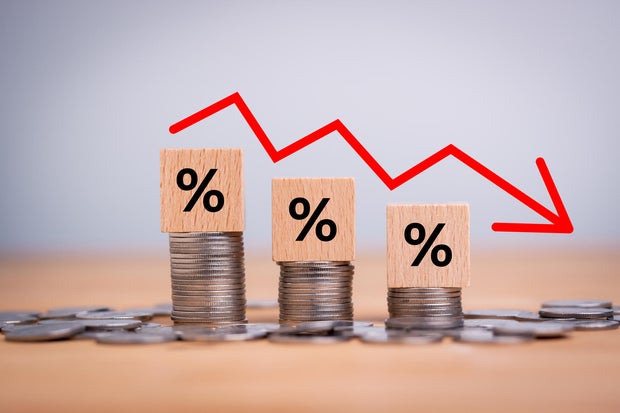
Inflation fell to 2.4% in March, down 0.4 percentage points from February, according to Thursday's Bureau of Labor Statistics (BLS) Consumer Price Index report. It marks the first time since September that rates fell for two consecutive months and offers a sustained respite from the four consecutive months of rising inflation we saw from October 2024 to January 2025.
Thursday's report has multiple implications for the economy at large, and will likely trickle down to homeowners who plan to open a home equity line of credit (HELOC) this month or already have one. While the inflation rate isn't directly tied to your HELOC interest rate, a decline in inflation could spark additional Federal Reserve rate cuts and, thus, lower HELOC rates for borrowers.
Exactly what that impact looks like can be helpful to know as homeowners navigate the current HELOC rate environment. Below, we'll detail what to know now.
See how low your HELOC rate offer could be here now.
What the inflation drop means for HELOC rates
Generally speaking, Wednesday's inflation news will likely have several rate-related impacts on HELOCs:
Rates will likely continue to decline
The inflation rate tends to influence multiple aspects of the economy. For example, a rise in inflation can lead to market volatility. On the other hand, easing inflation or increases that are lower than expected can lead to lower rates for financial products such as HELOCs.
March's inflation decline is likely good news for current or prospective HELOC borrowers, as it means rates will probably continue their downward movement this April. Recent HELOC rate trends support this. Just weeks after the BLS' January inflation report, released in February, which showed inflation rose less than what experts predicted, HELOC rates fell 0.17 percentage points from 8.29% to 8.12%, according to Bankrate. Rates continued their decline after February's inflation report showed inflation easing for the first time in four months, leading HELOC rates to drop from 8.04% on March 12 to 7.90% on April 2.
Secure your HELOC interest today.
HELOCs are likely to remain one of the cheaper borrowing options
An inflation drop means that HELOCs will remain one of the most affordable borrowing options available to homeowners right now. The average HELOC rate is at 8.00% today, which is considerably lower than the average rates for credit cards and personal loans — 21.91% and 12.36%, respectively. That trend should continue even if personal loan and credit card rates decline over the next few weeks.
HELOCs also have lower rates than home equity loans right now, with the average HELOC rate sitting at around 0.4 to 0.5 percentage points lower than 15- and 10-year home equity loans.
For homeowners who are considering tapping their equity — which sits at an average of $313,000 right now — HELOCs' competitive rates make them a low-cost option to fund a wide variety of expenses, including home renovations, college tuition or buying a second home.
Lower rates mean existing borrowers will see lower monthly payments
Because HELOCs use a variable rate that's typically adjusted monthly to calculate payments, the continued drop in rates we'll likely see will translate into lower monthly payments for existing HELOC borrowers perhaps as soon as this May. This is welcomed news for homeowners who saw their HELOC rates remain around or above 9% for most of 2024, and it highlights how a HELOC's variable rate can work to the borrower's advantage.
For example, today's HELOC rates are more than two percentage points lower than they were in early January 2024, dropping from 10.16% to 8.00% today. Meanwhile, if a homeowner took out a home equity loan in early January, their rate would've been 9.08% then and now since home equity loans use fixed rates to calculate monthly payments.
Here's how that change in rates would look in terms of a monthly payment for a $100,000, 15-year HELOC and home equity loan at the average rates on January 3:
- 15-year HELOC at 10.16%: $1,084.41
- 15-year home equity loan at 9.08%: $1,019.03
Here's what those monthly payments would look like at today's average rates:
- 15-year HELOC at 8.00%: $955.65
- 15-year home equity loan at 9.08%: $1,019.03
While a $100,000 15-year HELOC monthly payment was around $65 higher than a $100,000 15-year home equity loan at January 2024 rates, HELOC monthly payments are around $64 lower than home equity loan payments at today's rates. That disparity will grow this May if HELOC rates continue to drop.
The bottom line
With inflation falling in March, it's likely that HELOC borrowers will see their rates continue to drop this April, which should lead to a lower monthly payment in May. After dealing with interest rates above 9% for the majority of 2024, the drop in HELOC rates that coincided (for the most part) with a drop in inflation over the past two months highlights the benefits of a HELOC's variable rates. Not only are rates likely to fall this April and monthly payments drop in May, but HELOCs should continue to be one of the most affordable borrowing products available to homeowners this month and, hopefully, in the months to come.