Voices of the civil rights movement
For 40 years, Martin Luther King Day has been a federal holiday. But with his legacy and landmarks of the civil rights era no longer set in stone, we thought it might be a good time to look back at some events from the tumultuous decade between 1955 to 1965, and meet people who lived them.
Tampa lunch counter sit-in
Arthenia Joyner became a prominent lawyer, and a Florida state senator. But in February 1960, Joyner, then 17, was one of 20 Black high school students picked by the NAACP to take part in a sit-in at a Whites-only lunch counter. The old Woolworth's in downtown Tampa, Florida, is just a gutted shell now.
Similar sit-ins by students took place across the South.
Asked about being scared of taking part in the sit-in, Joyner replied, "There are things that are bigger than fear. Older folks thought that you're taking a heck of a chance, you could get killed. Why are you doing this? Because we have a right to fight for respect and dignity, and we are gonna do it. It's time for a change."
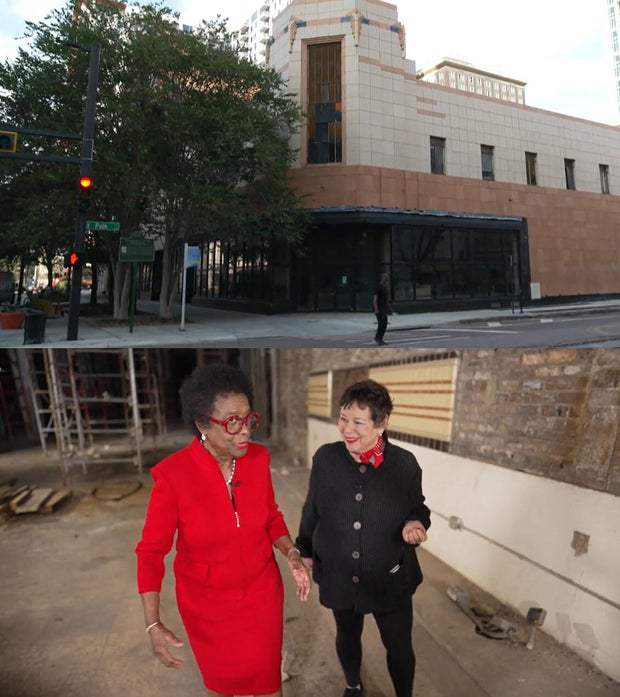
Joyner was a fifth grader in 1954, when the Supreme Court ruled unanimously, in Brown v. Board of Education, that segregated schools were unconstitutional. "It said that I was equal," she said. "I was entitled to have schools like the ones that the White kids went to. That inspired me."
Montgomery bus boycott
On Dec. 1, 1955, Rosa Parks was arrested for refusing to give up her seat to a White passenger on a public bus in Montgomery, Alabama. What came next was the Montgomery bus boycott. Approximately 40,000 Black Montgomerians decided it was time. They walked, or took Black-owned taxis, or carpooled, rather than riding the bus, for over a year.
Their spokesman: a young, unknown Martin Luther King, Jr., advocating non-violent, passive resistance.
King and Parks' lawyer was Fred Gray. Just out of law school, 26 years old, he won the U.S. Supreme Court case that ended segregation on Alabama's buses, and by extension all public transportation.
It was the first of four big civil rights cases – Browder v. Gayle (1956) on equal protection; NAACP v. Alabama (1958) on freedom of association; Gomillion v. Lightfoot (1960) on racial gerrymandering; and N.Y. Times v. Sullivan (1964) on free speech – that Gray would win before the Supreme Court by the age of 35. "It was just taking one step at a time, and in my mind was to ultimately file lawsuits [that] would destroy everything segregated I could find," he said.
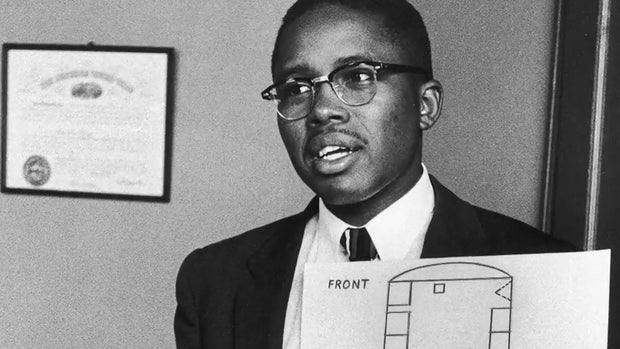
Gray, now 95, winner of the Presidential Medal of Freedom, was the titan of the civil rights movement the public didn't see at the head of a march. He was in court.
Without those lawsuits, he was asked, would any of what we consider the civil rights movement achievements of those ten years have been possible? "I don't think so," he replied.
On television
What else was pushing change? Television. On the evening news, images of non-violence being met with brutality. The Civil Rights Act passed in 1964. Martin Luther King Jr won the Nobel Peace Prize.
But the confrontations didn't stop.
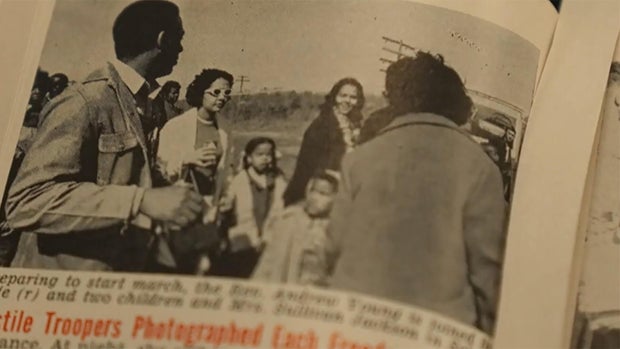
"Bloody Sunday" – Selma, Alabama, March 7, 1965, at the foot of the Edmund Pettus Bridge. This was not the peaceful march from Selma to Montgomery to promote voting rights that King and other movement leaders had spent months planning, staying with the Jackson family in Selma.
"The world had a Dr. Martin Luther King, Jr," said Jawana Jackson. "I had an Uncle Martin that read me bedtime stories and offered me cookies."
Jawana was four at the time. Her father, a dentist, and her mother, a teacher, saved everything, aware that they were preserving history. The house and its contents have been acquired by the Henry Ford Museum in Dearborn, Michigan, and moved there. It opens to the public in June.
"This house, for a brief period of time, belonged to the world," said Jawana. "History is portable. The history, and the message of the Jackson house, can be told anywhere, but it must be told."
Here, after Bloody Sunday, coordinating with President Lyndon Johnson and convincing the federal courts to let the march to Montgomery go ahead consumed these men. On March 15, as President Johnson spoke, 70 million Americans watched.
"Really it's all of us who must overcome the crippling legacy of bigotry and injustice," said Johnson. "And we shall overcome."
On March 21, marchers set off from Selma protected – not beaten – by law enforcement. By the time they reached Montgomery four days later, there were 25,000 (Jawana and her mother among them).
On the sixth of August 1965, LBJ signed the Voting Rights Act, considered by many the crowning achievement of the Civil Rights Era. Lately, attorney Fred Gray has watched as the Supreme Court chips away at it and other milestones he's devoted his life to making the law of the land.
He says he believes the clock has turned back: "But we can't give up. We can't look at saying it's turning back and then say, 'Well, I give up.' We were arrested. We were put in jail. We suffered all those things. But we didn't stop."
For more info:
- The Jackson Home, at the Henry Ford, Dearborn, Mich. (Opens the week of June 9)
- Arthenia Joyner (Wikipedia)
- Fred Gray (Tuskegee History Center)
- Equal Justice Initiative
- "Triumph: Tampa's Untold Chapter in the Civil Rights Movement" (PBS)
- "Ride a Fine Line" (N.Y. Times)
Story produced by Mary Raffalli and Robbyn McFadden. Editor: Carol Ross.
See also:
- CBS News special coverage: The Long March for Civil Rights