Report: Democracy on the decline worldwide
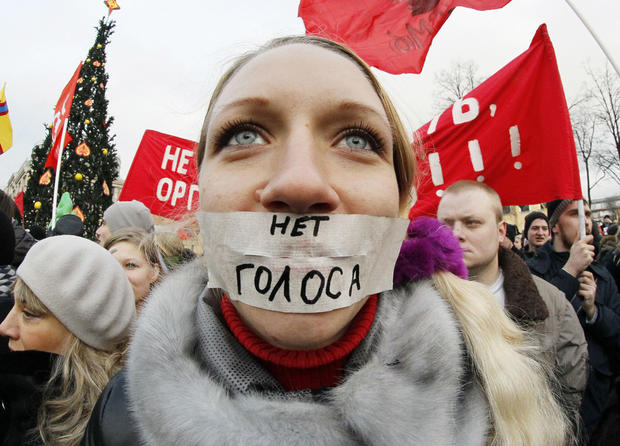
As the world's economic fortunes began taking a turn for the worse in 2008, so too did the growth in the global democracy movement, The Economist reports in its latest Democracy Index. That downward trend continued in 2011, according to the news magazine's findings, which ranked countries based on five categories: electoral process and pluralism; civil liberties; the functioning of government; political participation; and political culture.
Given that the functioning of government and political culture play important roles in the indication of a democracy's health, it should come as little surprise that the United States ranked 19th out of 25 in its group of "full democracies." The U.S. government has been nearly paralyzed on several occasions in the last year as political brinksmanship has become a frequent part of the negotiating process between the two dominant political parties.
In the group of most democratic countries, the U.S. ranks just behind the U.K. Overall, the top three ranked democracies in the world in order are Norway, Iceland and Denmark.
The least democratic countries listed are mostly unsurprisingly brutal and dirt-poor dictatorships: Uzbekistan, Turkmenistan, Chad and North Korea, which often pulls up the rear on lists of open societies.
The Economist writes: "Almost one-half of the world's population lives in a democracy of some sort, although only 11 percent reside in full democracies. Some 2.6bn people, more than one-third of the world's population, still lives under authoritarian rule (with a large share being, of course, in China)."
Other key findings in the report include:
- Although almost one-half of the world's countries can be considered to be democracies, the number of "full democracies" is low, at only 25 countries; 53 countries are rated as "flawed democracies." Of the remaining 89 countries in The Economist's index, 52 are authoritarian and 37 are considered to be "hybrid regimes."
- The most developed countries are generally the most democratic, although there are exceptions. There are two Latin American countries (Costa Rica and Uruguay) in the group of full democracies, as well as one east European country (Czech Republic) and one African country (Mauritius), which suggests that the level of development is not a binding constraint. Only two Asian countries are represented as top democracies: Japan and South Korea.
- Eastern Europe experienced another decline in democracy in 2011, with 12 countries experiencing deterioration.
- Rampant crime in some countries - in particular, violence and drug-trafficking - continues to have a negative impact on democracy in Latin America.
- Popular confidence in political institutions continues to decline in many countries.
- Mounting social unrest could pose a threat to democracy in some countries.
- There has been a noticeable decline in media freedoms in recent years, affecting all regions to some extent, and that trend has accelerated since 2008.