Gold vs. silver investing: 5 big differences to know this January
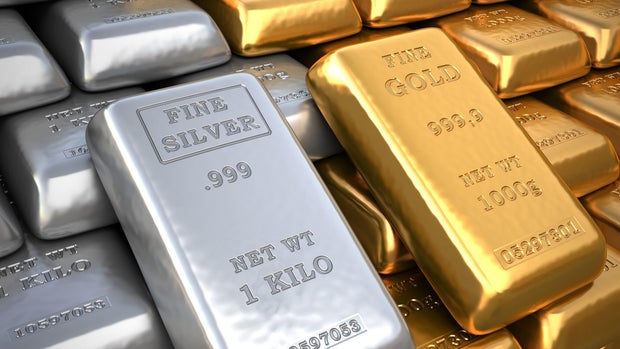
Gold has been on a historic price run in recent years, repeatedly setting new price records and grabbing headlines as investors look for stability amid stubborn inflation concerns, shifting interest rate expectations and global uncertainty. Silver, meanwhile, has been riding some of the same tailwinds, with the price of silver also breaking numerous records recently, but for very different reasons — many of which go beyond safe-haven demand.
For investors thinking about adding either precious metal to their portfolios this January, the choice between gold and silver isn't just about which metal has performed better recently. Gold and silver play distinct roles in portfolios, respond differently to economic forces and can behave in surprisingly opposite ways during the same market conditions. That's why understanding how these two metals diverge — not just where they overlap — matters right now.
Before committing new money or rebalancing an existing allocation, it helps to know what really separates gold from silver in today's environment. So, what are the big differences between these two assets that investors should know right now? Below, we'll examine five specific ones.
Start adding gold and silver to your investment portfolio today.
Gold vs. silver investing: 5 big differences to know this January
Both gold and silver can act as hedges and diversification tools, but they aren't interchangeable assets. Here are some of the most important differences investors should keep in mind this January:
Stability vs. volatility
Gold is widely viewed as the steadier of the two metals. Its price movements tend to be more measured, even during periods of market stress. That's one reason central banks hold gold and why long-term investors often use it as a portfolio anchor.
Silver, on the other hand, tends to be more volatile. It can surge quickly when sentiment shifts, but it can also fall just as fast. For investors who can tolerate bigger swings in pursuit of higher upside, silver's volatility can be appealing. For those seeking smoother performance, gold may be more comfortable.
Learn more about your precious metal investing options here.
Safe-haven demand vs. industrial demand
While numerous factors drive the price of gold, the reality is that gold's value is heavily impacted by investment demand. When confidence in fiat currencies, stock markets or geopolitical stability wavers, gold often benefits as a perceived store of value.
Silver, on the other hand, straddles two worlds. It's partly a precious metal and partly an industrial one, with heavy use in electronics, solar panels and other manufacturing sectors. That means silver prices can rise during economic expansions, but they may struggle if industrial demand weakens, even when gold is climbing.
Price accessibility and entry point
Gold's high per-ounce price can be a psychological and practical barrier for some investors, especially those buying physical metals, like gold bars and coins. Even fractional gold bars and coins represent a meaningful upfront investment, and not all investors have the cash on hand to buy in.
Silver's lower price point makes it more accessible, though. Investors can accumulate silver ounces gradually and diversify across products or make smaller purchases without committing large sums at once. For newer investors or those testing precious metals for the first time, the silver market often feels easier to enter.
Performance drivers in a shifting rate environment
Interest rate expectations matter for both metals, but not equally. Gold tends to benefit when real interest rates fall or when rate cuts reduce the appeal of yield-bearing assets. That dynamic has helped fuel gold's recent strength.
Silver can benefit from the same environment, but its industrial exposure complicates things. Rate cuts tied to economic weakness may help gold while hurting silver if manufacturing demand slows. This split means the two metals can diverge even when broader macro trends appear favorable to precious metals as a group.
Portfolio role and strategy
Gold is often used defensively, whether as a hedge against inflation, currency risk or market stress. As a result, many investors allocate to gold with preservation rather than aggressive growth in mind.
Silver is more often treated as a hybrid play. It can act as a hedge, but it's also a tactical bet on economic growth, technological demand and price momentum. That's why some investors pair gold and silver deliberately, using gold for stability and silver for potential upside.
The bottom line
Gold and silver are both offering big benefits to investors right now, but they serve different purposes in an investment portfolio, especially in this economic landscape. Gold's strength lies in its stability and long-standing role as a defensive asset during uncertain times. Silver, on the other hand, brings more volatility, more industrial exposure and, potentially, more upside — as well as greater risk.
This January, choosing between gold and silver isn't about picking a winner. It's about understanding what role you want precious metals to play, how much volatility you're willing to accept and how today's economic forces could affect each metal differently. For many investors, the smartest approach may not be gold or silver, but knowing exactly why you're choosing one, the other or both.