Are Iran strikes legal? Here's how the U.S. Constitution defines declarations of war.

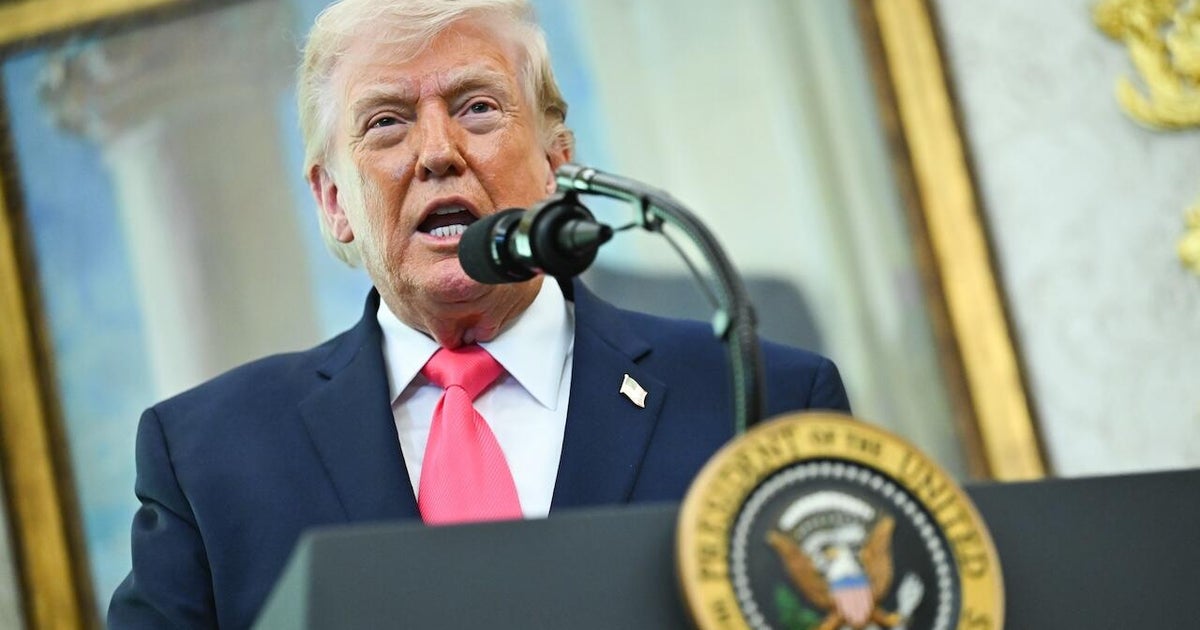
The military strikes against Iran have sparked intense debate in Congress. U.S. lawmakers are not only split on whether to support the operation but also on whether President Trump should have sought congressional approval in advance.
Swift air strikes targeting Iranian military sites have thrust the U.S. into a new conflict in the Middle East. They are acts of war, which federal law defines as "an armed conflict, whether or not war was declared between two or more nations."
Secretary of Defense Pete Hegeseth didn't shy from using the word in describing Operation Epic Fury.
"We set the terms of this war from start to finish," Sec. Hegseth said.
The terms weren't discussed with Congress first, which angered some members.
"There was no consultation, let alone approval from Congress as constitutionally required," said Democratic Sen. Richard Blumenthal of Connecticut.
How is war declared in the US?
The Constitution states that Congress has the exclusive power to declare war. Constitutional law expert and Hamline University professor David Schultz offers context.
"The whole idea of a formal declaration of war goes back to our constitutional framers' fear of a king, that a king could just unilaterally take us into a conflict," said Schultz.
Congress has only officially declared war in five military conflicts:
- War of 1812
- Mexican-American War
- Spanish-American War
- World War I
- World War II
All the wars that followed, including the Korean War, Vietnam War and Gulf War, were not officially declared by Congress. The constitution also states that the president is the commander in chief of the armed forces and preserves his or her ability to repel sudden attacks.
Given the president's power, Schultz said the concern some have is, "At what point does the president have the authority to commit troops, or commit the U.S. to any military action, without congressional support?"
Following the Vietnam War, Congress passed the War Powers Resolution, also known as the War Powers Act, to limit a president's ability to initiate military action. It required the president to notify Congress of military action within 48 hours and limit the operation to 60 days. Congress could even vote to end the operation.
"The question becomes, from a practical point of view, if the U.S. already engaged in military action, how practically easy is it for (Congress) to say, 'Bring the troops home immediately'," said Schultz.
It has actually become common for presidents to initiate military action overseas without congressional approval. President Harry Truman ordered troops into Korea. President Ronald Reagan ordered strikes on Libya. President Barack Obama ordered airstrikes on Yemen.
The acts of war only add to the confusion on what is considered a war in the U.S., leading to a continuous debate on just how much power the president has when it comes to the military.
There have been several instances in which Congress authorized the president's use of military force without formally declaring war. In 2001, Congress approved the Authorization for Use of Military Force. It allowed then-President George W. Bush to use force against the nations, organizations, or persons that coordinated the September 11, 2001, terrorist attacks, as well as the groups that supported them.
In 2002, another congressional resolution was passed that allowed former President Bush to order military action against Iraq to "defend the national security of the United States against the continuing threat posed by Iraq."