WCCO Goes Behind The Wheel For Police Pursuit Training
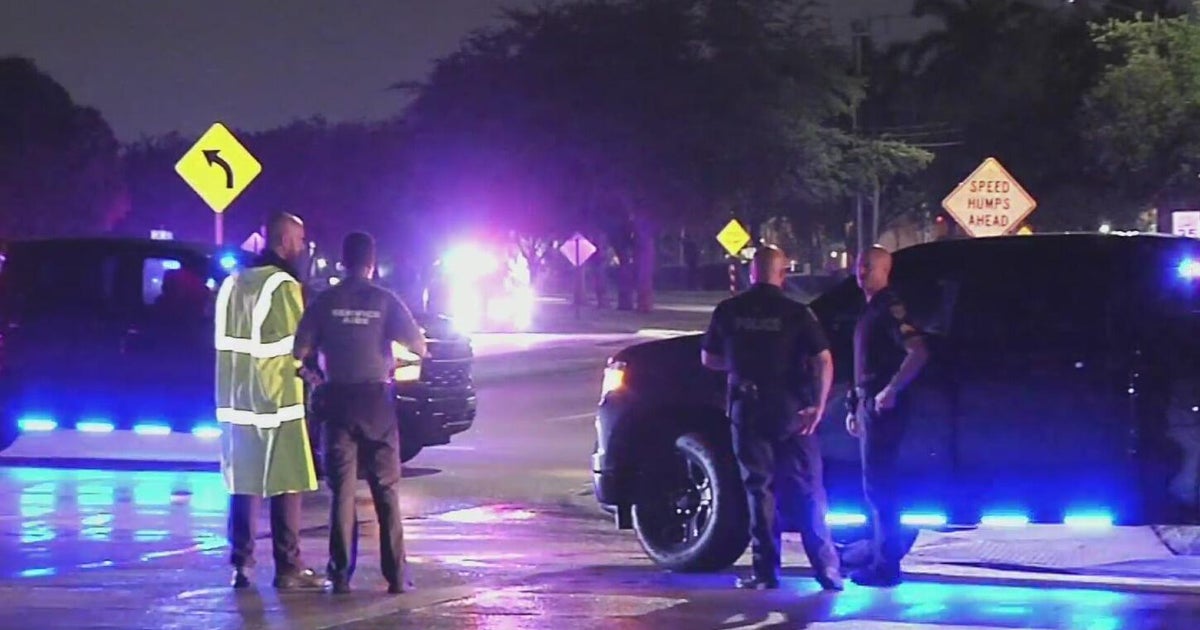
MINNEAPOLIS (WCCO) -- Police pursuits capture attention, with sirens blaring and tires squealing.
It is something police train for; when to pursue a suspect, and when to call it off. They simulate real scenarios on a course.
WCCO was invited to go through the training required of all Minneapolis police officers.
You have seen police chases on TV; long, high-profile pursuits, like with O.J. Simpson.
Shorter, more under-the-radar pursuits may only affect drivers near the chase.
In order to begin a chase, police first have to know how their vehicle handles in tight turns, at high rates of speed, in all elements.
"It's a great exercise to show officers what the limits of their vehicle, and the limits of their own driving skill," Sgt. Mark Klukow said.
Training teaches dimensional awareness, critical decision making and maintaining control. It is something every officer must go through.
"Everybody at every rank, every level, it doesn't matter seniority or rank," Klukow said.
And it is the same training I went through. Behind the wheel, I put the pedal to the metal, only braking when I felt I might lose control of the SUV.
Police pursuits can begin for a variety of reasons.
"We use pursuits for as a tool in law enforcement of the things that we have at our discretion to use," Klukow said.
They can begin when an officer turns on their lights and sirens and the driver does not pull over. And they may make evasive actions to get away.
"The reason we are pursuing that car is very different from the reason they are fleeing from us," Klukow said.
And WCCO learned there is a specific policy to follow. SHARK helps officers determine when to pursue.
The acronym details the crimes where officers can continue chasing a fleeing car, if they know the person driving it is wanted for:
- S - Sex Assault With A Weapon
- H - Homicide
- A - Assault 1 Or 2
- R - Robbery (Aggravated Only)
- K - Kidnapping
Officers say the community should know to move to the right side of the road -- and stay there -- when they see police in pursuit.
"When you see one police car and they're pursuing a bad guy, there are likely more coming," Klukow said.
In Minneapolis, chases are most often less than a mile and last under a minute. About 30 percent of the time in 2015, police terminated pursuits soon after they started.
"So we don't pursue people if sometimes the public safety is too compromised. We will end pursuits," Klukow said.
He says they use best practices, and are on the cutting edge of training when it comes to police pursuits.
The state mandates every sworn officer who could be involved in a pursuit be trained prior to service, and then every five years.