Judge blocks Trump administration from deploying California National Guard members in Los Angeles
Washington — A federal judge in California blocked the Trump administration from deploying members of the California National Guard in Los Angeles and directed it to return control of the Guard to Gov. Gavin Newsom.
The decision Wednesday from U.S. District Judge Charles Breyer is the second in which he has ruled against the Trump administration in its efforts to federalize the California National Guard, under a law known as Title 10, and send troops to the streets of Los Angeles to protect federal personnel and property during immigration enforcement operations. Newsom, a Democrat, opposed President Trump's move to call the state's National Guard into federal service in support of the president's immigration crackdown.
Sought by California officials, the preliminary injunction granted by Breyer arose out of orders issued by Defense Secretary Pete Hegseth in August and October that kept 300 California National Guard troops under federal control to temporarily protect federal immigration agents and other government entities. The October order from Hegseth called for 200 of the California National Guard personnel to deploy to Oregon, with the remaining 100 troops sent to various locations throughout Los Angeles.
The California National Guard members are set to remain in federal service through Feb. 2.
Breyer criticized the Trump administration in his 35-page order for continuing to retain control of roughly 300 Guardsmen when there is no evidence the execution of federal law was hindered "in any way."
"The Founders designed our government to be a system of checks and balances. Defendants, however, make clear that the only check they want is a blank one," he wrote.
Breyer also accused the Trump administration of "effectively creating a national police force made up of state troops" by sending California Guardsmen to other states, including Oregon and Illinois, and said the government has adopted an "expansive view" of Mr. Trump's powers under Title 10.
The judge put his order on hold until Monday, likely to give the Justice Department time to appeal.
California Attorney General Rob Bonta cheered the decision from Breyer.
"Once again, a court has firmly rejected the President's attempt to make the National Guard a traveling national police force," he said in a statement. "For more than five months, the Trump Administration has held California National Guard troops hostage as part of its political games. But the President is not King. And he cannot federalize the National Guard whenever, wherever, and for however long he wants, without justification. This is a good day for our democracy and the strength of the rule of law."
Mr. Trump first invoked Title 10 to federalize members of the California National Guard in June in response to protests against immigration raids in the Los Angeles-area. The law allows the president to call into federal service members of a state's Guard under certain conditions, namely when he cannot execute U.S. laws with the "regular forces" or when there is a "rebellion or danger of a rebellion" against the government.
Hegeth initially federalized roughly 4,000 California Guardsmen. But Newsom, California's Democratic governor, sued to block the federalization and deployment, and Breyer issued a temporary restraining order on June 12 finding that Mr. Trump's initial federalization did not satisfy the prerequisites laid out in Title 10.
But a three-judge panel for the U.S. Court of Appeals for the 9th Circuit temporarily lifted Breyer's order, allowing the federalization and deployment to continue. The 9th Circuit held a hearing on the Justice Department's appeal of the district court's decision, but has not yet issued a ruling.
Since those proceedings, the Trump administration has released most of the federalized members of California's National Guard, but kept roughly 300 troops under federal control.
In their latest bid for relief, California officials had argued that there was no basis for Mr. Trump to continue to keep the state's National Guard under federal control because the violence during protests in June had subsided. They accused the Trump administration of implementing a "months-long military occupation, without any justification, and with no apparent end in sight."
But the Trump administration said that the court did not have the authority to review the president's federalization orders at all, since it said they were merely extensions of his initial June memorandum that first called the California National Guard into federal service.
Breyer called that position "shocking" and said adopting that interpretation "would permit a president to create a perpetual police force comprised of state troops, so long as they were first federalized lawfully."
"Defendants' argument for a president to hold unchecked power to control state troops would wholly upend the federalism that is at the heart of our system of government," he wrote.
Breyer also refuted the administration's claim that National Guard troops were still needed in the Los Angeles area. By sending 200 of the 300 California Guardsmen who remained under federal control to Oregon, the Trump administration "signaled that there was no pressing need for them in Los Angeles," he wrote.
Mr. Trump has also sought to federalize the Oregon and Illinois National Guards to assist with immigration enforcement operations over the objections of their Democratic governors. In Oregon, a federal judge ruled Mr. Trump did not have a lawful basis to federalize the state's National Guard under Title 10 and permanently blocked the administration from deploying the troops to Portland.
In Illinois, a federal appeals court blocked the Trump administration from deploying Illinois Guardsmen to the Chicago-area but allowed them to remain under federal control. The Supreme Court is now weighing whether to allow their deployment.
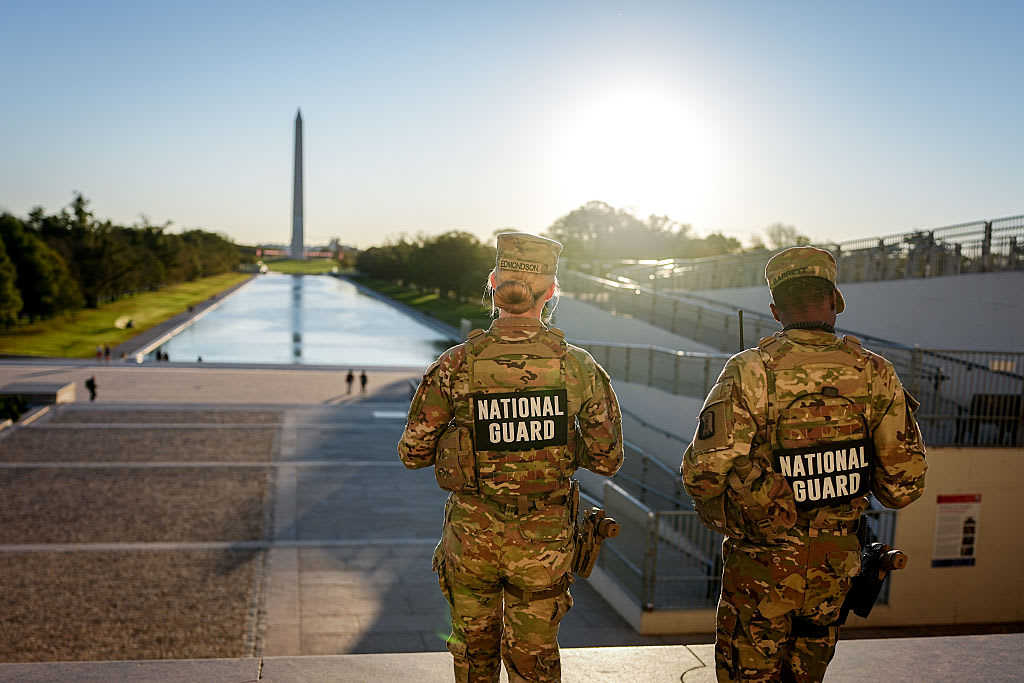
Mr. Trump has also sent National Guard members to the streets of Washington, D.C., and Memphis. Two West Virginia National Guard members who were sent to Washington, D.C., were shot in an ambush-style attack near the White House last month. One of the victims died and the other remains hospitalized.