Jimmy Jam and Terry Lewis take WCCO inside the music at Electric Fetus
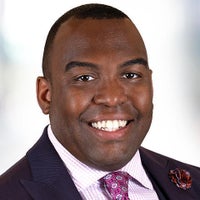
For more than four decades, Jimmy Jam and Terry Lewis have helped make some of the songs we know by heart.
But during a recent morning inside Minneapolis record store Electric Fetus, the legendary production duo offered a glimpse into something else: How they hear those songs.
Surrounded by albums that shaped them — and several they helped create — Jam and Lewis talked about the samples, sequencing, voices and decisions hidden inside records millions of people have heard hundreds of times. Fair warning: This one is for the music nerds.
The ceremony of a record store
For Jam and Lewis, walking into a record store is a different experience than scrolling through an album on a phone.
"It's just the tactile of it," Jam said. "Actually being able to touch things, flip through and look at things."
He pointed to the details that can disappear in the streaming era: the album cover, the track listing, song lengths, writers and credits. Lewis calls it "the ceremony" of listening.
"It's a whole different thing. It's an experience," he said. "It's like the investment that you make in it. You actually spend time trying to figure out what's going on with this."
And inside Electric Fetus, nearly every record we pulled seemed to unlock another story.
A masterpiece — and a lesson in sequencing
One of the first albums Jam picked up was Marvin Gaye's "What's Going On."
"This is my favorite record of all time," he said.
"Because it's a masterpiece," Lewis added.
Jam pointed to the way the songs flow into one another, particularly on the first side of the album.
"The songs all segue together," he said. "There's no skips, basically, truly no skips. The songs all are in one suite, almost, if you will."
That led to a question I've always wondered about: How do producers decide what song goes where? For Jam and Lewis, sequencing was never an afterthought.
"It's important," Jam said. "The sequencing was always very important."
One of the clearest examples is Janet Jackson's "Rhythm Nation 1814." The black-and-white cover is stark, serious. The album opens with "The Pledge," followed by "Rhythm Nation," "State of the World" and "The Knowledge." Jam said that order was intentional.
"We're placing all of the conscious songs, if you will, at the front of the record," he said.
Now imagine the same songs packaged differently. Put a smiling color photograph of Janet on the cover. Call the album "Escapade." Lead with "Escapade," "Miss You Much," "Love Will Never Do (Without You)" and "Alright." It might have been easier to market, but Jam said it would not have made the same statement.
"It wouldn't have achieved what we wanted it to achieve," he said.
The structure of the album allowed them to make the point first. Then came the release.
"Get the point?" Jam said. "Good. Let's dance."
Hearing the ingredients
That's about when the music nerd in me took over. There's a tiny moment near the end of Janet Jackson's "Someday Is Tonight" that I've noticed for years. A trumpet enters, Janet's voice follows. Then comes a repeating, layered harmony. I had to ask. How did they do that?
Jam smiled. "What I love about that is that people will now hear that when they listen," he said. "That's one of those things that most people don't hear."
He compared listening closely to tasting food. A diner may know a dish tastes good. A chef tastes the individual ingredients.
"A chef can taste every bit of what went into a dish," Jam said. "We'll just go, 'Oh man, that tastes good.' But a chef will be like, 'Oh no, that oregano.'"
In this case, one of those ingredients was the trumpet player: Herb Alpert. Another was the repeating Janet vocal, created through a sampled harmony. Little details buried inside a song you may have heard for decades. Jam had a name for what happens once you learn they're there: "Informed listening."
"Once you know the information when you listen," he said, "it's almost like hearing it for the first time."
Stevie Wonder, Public Enemy and "New Agenda"
So we listened again. This time, to Janet Jackson's "New Agenda," featuring Chuck D. The track opens with a sample of Stevie Wonder's "Superwoman." Given the song's message about the experience and empowerment of Black women, I wondered whether that sample was deliberately chosen.
"Yeah," Jam said. "That record was very purposeful."
And the Stevie Wonder sample is only part of what's happening. Jam said the record contains a collection of samples and influences, including Kool & the Gang and Average White Band.
Then there was the Public Enemy connection. Because Chuck D was part of the song, Jam and Lewis wanted the production to carry some of the sonic chaos and aggression associated with Public Enemy and producer Hank Shocklee. The result was a collision of sounds.
"We wanted to have the beauty of the Stevie Wonder 'Superwoman,'" Jam said, "but then the kind of aggressiveness of those other samples."
Beauty meeting aggression. Organized chaos with a purpose.
How Chuck D helped settle one of Janet Jackson's biggest decisions
Chuck D's role in the album didn't end when "New Agenda" was finished.
Jam remembers it being about 2 a.m. when he and Lewis asked Chuck to listen to two songs they were considering as the album's first single. One was "If." The other was "That's the Way Love Goes."
The record label was leaning toward "If." Jam and Lewis believed "That's the Way Love Goes" better introduced the direction of Janet's new album. Chuck listened to "If" first.
"He goes, 'Man, that 'If,' man, that sounds like Janet,'" Jam recalled. "'I can see the video. I can see the dancing.'"
Not exactly the answer Jam and Lewis wanted. As Chuck talked, Jam remembers Janet looking over at them.
"We're like, 'Damn,'" he said.
Then Chuck asked about the other song. They played "That's the Way Love Goes." Chuck compared it to the way Sade releases music — understated, with no need for spectacle. The record simply arrives.
"And we're looking at Jan like, 'We told you,'" Jam said.
Janet agreed. "'That's the Way Love Goes' as a single," Jam recalled her saying.
His response? "Thank Chuck D. Thank you, Chuck D."
Mary J. Blige just wanted something that sounded like Mary J. Blige
Sometimes, figuring out what an artist needs is far less complicated.
When Mary J. Blige came to work with Jam and Lewis, they played several ideas for her. She wasn't feeling them.
"We were like, 'Well, Mary, what are you looking for?'" Jam recalled.
Her answer was simple: "I want something that sounds like me."
Jam and Lewis played her a loop built from Rick James' "Moonchild." And suddenly, there was no confusion.
"She got up and started doing the Mary J. Blige dance," Jam said. "And she said, 'Yeah, that's what I'm talking about. This is what I was talking about.'"
No long explanation. No technical discussion. She moved. They knew.
Jam said that reaction helped them understand that the loop-and-sample-driven sound was what she was looking for.
Fired in one studio. Their future playing in another.
Of all the records we pulled at Electric Fetus, one meant something different. The S.O.S. Band's "On the Rise."
"Man, everything," Lewis said when I asked what the record meant to them.
"The beginning," Jam added. "That's kind of where we started."
At the time, Jam and Lewis were still two young producers from Minneapolis. The S.O.S. Band already had a major hit with "Take Your Time (Do It Right)," but gave the pair a chance to help shape what came next.
"Who are we at that point?" Jam said. "It's like just these two boys from Minneapolis. We didn't even know what we were doing half the time."
The opportunity would eventually cost them another job. Jam and Lewis were members of The Time, and Prince had warned them not to produce other acts. They did it anyway.
Jam remembers being at Sunset Sound in Los Angeles when Prince confronted them.
"Prince fires us," Jam said. "He says, 'I've told you not to produce other bands. You produced S.O.S. Band. You're fired.'"
They left Sunset Sound and headed to another studio. Waiting there was engineer Steve Hodge — and a mix of the S.O.S. Band's "Just Be Good to Me." Hodge could tell something was wrong. Jam and Lewis told him they had just been fired from The Time.
His response? "You don't have anything to worry about because this record here is a smash." Then he pressed play. "'Just Be Good to Me' came out the speakers," Jam recalled. "And we were like, 'Wow.'"
Fired in one studio, their future playing through the speakers in another.
"That was a night that totally changed our life," Jam said. "Getting fired or freed, as Terry said — from one studio to mixing our first big hit."
Even Jimmy Jam and Terry Lewis geek out
For more than 50 years, Jam and Lewis have listened — to records, to artists, to each other and sometimes, to things the rest of us don't hear until they point them out.
But just as our music-nerd session was winding down, one more name came up: Michael Jackson.
Jam said working with Jackson on "Scream," his duet with Janet, remains the most impactful studio session of his career. Michael entered the studio calm and mild-mannered. Then the track started.
"He launches into the full Michael mode," Jam recalled. "He's spinning and whooping and wooing and hollering."
And suddenly Jimmy Jam and Terry Lewis — two men who have worked with some of the biggest stars in music — became fans.
"Terry and I are like some little girls," Jam said. "'Ah! It's Michael Jackson!'"
Jam called it an easy answer when asked about his most memorable studio experience.
"It was Michael, without a doubt."
And apparently, Janet Jackson didn't want to follow him. Janet was scheduled to record her vocal after Michael finished. Instead, she leaned between Jam and Lewis and said she would record hers back home.
"She wanted no part of following what he had done," Jam said.
Janet later recorded her vocal in Minneapolis. Michael heard it. He liked what he heard, then he asked where they recorded it. Jam told him Minneapolis. Michael's response? "I'm coming to Minneapolis."
Hearing familiar songs differently
From Marvin Gaye to Janet Jackson, Mary J. Blige, Chuck D. Prince and Michael Jackson, every record we pulled seemed to hold another story. Every sound had another ingredient.
After a morning digging through both at Electric Fetus, Jam's idea of "informed listening" stuck with me. Once you know what went into a song, you may never hear it quite the same way again.


