DOJ brings charges against 15 in $90 million Minnesota Medicaid fraud schemes
The U.S. Department of Justice announced criminal charges against 15 people Thursday morning in a series of Medicaid fraud schemes that prosecutors say cost taxpayers $90 million.
According to Colin McDonald, the assistant attorney general for the national fraud enforcement division, the charges involve seven different state-managed Medicaid programs that have been "systematically pilfered by fraudsters who treated Minnesota-run programs as their personal piggy bank."
The cases take on a certain pattern, officials say, in which the suspects billed the state for programs they did not provide. They would then spend the money on real estate holdings, cars, jewelry and other lavish items.
One of the schemes bilked a program meant to help people with disabilities live independently. McDonald said that a man was supposed to receive around-the-clock care, but instead was not served at all and died.
Another scheme involved defrauding a program designed to offer autism medical services. Two people are accused of allegedly paying kickbacks to families who brought their children in to be diagnosed with autism, regardless of their medical needs. Then the alleged fraudsters billed the state for administering autism services that were not provided.
According to McDonald, the autism program cost the state $600,000 just six years ago, but the cost has since skyrocketed to $400 million.
Robert F. Kennedy Jr., the Health and Human Services secretary, said the charges Thursday represented "the largest autism fraud bust in American history."
Eight people were accused of defrauding the Housing Stabilization Services program, which shut down last year. McDonald said all the funds for the program, which is meant to help seniors and people with disabilities find stable housing, had completely run out. Three of the people charged in the scheme are from Pennsylvania.
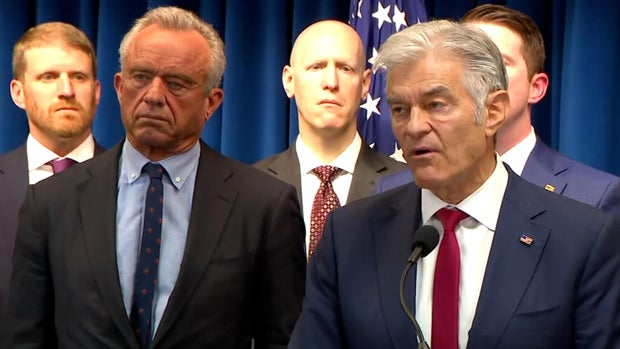
The speed at which the alleged fraudsters were charged is "unprecedented," officials said at the press conference. McDonald highlighted the Department of Justice's newly-minted fraud division, which, since April 1, has brought 450 fraud enforcement actions across the country, representing billions in taxpayer dollars. Eleven extra prosecutors are on the ground in Minnesota in an effort to fight fraud, he added.
The department would continue its efforts by expanding the healthcare fraud Midwest strike force and adding 15 more prosecutors dedicated to combating Medicaid fraud nationwide.
McDonald said law enforcement is working to bring the suspects into custody. Prosecutors showed video of Muhammad Omar, accused of defrauding Housing Stabilization Services, limping after he jumped from a balcony in an attempt to escape.
The charges came down on the same day that the architect of the Feeding Our Future fraud scheme was sentenced to more than 41 years in prison.
Prosecutors said Aimee Bock orchestrated the largest pandemic fraud case in the country, which diverted tens of millions in government funds meant to feed hungry children. In addition to spending decades in prison, a judge also ordered her to repay nearly $243 million to the federal government.
Within the last year, the Trump administration has deferred hundreds of millions of dollars in federal Medicaid funding to Minnesota, citing fraud.
Late last year, a viral social media video by YouTuber Nick Shirley — which was amplified by Elon Musk, Vice President JD Vance and former Attorney General Pam Bondi — pushed the fraud story into the center of the national conversation, stoking a scandal that has been brewing in state politics for years.
In the wake of the video, the Trump administration announced it is pausing federal funding to child care in Minnesota, with President Trump calling Minnesota a "hub of fraudulent money laundering activity."
While Shirley's video focused on allegations of fraud in daycares in Minneapolis, federal investigators told CBS News childcare is only "vaguely" a priority for prosecutors, and attention and resources are instead focused on more than a dozen other social services programs in Minnesota, including nutrition, housing and behavioral health.
Federal prosecutors have estimated the fraud scandal in Minnesota could top $9 billion, a figure that has been disputed by Gov. Tim Walz.
Walz has defended his handling of the crisis, saying his administration has "spent years cracking down on fraudsters" and has accused Mr. Trump of "politicizing the issue to defund programs that help Minnesotans."
During the most recent legislative session, Republicans and Democrats in both chambers of the Minnesota Legislature agreed to establish a new Office of Inspector General to fight fraud.


