Why is it so tricky to get rid of creeping bellflower?

Creeping bellflower is pretty, purple and a problem. It's spreading across Minnesota, and stopping it is easier said than done.
For Alice Schimunek, every summer brings the same challenge.
"I have a lot of plants in my yard, and creeping bellflower likes to be one of them," Schimunek said. "It's a lot of work to deal with it."
The invasive plant can cause a major headache for gardeners, and and can choke out other native plants nearby.
Laura Irish-Hanson, an extension horticulture educator at the University of Minnesota, says stopping the spread isn't easy.
"It is really good at growing in highly disturbed sights, so a lot of our urban environments where we don't have native soil," Irish-Hanson said.
She says the problem stems from the plants ability to spread quickly and aggressively.
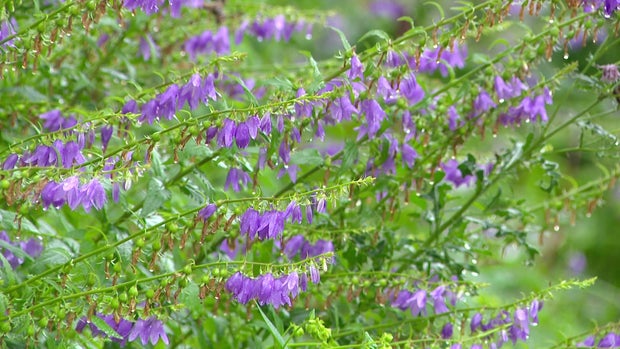
"You can see potentially upwards of about 150,000 seeds per single plant, and that's because one plant has multiple flowering stalks," Irish-Hanson said.
On top of that, the plant has a vigorous root system called rhizomes, making it difficult to remove.
"When you try to dig it, we actually just snap those rhizomes right off. If we leave any of the root pieces behind it can actually just encourage more branching and more plants to grow," she said.
The best thing you can do? Remove the flowers.
"Yes they're beautiful, yes the pollinators use them, you see lots of bees go to those flowers, but we just want to slow that seed spread as much as possible," Irish-Hanson said.
Also helping slow the spread are yard signs.
"I think that's really great to make people aware of it and then maybe they'll decide to start trying to get it out of their yards, too, and at least not spread it as well," Schimunek said.
Pulled creeping bellflower should be burned or allowed to decompose in a bag to minimize their aggressive spread.


