Helicopter that crashed into Biscayne Bay was flying "extremely low," NTSB report says
A post-crash examination of the Robinson R44 II helicopter that crashed into Biscayne Bay earlier this month, killing the pilot and seriously injuring two passengers, found no evidence of pre-impact flight control or engine malfunctions, according to a preliminary federal aviation report.
Investigators examining the wreckage determined that the aircraft was operating normally prior to striking the water during a low-altitude aerial photography maneuver on Nov. 4.
Wreckage Examination Rules Out Control and Engine Failures
According to the preliminary report, investigators confirmed continuity of flight control across all flight control surfaces through the helicopter's controls, servos, actuators, linkages and pushrods.
While one of the three main rotor hydraulic servos broke free during the crash and all three sustained minor impact damage, investigators confirmed all three remained functional and responded properly when manually operated. The helicopter's rotor blades operated freely on the teetering hinge, with no indications of mast bumping.
Manual rotation of the engine crankshaft also confirmed mechanical continuity through the crankshaft and valvetrain, with normal compression and suction recorded across all six cylinders. All 12 spark plugs exhibited normal wear, and investigators drained roughly 3 gallons of a saltwater-and-oil mixture from the engine after it was submerged.
What the preliminary investigation revealed about the helicopter's impact damage and maintenance history
The investigation revealed extensive structural damage consistent with high-energy water impact:
Rotor Systems: One main rotor blade was missing its outboard 6 feet, while the opposing blade sustained heavy impact damage. The main rotor gearbox case fractured on impact, exposing internal gears, and the tail rotor shaft separated from the main transmission—though the tail rotor gearbox remained sealed and operated normally when manipulated by hand.
Airframe: The fuselage split open and peeled backward, exposing the cockpit area and seats, while digital camera and video equipment aboard the flight was ejected and not recovered.
A review of maintenance records showed the helicopter had completed a 100-hour inspection on Aug. 5, 2026, at roughly 2,500 total flight hours, with about 400 hours on the engine since its last overhaul.
What witnesses and passengers told investigators
According to witness accounts and passenger interviews included in the report, the helicopter was photographing boats during a high-performance "Poker Run" powerboat event when it flew low and parallel off a boat's starboard side before banking toward the vessel at a 45-degree angle.
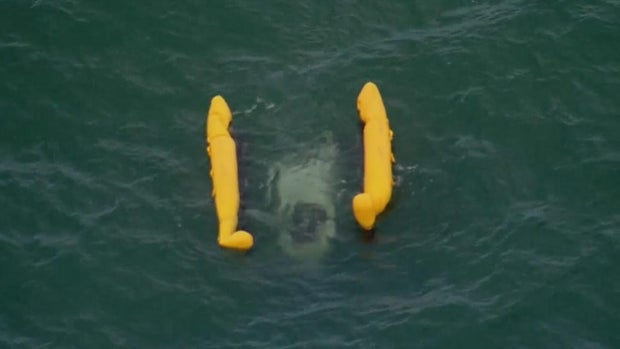
Witnesses on two nearby boats told investigators the helicopter was making turns "extremely" close to the water's surface just before its main rotor blades struck the bay, causing the aircraft to impact the water, deploy its emergency floats and roll upside down in roughly 10 feet of water.
Federal investigators have retained the wreckage for further examination as the investigation continues.