LA County reaches coastal flooding record in 100-year recorded history

Los Angeles has faced more coastal flooding days in 2026 than in its recorded history over the last 100 years, according to NOAA data, since the city's tide gauge was installed in 1923.
So far in 2026, LA has experienced 12 recorded flooding days. The most in the city's 100-year history before that was in 1983, which saw nine flooding days.
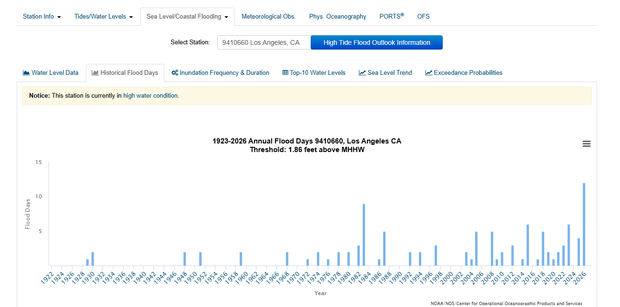
Karen Kavanaugh, a NOAA oceanographer, says the agency's current data online has not yet factored in October 2026 flooding days, so, she says, the 2026 totals are on track to far surpass previous years with high flooding counts.
Kavanaugh says preliminary NOAA data also shows the most flood days in recorded history at San Diego, La Jolla, and Santa Barbara tide gauges. Santa Monica, Port San Luis and Monterey had readings that landed in their all-time top 10.
"I think it just really illustrates how significant this event that we're living through is," Kavanaugh said. "This is significant in the water levels, and significant height, and significant in how often it's impacting these areas, and also, that, at least with this event this week, it's happening not because of a tropical cyclone, it's happening really because of the astronomical tides plus this… this Kelvin wave and… and warmer water, and that just kind of impresses upon us, because we're used to seeing catastrophic flooding from a tropical cyclone or a big storm, and that's not the case in particular week."
Kavanaugh calls the high tide flooding the LA metro is facing this week, "sunny day flooding." She says it will be something residents will need to consider moving forward for the rest of the year, as she says more intense coastal flooding is expected in the weeks of Thanksgiving and Christmas.
"I think it's becoming increasingly frequent in other places and... it may catch regular citizens off guard who aren't used to this... it's unusual to have to pay attention, when it's, you know, beautiful weather outside, but... you're being advised to maybe move your car from areas that are low-lying and could get damaged by saltwater, get sandbags, and… and keep the sandbags for… for weeks," Kavanaugh said.
She explains that their are several compounding factors for the intense flooding this year.
One cause is the King Tides, when the moon is full and is also at its closest point to Earth, which increases the gravitational pull on the ocean. This is what the LA region has seen this past week.
Second is this year's marine heat wave, which includes weeks of warm water caused by thermal expansion. Kavanaugh says warm water takes up more space than cool water, so sea levels rose slightly.
Third, Kavanaugh says is the Kelvin wave, a slow-moving, El Niño-related wave, which traveled along the equator, then up the Pacific Coast. It reached California in recent weeks and can raise water levels by six to 12 inches for a few weeks.
Fourth, she says, is long-term, global sea level rise of about two inches over the last few decades.
To take a closer look at your community's flooding observations and latest advisories, visit the NOAA website for an interactive map.
Asked what advice she has for residents in coastal areas, Kavanaugh said, "pay attention to what your city government is sharing with you to prepare in advance, and also monitor what the weather service is saying. Follow their coastal flood advisories as we move closer to those events... and although we can identify when there's higher-than-normal high tides, there might be storms that come through that could exacerbate flooding in other parts of the month, so it's just important to kind of stay tuned and have a plan."


