Extended heat wave in Southern California expected to break records as dangerous conditions persist
The extreme heat that has been affecting Southern California over the past several weeks could break records over the weekend.
The National Weather Service says the high-pressure system will continue to pump hot air from the east into the atmosphere. Weather officials say the heat isn't expected to ease up anytime soon.
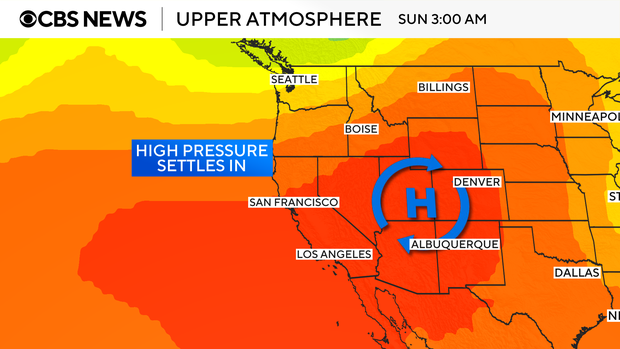
"High pressure aloft will continue to dominate the weather pattern along the West Coast all of next week, meaning highs will remain above normal for the foreseeable future," the NWS said.
An extreme heat warning and advisory will remain in effect across much of Southern California until 8 p.m. on Sunday. Weather officials say the heat hazards will likely be extended into next week.
After the morning marine layer burns off, temperatures will quickly rise.
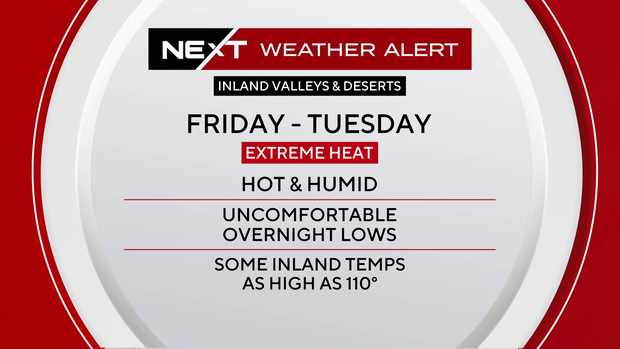
CBS LA Next Weather Alert will go into effect on Friday and remain until Tuesday for the inland valleys and deserts. People are urged to limit outdoor activities during peak hours, drink plenty of fluids and check on vulnerable populations including young children and the elderly.
"Do not leave young children and pets in unattended vehicles," the NWS says. "Car interiors will reach lethal temperatures in a matter of minutes."
The valleys and inland areas will see highs well over 100 degrees on Friday and Saturday. Forecasters say some areas could experience record-breaking conditions. Areas near downtown and the coast will be in the high 80s to mid-90s.
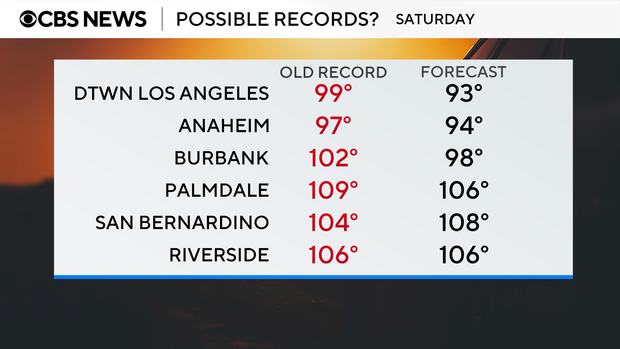
In addition to the daytime heat, weather officials say overnight lows will remain uncomfortable, with temperatures well above normal.
Swells from a distant tropical cyclone west of Mexico are contributing to the moisture and humidity in the region.


