Los Angeles Mayor Karen Bass pens letter demanding urgency from Lineage in Boyle Heights fire cleanup
Los Angeles Mayor Karen Bass penned a scathing letter to the chief executives of Lineage, nearly three weeks after the company's massive cold storage facility in Boyle Heights caught fire and caused millions of pounds of food to spoil, impacting residents living in the surrounding area.
"The fire at the warehouse you operate in the Boyle Heights neighborhood of Los Angeles has severely impacted and harmed the families and businesses who call the neighborhood home," the letter said. "Residents' quality of life remains significantly diminished and concerns remain about impacts on overall health, water quality, and air quality, not to mention the extraordinary odor and infestations that make the area around the warehouse unbearable."
The letter, which was also signed by Los Angeles City Councilwoman Ysabel Jurado, Los Angeles County Supervisor Hilda Solis and Carol Parks, the city's general manager of Emergency Management, said that residents are now constantly living in a state of uncertainty, unsure of what "new dangers tomorrow's cleanup may bring."
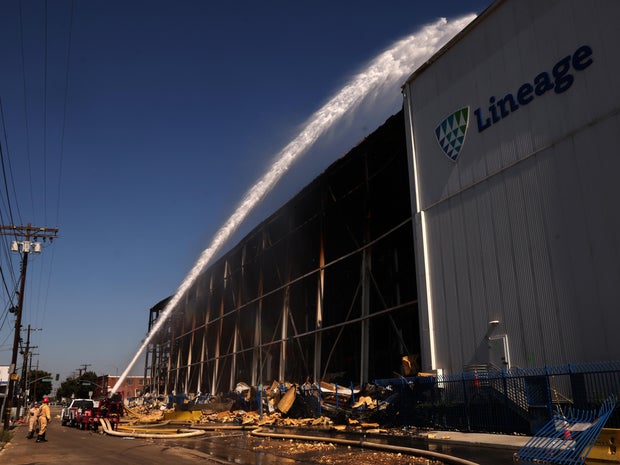
After the fire broke out on June 17, when one of the many solar panels on the roof of the 500,000 square foot caught fire and rapidly spread, it burned for more than a week before Los Angeles Fire Department crews declared a knockdown. Still, operations continue as the more than 85 million pounds of once-frozen food, including meat, have to be removed from within.
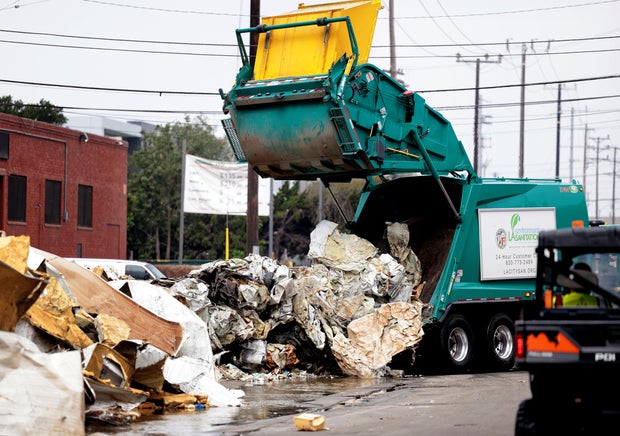
On Tuesday, Lineage president and CEO Greg Lemkuhl said that they are "committed to this community during this recovery, and beyond." He also said that work was underway 24/7 to remove the spoiled food, which has caused a putrid stench to linger over the community, days after the heavy smoke coated the area, and clear the infestation of rodents attracted to the waste.
In her letter, Bass asked that Lemkuhl "back up that commitment with concrete actions and partnership."
Due to the lack of explicitly stated plans for cleanup and risk management, Bass demanded "without further delay" comprehensive and detailed plans for material removal, odor and vector control, fire water runoff management, air quality monitoring, removal of hazardous materials, identification of certified waste haulers and biohazard disposal contractors and publication of designated operating hours for truck hauling.
"Notably, your representatives have not committed to the most basic steps of sharing comprehensive, real-time data about the volume of rotting food and debris being removed from the site," the letter said.
She demanded that Lemkuhl and Lineage fully participate in the ongoing efforts of city officials, including Los Angeles County Supervisor Hilda Solis, whose urgency motion filed on June 23 included more than 80 directives that sought to "protect the community." Among the efforts that Bass said required immediate action from Lineage included:
- providing immediate temporary housing for impacted residents
- providing long-term housing assistance for residents, pets and service animals for the duration of remediation efforts
- creation of a smoke and toxin remediation program
- funding federally-qualified community health centers that provide mobile medical clinics
- funding community-based organizations that provide emergency financial support to residents and local businesses
- establishing a community notification schedule that provides advance notice of major cleanup activities
- establishing a multilingual hotline and claims center for businesses and residents
- making a confirm commitment that Lineage leaders and contractors would engage in community meetings to inform residents and business about ongoing efforts
"We will not stand by while families in the City of Los Angeles and unincorporated Los Angeles County are forced to endure the serious impacts of an ongoing industrial disaster in their own backyard," the letter said. "As the leader of a signification global for-profit enterprise, you must act with urgency to protect the people who live around the industrial facilities you operate at all times — particularly during serious crises like the one impacting the community of Boyle Heights now."


